 How-to
7 Steps to Prepare Your Home Plumbing for Winter
Table of Contents
- Why Winter Plumbing Prep Matters Before the First Freeze
- Step 1: Insulate Exposed Pipes in Unheated Spaces
- Step 2: Seal Cracks and Openings That Let Cold Air In
- Step 3: How to Winterize Outdoor Faucets and Hose Bibs
- Step 4: How to Prevent Pipes From Freezing in an Occupied Home
- Step 5: How to Shut Off Water to Your House and Drain the Lines
- What to Do if Pipes Freeze: Thawing and Emergency Steps
- Schedule a Winter Plumbing Inspection Before the Cold Hits
- Frequently Asked Questions
Last Updated: November 1, 2026
Why Winter Plumbing Prep Matters Before the First Freeze
Water expands when it freezes. That simple fact is why winter plumbing prep matters so much. A frozen pipe doesn't just stop water flow.
The damage often shows up hours after the cold snap ends. That's what catches homeowners off guard.
At DC Plumbing Heating and Air Conditioning, we've spent nearly four decades serving South Orange County homeowners. A common pattern is that a homeowner assumes mild winters mean no risk, until a hard freeze proves otherwise.
Here's the good news. Most freeze damage is preventable with a few hours of work in the fall.
Ready.gov guidance on winter weather preparedness
Step 1: Insulate Exposed Pipes in Unheated Spaces
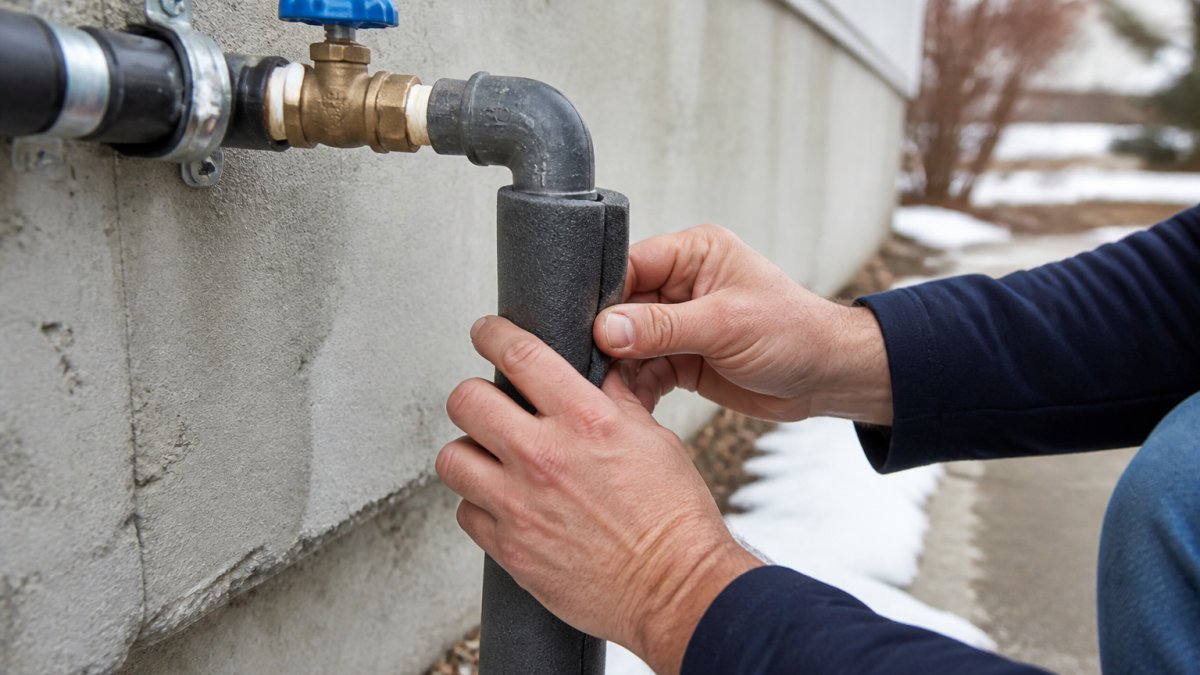
Pipe insulation is the single highest-value task on this list. Exposed pipes in cold zones lose heat fast. Wrapping them keeps water above freezing when temperatures drop.
Focus on any pipe that runs through an unheated space:
- Garages and garage walls
- Crawl spaces and basements
- Attics and attic knee walls
- Exterior walls
- Under sinks on outside walls
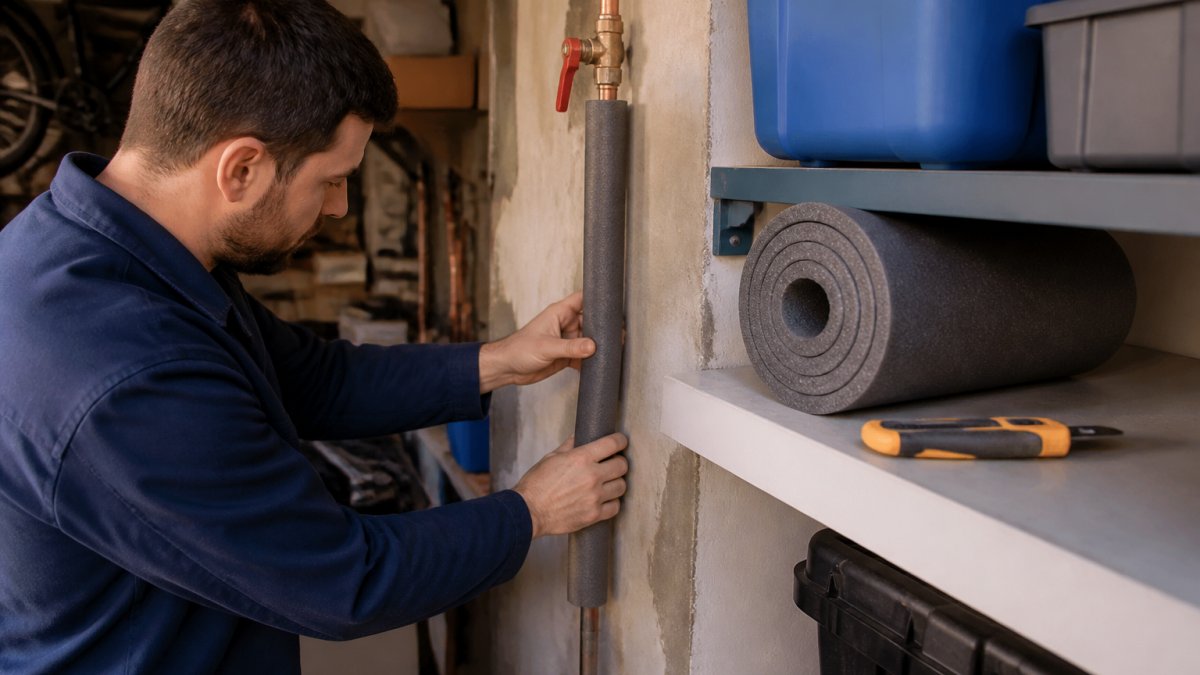
Which Pipes to Prioritize First
Start with pipes that sit closest to outside air. A pipe against an exterior wall freezes before one buried in a warm interior chase. Also prioritize any pipe that feeds a bathroom or kitchen on an outside wall.
Pipe Sleeves vs. Insulation Wrap vs. Heat Tape
Each option fits a different problem. Here's how they compare:
| Product | Best For | Watch Out For |
|---|---|---|
| Foam pipe sleeves | Straight runs, easy access | Leaves gaps at joints and elbows |
| Insulation wrap | Odd angles, tight corners | Needs careful overlap to work |
| Heat tape | Pipes prone to freezing | Needs power; follow the label exactly |
Best for: straight, accessible pipes. Skip if: the pipe sits behind drywall with no access.
Step 2: Seal Cracks and Openings That Let Cold Air In
Cold air finds every gap. Seal cracks and openings around pipes, vents, and wiring where they pass through exterior walls. Use caulk or expanding foam rated for the job.
Check these spots:
- Where pipes enter the house from outside
- Foundation vents and sill plates
- Dryer vents and cable holes
- Gaps under doors near plumbing
Sealing gaps does double duty. It keeps cold air off your pipes and lowers your heating bill.
Step 3: How to Winterize Outdoor Faucets and Hose Bibs
Outdoor faucets freeze before anything inside. Disconnect hoses first, then drain them and store them indoors.
Next, shut off the indoor valve that feeds each hose bib. Open the outdoor faucet to let remaining water drain out. Install a faucet cover over the spigot for extra protection.
Watch out: skipping the indoor shutoff leaves water sitting in the line between the valve and the outside wall. That trapped water is exactly what splits the pipe.
Step 4: How to Prevent Pipes From Freezing in an Occupied Home
Keeping the heat on is the simplest defense, and the details matter. Set your thermostat to at least 60°F, day and night, even when you're away. A colder house means colder pipes, and the pipes most at risk are the ones running through exterior walls, unheated garages, crawl spaces, and attic knee walls, not the ones in the middle of a warm room.
Treat 60°F as a floor, not a target, and leave it there through the cold season.
Other habits that help:
- Open cabinet doors under sinks on exterior walls so warm room air reaches the pipes
- Let a thin trickle run from the faucet furthest from your main shutoff valve on the coldest nights, moving water freezes more slowly than still water
- Keep the garage door closed if water lines run through it
- Leave interior doors open so heat circulates into bathrooms, laundry rooms, and closets that back up to exterior walls
Locate Your Valves Before You Need Them
Prevention fails when you can't find the shutoff in a hurry. Walk the house now and label three things:
- The main shutoff. Usually near the water meter or where the supply line enters the home. Test it while things are calm: turn it off, open a faucet, confirm the water stops, then turn it back on.
- Fixture valves. Most toilets, sinks, and washing machines have a dedicated supply valve behind or beneath the fixture. Know which one feeds which fixture so you can isolate a single line instead of the whole house.
- The water heater valve. The cold-water inlet valve on top of the tank lets you cut supply to the heater without draining the whole system.
A quick phone photo of each valve, labeled by room, saves minutes in an emergency.
Heat Tape and Space Heaters: Safe Use and Limits
Supplemental heat is where well-meaning prep turns dangerous. Heat tape (also sold as heat cable) is designed for exposed pipes and must be plugged in and installed exactly per the label.
Space heaters are not a substitute for pipe insulation.
Watch out: never use an open flame, blowtorch, or charcoal source to warm a pipe.
For a full room-by-room walkthrough, see our guide on preventing frozen pipes in winter.
Step 5: How to Shut Off Water to Your House and Drain the Lines
Knowing how to shut off water to your house protects you in any emergency, and the same skill is the backbone of winterizing a vacant or seasonal property. Find your main shutoff valve now, before you need it. It's usually near the water meter or where the supply line enters the home. Test it while things are calm: turn it off, open a faucet, and confirm the water stops. Then turn it back on.
Occupied vs. Vacant: Two Different Procedures
Most winterization checklists blur two very different jobs. Use the right path for your situation.
Occupied home. Keep the heat on at 60°F or above, insulate and seal as covered above, and leave the water on.
Vacant or seasonal home. If the house will sit empty through freezing weather, a full drain-down is the safer path. Shut off the main supply, drain the lines, and protect the traps.
Full Drain-Down for a Vacant Home
- Shut off the main valve.
- Open every faucet, hot and cold, starting with the highest fixture in the house so air can enter and water can fall.
- Flush all toilets, then empty the tanks and bowls.
- Drain the water heater per the manufacturer's instructions, shut off the power or gas first, connect a hose to the drain valve, and let it empty.
- Open the drain valves on the water heater and any low-point drains in the system.
- Blow compressed air through the lines if your system allows it. A common rule of thumb is to keep pressure modest and blow each branch until it runs dry, but follow the manufacturer's guidance for your system.
- Pour antifreeze made for plumbing systems into traps and toilet bowls. Never use automotive antifreeze.
Winterize the Systems Checklists Overlook
Broad checklists stop at the main valve. These systems freeze too:
- Washing machine. Shut off the hot and cold supply valves behind the machine, disconnect the hoses, and drain them. Water left in the hoses or the pump housing can split.
- Dishwasher. Shut off its supply valve (often under the sink), then run a drain cycle to clear the line.
- Water softener. Follow the manufacturer's bypass and drain procedure; a softener left full of water in an unheated space can crack its resin tank.
- Sump pump. Check that the discharge line slopes away from the foundation and isn't holding water that can freeze and block the pump.
- Irrigation system. Shut off the supply, drain the backflow preventer and zone lines, and blow out the system with compressed air if you have the equipment. This is the step most often skipped and the one that produces spring surprises.
Protect the Traps and Toilets
After draining, pour plumbing antifreeze into every sink, tub, and shower trap and into each toilet bowl.
Ask a neighbor to check the house during cold snaps. A small leak caught early beats a flooded basement found in spring.
Watch out: if you drain the system but leave the water heater powered, you can damage the heating element. Shut off power or gas to the heater before you drain it.
What to Do if Pipes Freeze: Thawing and Emergency Steps
A frozen pipe isn't a disaster yet. A burst pipe is. Act fast and shut off the water first if you see a split or water spraying.
Thaw a frozen pipe safely:
- Open the nearest faucet so melting water has somewhere to go
- Apply gentle heat with a hair dryer, heat lamp, or wrapped towels
- Work from the faucet end back toward the frozen section
- Never use an open flame or a blowtorch
Watch out: thawing too fast can crack the pipe. Slow, even heat is the rule.
If a pipe has already burst, get the water off and call for help. Our guide on what to do when a pipe bursts in a wall walks through the first steps. For urgent situations, our emergency plumbing services line is open around the clock.
Red Cross winter storm safety checklist
Schedule a Winter Plumbing Inspection Before the Cold Hits
A professional inspection catches problems you can't see. A licensed technician checks pipe insulation, valve condition, water pressure, and the water heater before the first freeze.
Here's what a winter inspection typically covers:
- Insulation gaps on exposed pipes
- Main shutoff valve operation
- Outdoor faucet and hose bib condition
- Water heater age and settings
- Signs of small leaks or corrosion
Our residential plumbing maintenance checklist gives you the full list to work through. If you're ready to book, our guide on how to choose a reliable plumber covers what to ask before you hire.
At DC Plumbing Heating and Air Conditioning, we offer upfront pricing, licensed technicians, and warranties on parts and installation services. No surprise fees.
U.S. Department of Energy tips on insulating water pipes
Frequently Asked Questions
What temperature should I keep my house to prevent pipes from freezing?
Keep indoor temperatures at 60°F or higher, day and night, even when you are away. Pipes in exterior walls and unheated spaces sit closer to outdoor temperatures than the thermostat reading suggests, so a lower setting gives cold air more room to win. Open cabinet doors under sinks on exterior walls so warm air reaches those pipes, and leave interior doors open to keep air moving between rooms.
Should I leave faucets dripping when temperatures drop?
A slow drip on fixtures served by exposed pipes relieves pressure and reduces the chance of a burst if ice forms. A pencil-thin stream is enough; you do not need full flow. This is a stopgap for a cold snap, not a substitute for insulation and sealing air leaks. If you rely on drips every winter, treat that as a signal to insulate the pipes properly or call a licensed plumber to assess them.
What should I do if a pipe freezes?
Shut off the main water supply first, then open the nearest faucet and warm the pipe gently with a hair dryer, heat lamp, or wrapped towels. Work from the faucet end toward the frozen section. Never use an open flame, and do not use a space heater unattended near combustibles. If the pipe is behind a wall or you cannot find the freeze point, call a licensed plumber before thawing further.
When should I call a plumber to winterize my home?
Call a plumber if you have pipes in hard-to-reach crawl spaces, a vacant or seasonal property, a tankless water heater, or a history of frozen lines. A licensed technician can locate the main shutoff, drain and blow out lines properly, and check that heat tape and insulation are installed safely. For South Orange County homes, booking an inspection before the first cold night avoids emergency calls later.
Winter doesn't wait for a convenient weekend. A frozen pipe can turn a quiet night into an emergency call, and the repairs can cost far more than an afternoon of prep. DC Plumbing Heating and Air Conditioning offers 24/7 emergency service, upfront pricing with no surprise fees, and warranty-backed workmanship on every job. Get started with DC Plumbing Heating and Air Conditioning and protect your home plumbing for winter before the first freeze hits.