 how-to
Residential Plumbing Maintenance Checklist 2026
Table of Contents
- What to Include in Your Residential Plumbing Maintenance Checklist
- Checking for Leaks and Signs of Hidden Water Leaks
- Testing Water Pressure and Inspecting Shut-Off Valves
- DIY Plumbing Maintenance Tips You Can Do Yourself
- Plumbing Maintenance Tools for Homeowners
- When to Call a Professional Plumber
- Annual Inspection Checklist and Preventative Maintenance
- Frequently Asked Questions
Last Updated: September 24, 2026
What to Include in Your Residential Plumbing Maintenance Checklist
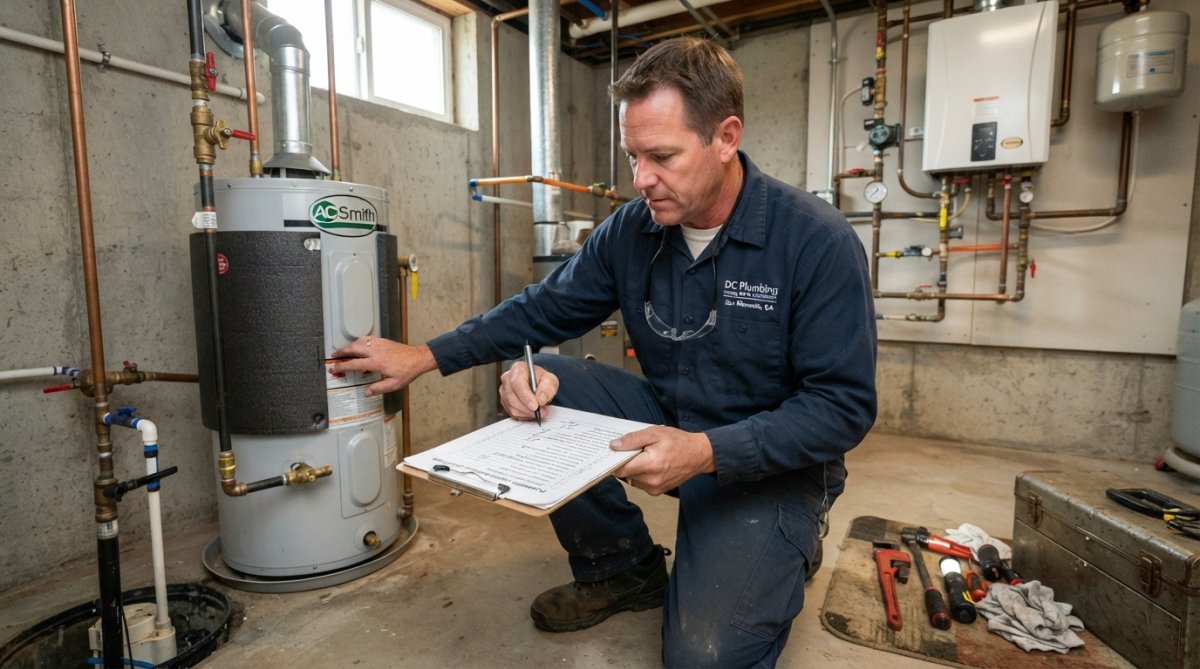
A solid residential plumbing maintenance checklist prevents costly repairs and water damage before they start. At DC Plumbing Heating and Air Conditioning, we help homeowners catch small problems early, often preventing costly emergency repairs. The key is knowing what to inspect and when.
Most homeowners ignore their plumbing until something breaks. A few minutes each month catches issues when they're cheap to fix.
Monthly Inspection Items
Check these items once a month. It takes less than 15 minutes.
- Look under sinks for drips or wet spots
- Listen for running water when no taps are on
- Check visible pipes for corrosion or staining
- Test all faucets for steady water pressure
- Inspect toilet tanks for slow leaks (add food coloring to tank water; if it appears in the bowl without flushing, you have a leak)
- Feel exposed pipes for unusual temperature changes
The under-sink area is where most leaks hide, moisture buildup signals a slow leak before mold appears.
Quarterly and Seasonal Tasks
Every three months, add these checks to your routine.
- Run water in rarely used drains to keep traps full
- Inspect basement or crawl space pipes for moisture
- Check water heater for rust or sediment buildup around the base
- Test the pressure relief valve on your water heater
- Look for water stains on ceilings or walls
- Examine exterior faucets and hose connections for damage
Spring and fall are ideal times for seasonal maintenance. Before winter, insulate exposed pipes in unheated areas. Before summer, test outdoor water systems and check for debris in drain-waste-vent openings.
Checking for Leaks and Signs of Hidden Water Leaks
A small drip wastes 3,000 gallons per year (the EPA). Hidden leaks cause structural damage, mold, and rot that gets expensive fast.
Visible Leak Inspection Points
Start with what you can see. Check these spots first.
- Under every sink and toilet base
- Around water heater connections
- Behind washing machine hoses
- At water meter for moisture
- Joint connections where pipes meet fixtures
- Supply lines entering the home
Corrosion around pipe joints signals failure is coming. Staining on drywall or wood means water is traveling where it shouldn't. Soft spots in subfloors indicate active water damage.
Hidden Damage Indicators
The real danger is what you can't see. Watch for these warning signs.
- Water stains on ceilings below bathrooms
- Discolored patches on walls or floors
- Musty odors in cabinets or crawl spaces
- Soft or spongy drywall
- Unusually high water bills
- Mold growth in corners or around baseboards
- Foundation cracks near plumbing runs
If your water bill jumped without explanation, you likely have a hidden leak. Check your water meter: turn off all water sources, then watch if the meter moves. Movement means a leak somewhere in your system.
Testing Water Pressure and Inspecting Shut-Off Valves
Water pressure that's too high damages fixtures and pipes. Pressure that's too low means weak flow and slow drains. The sweet spot is 40-60 PSI.
Buy a water pressure gauge at any hardware store for under $15. Screw it onto an outdoor faucet. Turn the valve fully open. Read the pressure. If it's above 80 PSI, you need a water pressure regulator installed. If it's below 30 PSI, you may have a supply line issue.
Your main shut-off valve is your emergency tool. Test it twice yearly. Turn it off, then back on slowly.
DIY Plumbing Maintenance Tips You Can Do Yourself
You don't need a plumber for every small task. These maintenance jobs save money and prevent bigger problems.
Drain Cleaning and Flushing (Eco-Friendly Method)
Drains clog from sediment buildup, hair, and grease. Clean them regularly without harsh chemicals.
Monthly drain flush:
- Remove standing water from the drain
- Pour one cup of baking soda down the drain
- Follow with one cup of white vinegar
- Cover the drain and wait 30 minutes
- Flush with hot water
Water Heater Maintenance and Efficiency Monitoring
Your water heater works hard and needs care. Flush it annually to maintain efficiency and extend lifespan.
- Turn off the power (electric) or gas (gas heater)
- Turn off the cold water supply valve
- Connect a garden hose to the drain valve at the tank base
- Open the drain valve and let water run until clear
- Close the valve, turn water back on, and restore power
This removes sediment that reduces efficiency and shortens lifespan.
Faucet and Toilet Functionality Checks
Dripping faucets waste water and money. A single drip per second wastes 2,700 gallons yearly.
Test every faucet:
- Turn the handle fully off
- Listen for drips for 30 seconds
- Check under the sink for leaks
Installing and Testing Smart Water Leak Detectors
For homeowners with smart home systems, water leak detectors are a practical 2026 upgrade that prevents costly damage.
Plumbing Maintenance Tools for Homeowners
You need only a few tools to handle basic plumbing maintenance.
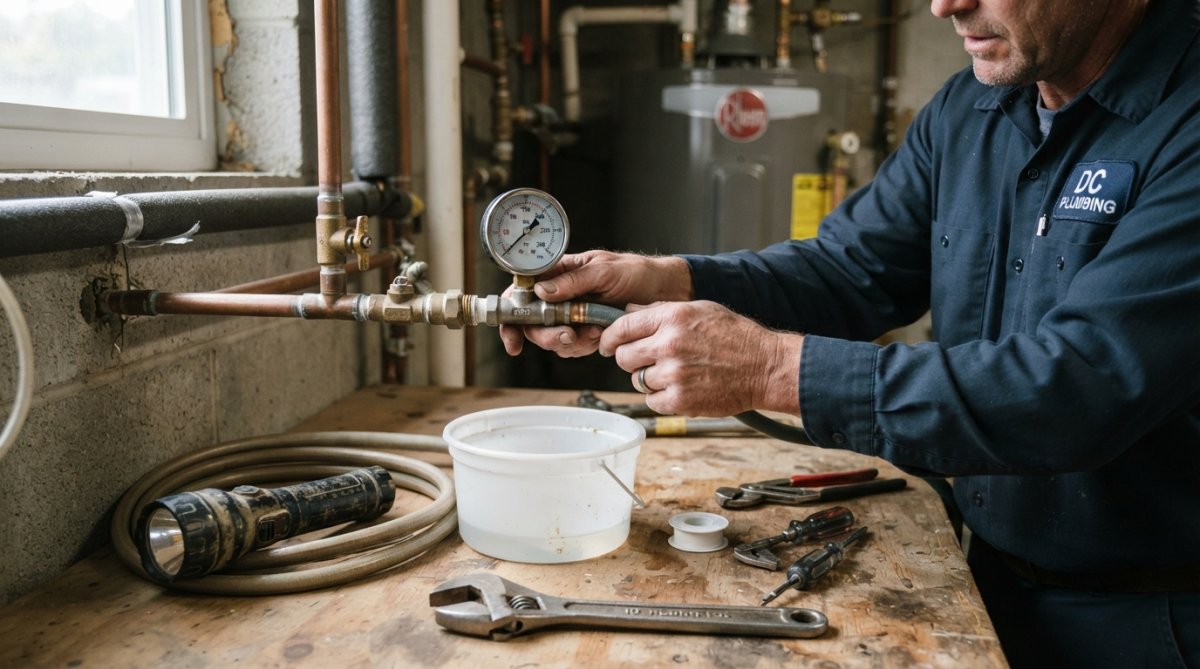
- Water pressure gauge, Tests PSI at outdoor faucets
- Adjustable wrench, Tightens and loosens connections
- Flashlight, Illuminates dark under-sink areas
- Bucket, Catches water during inspections
- Plumbing snake, Clears minor clogs
- Inspection mirror, Views pipes behind appliances
- Tape measure, Measures pipe sizes and distances
- Pipe wrench, Grips round pipes for loosening
When to Call a Professional Plumber
Knowing when to call a licensed professional protects your home, wallet, and insurance coverage. Unpermitted plumbing work can void insurance claims or create liability issues when selling.
Critical Issues Requiring Immediate Attention
Call a plumber immediately for these problems.
- No water in the entire house
- Sewage smell inside or outside the home
- Water backing up from drains or toilets
- Visible water damage spreading on walls or ceilings
- Gas smell near water heater or pipes
- Burst or actively leaking pipes
- Water heater producing no hot water
These aren't minor inconveniences. They indicate serious system failures that worsen hourly. Delayed action means structural damage, mold, and expensive repairs.
The DIY vs. Professional Decision Framework
Not every plumbing task requires a professional, but some do. Use this framework to decide:
Call a professional if:
- The repair involves the main water line or sewer line
- Work requires a permit under local building codes
- The repair is inside a wall, ceiling, or foundation
- You lack the specific tool required
- The problem is recurring after your DIY fix
- Your homeowner's insurance requires licensed contractor work
- You're uncertain about local plumbing codes
You can safely DIY if:
- The repair is visible and isolated (a single faucet, toilet flapper, or drain trap)
- No permits are required (most fixture repairs and maintenance tasks don't need them)
- You have the correct tools and clear instructions
- The work is reversible (you can undo it if needed)
- It's routine maintenance (drain cleaning, water heater flushing, pressure testing)
Insurance and Code Compliance Considerations
Check your homeowner's insurance policy before starting repairs, some require licensed contractor work. Unpermitted work can result in denied claims or expensive remediation if discovered during inspection or sale. When in doubt, call a professional for a consultation.
Complex Repairs Beyond DIY Scope
These jobs need professional expertise, specialized tools, and code compliance knowledge.
- Sewer line issues, backups, or camera inspection
- Whole-house water pressure problems or regulator installation
- Water heater replacement, repair, or anode rod replacement on sealed units
- Main shut-off valve replacement or repair
- Pipe replacement, rerouting, or rough-in work for new fixtures
- Septic system maintenance or repair
- Backflow preventer installation or testing
- Gas line work (always requires a licensed professional)
Annual Inspection Checklist and Preventative Maintenance
Schedule one professional inspection yearly. Think of it like an oil change for your plumbing system.
Professional Inspection Priorities
A licensed plumber checks what you can't see or safely test alone.
- Entire plumbing system for corrosion or wear
- Water pressure and flow rates
- Water heater condition and efficiency
- Sewer line integrity (camera inspection if needed)
- Pipe joints and connections for leaks
- Shut-off valves and backflow preventers
- Drain-waste-vent system function
- Exposed pipes in basements and crawl spaces
Smart Home Integration and Eco-Friendly Upgrades
Modern plumbing technology makes maintenance easier and reduces water waste.
Frequently Asked Questions
What should I include in a residential plumbing maintenance checklist?
A comprehensive residential plumbing maintenance checklist includes monthly inspections of visible pipes and fixtures for leaks, quarterly drain cleaning, water pressure testing, shut-off valve verification, water heater flushing, and toilet/faucet functionality checks. Annually, inspect your sewer line, anode rod in your water heater, and all exposed pipes for corrosion. Check for signs of hidden water damage like discoloration, mold, or moisture accumulation around cabinets and walls. Document all maintenance activities and keep records for warranty purposes.
How often should I perform routine plumbing maintenance?
Monthly visual inspections of under-sink cabinets, visible supply lines, and drain areas take just 10 minutes and catch small problems early. Quarterly tasks include drain cleaning and water pressure testing. Seasonal maintenance before winter includes pipe insulation and shut-off valve operation checks. Annual professional inspections catch issues with your sewer line, water heater sediment buildup, and pressure relief valve function. This schedule prevents costly emergencies and extends system life.
Can I perform my own plumbing maintenance or do I need a professional?
Homeowners can handle basic maintenance: flushing drains with hot water, cleaning faucet aerators, checking for visible leaks, and testing water pressure with a simple gauge. However, water heater flushing, sewer line inspection, anode rod replacement, and pressure regulator adjustment require professional expertise. If you find corrosion, persistent leaks, water hammer, or signs of hidden water damage, call a licensed plumber immediately. Attempting complex repairs risks water damage and voids warranties.
What are the most common signs of plumbing failure I should watch for?
Watch for slow drains, persistent odors from drain-waste-vent systems, water pressure drops, visible corrosion on copper piping or pipe joints, discolored water, and hard water deposits on fixtures. Hidden warning signs include moisture accumulation in cabinets, soft spots in walls or ceilings, mold growth, and unusually high water bills. Water hammer (banging sounds in pipes), sump pump failures, and leaking shut-off valves indicate system stress. Any of these warrant professional inspection to prevent major water damage.