 How-to
7 Steps to Find Your Main Water Shut Off Valve Fast
Last Updated: November 18, 2026
Quick Summary
To find your main water shut off valve, check where the water supply line enters your home: a basement or crawlspace wall facing the street, a utility room near the water heater, or an outdoor meter box near the sidewalk. Turn the handle clockwise until it stops, then open a faucet on the lowest floor to confirm the water stops.
- Gate valves need several full turns, typically 4 to 8, while ball valves need a quarter turn.
- Test your valve twice a year, in spring and fall, to confirm it still works.
- Never force a stuck handle past its stopping point or use a pipe wrench on the valve body.
- A round wheel means a gate valve; a flat lever means a ball valve.
- If the indoor valve fails and water is running, shut off at the street meter instead.
Table of Contents
- Why Every Homeowner Needs to Know Where the Main Water Shut Off Valve Is
- Where Is the Main Water Shut Off Valve in a House?
- How to Turn Off Water to a House: A Step-by-Step Walkthrough
- What to Do If a Water Shut Off Valve Is Stuck
- How to Test a Main Water Shut Off Valve Before You Need It
- Gate Valves vs. Ball Valves: What Your Shut Off Valve Looks Like
- Frequently Asked Questions
Why Every Homeowner Needs to Know Where the Main Water Shut Off Valve Is
Knowing how to find main water shut off valve step by step is the single most useful plumbing skill a homeowner can learn. Knowing where the main shutoff is lets you act immediately, and stopping a burst pipe also means limiting water damage while you address the leak.
Water emergencies in South Orange County follow a familiar pattern. Homeowners who know their valve location can stop the damage quickly. Those who don't may be left waiting for help while water spreads.
Here is the difference in plain terms:
- Valve found fast: water stops, damage stays small
- Valve unknown: water runs until a pro arrives, and damage spreads
A burst supply line can release water far faster than most people expect. Every minute counts. The American Red Cross guidance on home water damage stresses acting quickly when water escapes.
Below, we'll show you exactly how to locate, test, and operate your valve so you're ready before you need it. If a pipe has already burst, read our guide on what to do when a pipe bursts in a wall while you search.
Where Is the Main Water Shut Off Valve in a House?
The main water shut off valve is usually located where the water supply line enters your home. That means a basement wall, a utility closet, or an outdoor meter box near the street.
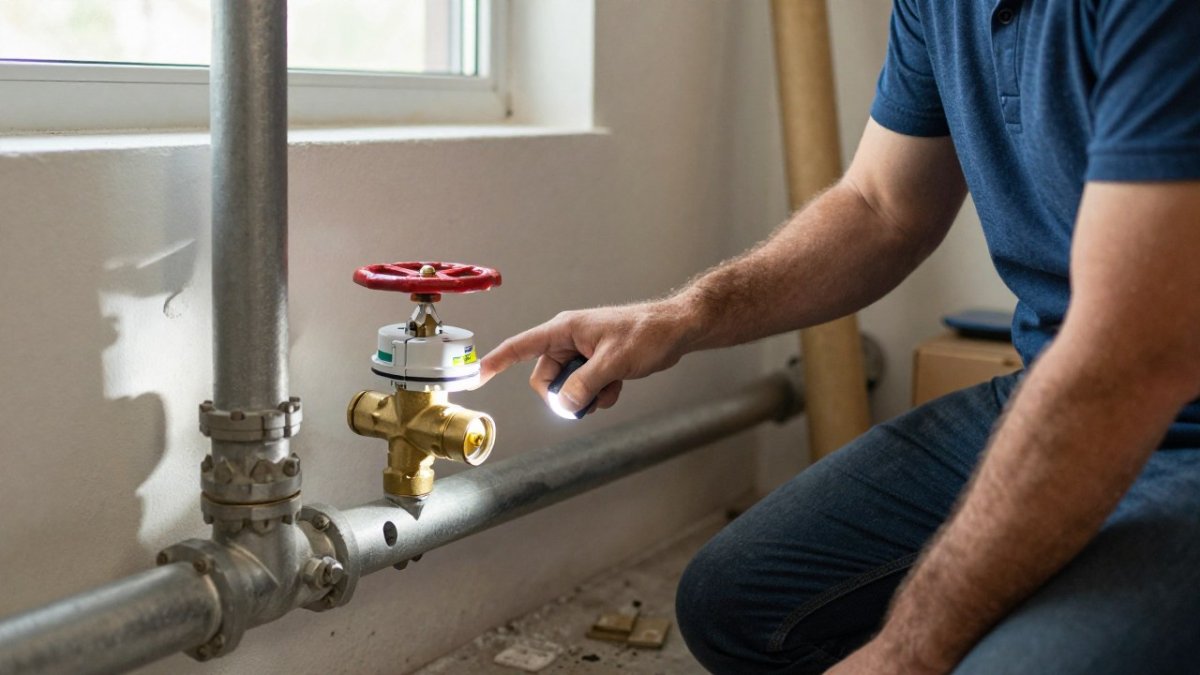
Common Locations Inside the Home
Start your search indoors. Check these spots first:
- Basement or crawlspace, on the wall facing the street
- Utility room, near the water heater or furnace
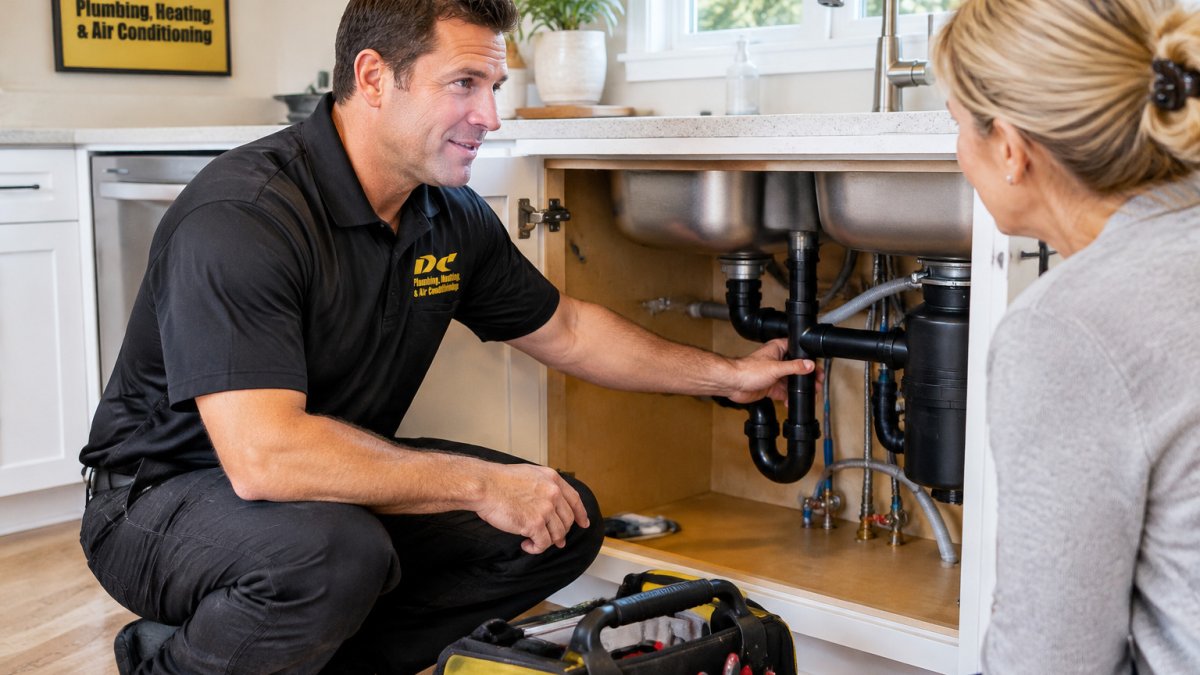
- Under the kitchen sink, for older setups
- A closet or panel near where the water line enters
Look for a pipe coming through a wall or floor with a valve handle on it. That handle is your target.
Outdoor and Basement Locations
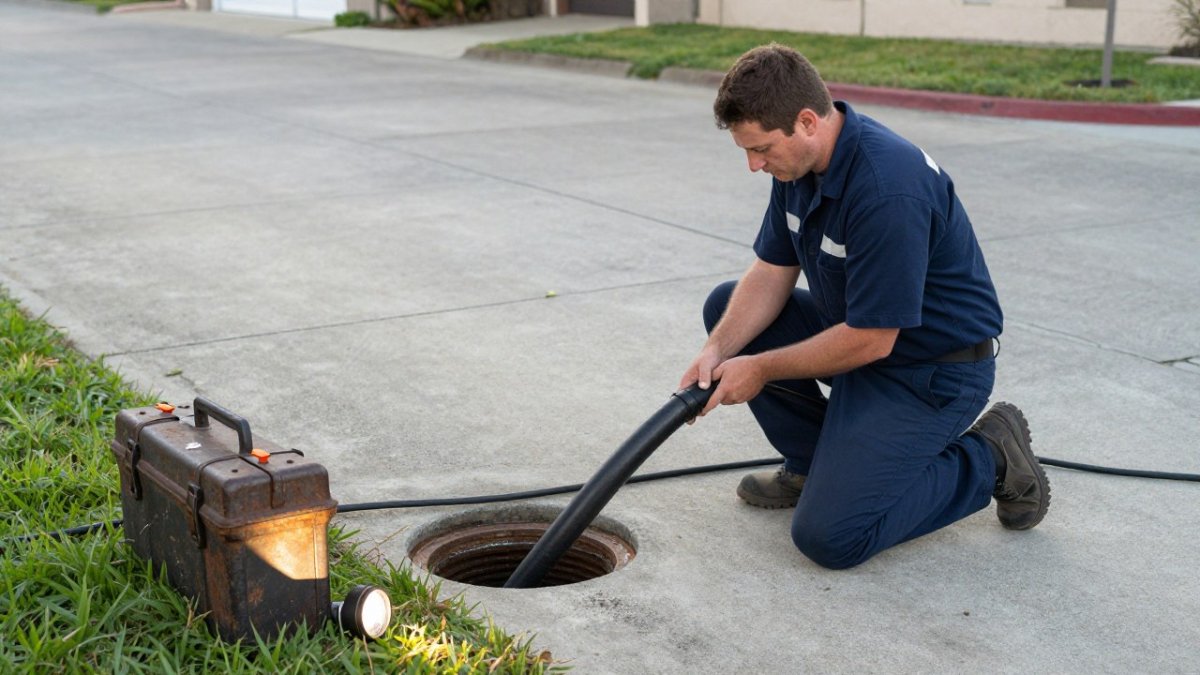
Many homes have the valve outside, near the property line. Look for a concrete or plastic box set into the ground, often near the sidewalk. Inside, lift the lid and you'll see the valve and meter.
In cold climates, exposed pipes and valves in basements and outdoor boxes are at risk of freezing. Our guide on preventing frozen pipes in winter covers how to protect those spots before temperatures drop.
How to Turn Off Water to a House: A Step-by-Step Walkthrough
Turning off the water takes about a minute once you know where the valve is. Follow these steps in order.
- Find the valve using the locations above.
- Clear the area so you can reach the handle fully.
- Turn the handle clockwise until it stops. Gate valves need several full turns. Ball valves need a quarter turn.
- Open a faucet on the lowest floor to release pressure and confirm the water stops.
- Flush a toilet to drain remaining water from the tank and lines.
Watch out: never force a handle past its stopping point. If it won't budge, stop and read the next section.
What to Do If a Water Shut Off Valve Is Stuck
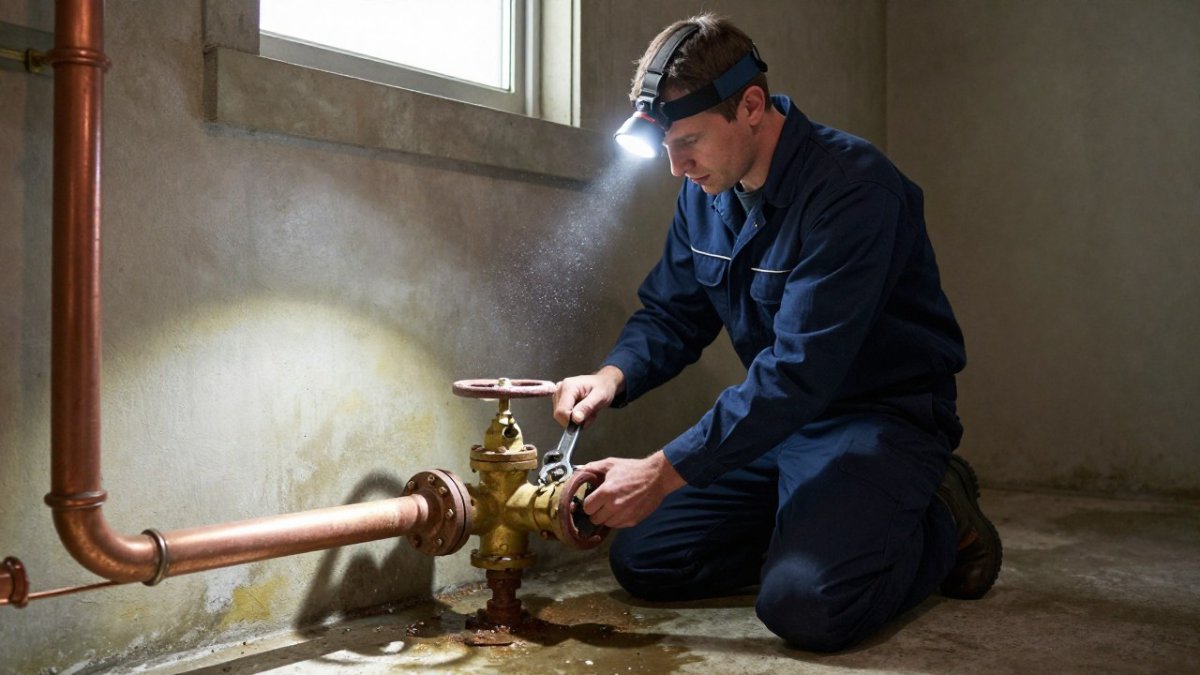
A stuck valve is common in older homes, especially gate valves that haven't moved in years. Don't panic, and don't crank harder. Too much force can snap the stem and turn a small problem into a flood.
Try these steps first:
- Apply a penetrating lubricant around the stem and wait
- Use a wrench on the handle for extra use, gently
- Rock the handle back and forth in small movements
- Tap the valve body lightly to loosen mineral buildup
If the valve still won't move and water is running, shut off at the street meter instead. Our emergency plumbing services team responds around the clock when a valve fails and water won't stop.
How to Test a Main Water Shut Off Valve Before You Need It
A valve you've never turned may not work when it matters. Test it twice a year, in spring and fall.
The test is simple:
- Turn the valve off fully.
- Open a nearby faucet and confirm the flow stops.
- Turn the valve back on and check for leaks around the stem.
If the handle turns hard or you see drips, note it for repair. Testing is also a core part of seasonal prep. Our 7-step winter plumbing checklist walks through the full routine, valve test included.
Gate Valves vs. Ball Valves: What Your Shut Off Valve Looks Like
Your valve is almost certainly one of two types. Knowing which you have tells you how it operates, how it fails, and whether a stiff handle is normal or a warning.
| Feature | Gate Valve | Ball Valve |
|---|---|---|
| Handle shape | Round wheel | Flat lever |
| How it turns | Several full turns (typically 4-8) | Quarter turn |
| Internal mechanism | A metal gate raised or lowered across the flow path | A drilled sphere rotated in a seat |
| Common failure | Stuck stem, packed mineral buildup, gate corrosion | Lever seizes, seat scoring, handle stripped |
| Failure behavior | Can stick partly open, so water never fully stops | Usually fails fully open or fully closed |
| Best for | Older homes | Newer installs |
Gate valves use a round wheel and raise or lower a metal gate inside the pipe.
Ball valves use a flat lever that rotates a drilled ball a quarter turn. They are faster and more reliable, which is why most new installs use them.
A common mistake is assuming a stiff wheel means a broken valve. Often it just needs gentle movement and lubricant.
Identify Your Valve by Pipe Material and Age
The valve body and the pipe it sits on tell you what to expect. Use this material-by-material guide:
- Galvanized steel pipe (common pre-1960s): Expect a brass gate valve with a round wheel. Internal corrosion narrows the pipe and welds the gate in place. Treat any movement as a win and plan to replace the valve, not just free it.
- Copper pipe (common 1960s-1990s): Usually a brass gate or ball valve with soldered connections. The valve itself often outlasts the solder joints; watch for green crust at the fittings, which signals a slow leak.
- PEX or CPVC (common 1990s-present): Almost always a ball valve with a lever, often a plastic or brass body. These are the easiest to operate but the lever can crack in cold utility spaces.
- Cast iron or clay drain-adjacent valves: Rare on the supply side, but older utility rooms sometimes mix materials. If the valve body is painted over, do not assume the paint is cosmetic, it can hide pitting.
If you cannot see the valve body because it is wrapped in insulation or buried behind drywall, look for the handle shape first.
(https://blog.dcplumbing.net/how-to-choose-a-reliable-plumber-2026-guide) explains what to look for.Don't wait for a burst pipe to test your luck.
A stuck or leaking main valve leaves your home one emergency away from serious water damage. DC Plumbing Heating and Air Conditioning can inspect, repair, or replace your valve before that happens.
Frequently Asked Questions
Where is the main water shut-off valve usually located?
Most homes have the main water shut off valve near the water meter, which is often in a basement, utility closet, garage, or outside near the property line. In warmer climates, it may sit in a curbside box or an exterior wall enclosure. Look for a brass valve on the pipe leading into the house. If you cannot find it after checking these spots, a licensed plumber can trace the line and show you exactly where it is.
How do I know which valve shuts off water to the whole house?
The main water shut off valve sits on the pipe that feeds every fixture, usually right after the water meter. To confirm, turn on a faucet and close the valve. If water stops at every tap in the house, you have found the main. If only one fixture loses water, that valve controls a single branch line. Testing this way takes two minutes and prevents confusion during an emergency.
What should I do if my main water shut off valve is stuck?
Do not force a stuck valve with a pipe wrench or excessive pressure, since that can break the stem or cause a leak. Spray a penetrating lubricant around the stem, wait, and try turning gently with the correct handle. If it still will not budge, call a licensed plumber. A seized main water shut off valve is a common problem in older homes, and a professional can free or replace it before a real emergency.
Should I call a plumber if I cannot find or operate the main shut-off valve?
Yes. If you have checked the meter area, basement, garage, utility closet, and exterior walls without success, a plumber can trace the line and identify the valve for you. The same applies if the valve is stuck, corroded, or leaking. Getting it sorted now means you will not be searching for it at 2 a.m. while water is spreading across the floor.