 How-to
Signs Your Water Pressure Is Too High: A Homeowner's Guide
Quick Summary
Signs your water pressure is too high include pipes banging when faucets shut off, faucets that drip even when closed, leaking pipe joints, bursting washing machine hoses, and showerheads that spray uncomfortably hard. A typical home runs best between 40 and 80 PSI, and readings above 80 PSI are a concern.
- A typical home runs best between 40 and 80 PSI.
- Readings above 80 PSI are flagged as a concern by many plumbers.
- Banging pipes when a faucet shuts off point to water hammer.
- Washing machine hoses that bulge or burst can signal excess pressure.
- Use a water pressure gauge on an outdoor hose spigot to get a real reading.
Table of Contents
- Warning Signs Your Water Pressure Is Too High
- How to Check Your Water Pressure With a Water Pressure Gauge
- Why Is My Water Pressure So High All of a Sudden, and What Damage Can It Cause?
- Frequently Asked Questions
Warning Signs Your Water Pressure Is Too High
Last Updated: November 19, 2026
Water pressure that is too high can quietly damage your plumbing and appliances. A typical home runs best between 40 and 80 PSI, and many plumbers flag readings above 80 PSI as a concern. Catching these problems early can prevent costly repairs. Because a pressure reading can reveal a problem before leaks or appliance damage appear, checking yours is a practical next step, and Kevin’s Soft Water can help you understand what to look for.
Watch for these common signs:
- Banging or hammering pipes when a faucet shuts off (water hammer)
- Faucets that drip or leak even when fully closed
- Pipe joints or fittings that leak for no clear reason
- Washing machine hoses that burst or bulge
- Shower heads that spray hard enough to feel uncomfortable
A common mistake is ignoring one small leak. High pressure forces water through worn washers and seals, so the leak usually gets worse over time.
The article lists several signs that water pressure may be too high, which you can compare at a glance.
| Sign | What it points to | Note |
|---|---|---|
| Banging pipes when a faucet shuts off | Water hammer | Sounds like hammering |
| Faucets dripping when closed | Worn washers and seals | High pressure forces water through |
| Leaking pipe joints or fittings | Excess pressure | Leak with no clear cause |
| Washing machine hoses bursting or bulging | Excess pressure | Can fail suddenly |
| Showerheads spraying hard | Excess pressure | Uncomfortable to feel |
| Typical safe range | 40 to 80 PSI | Above 80 PSI is a concern |
How to Check Your Water Pressure With a Water Pressure Gauge
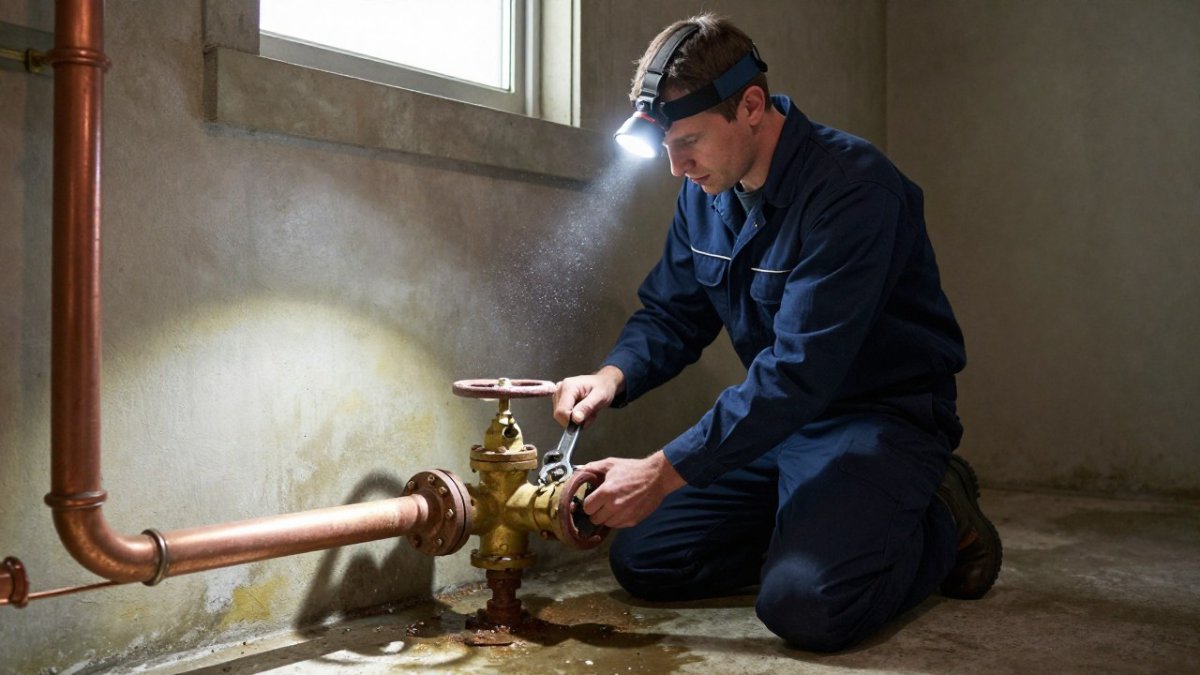
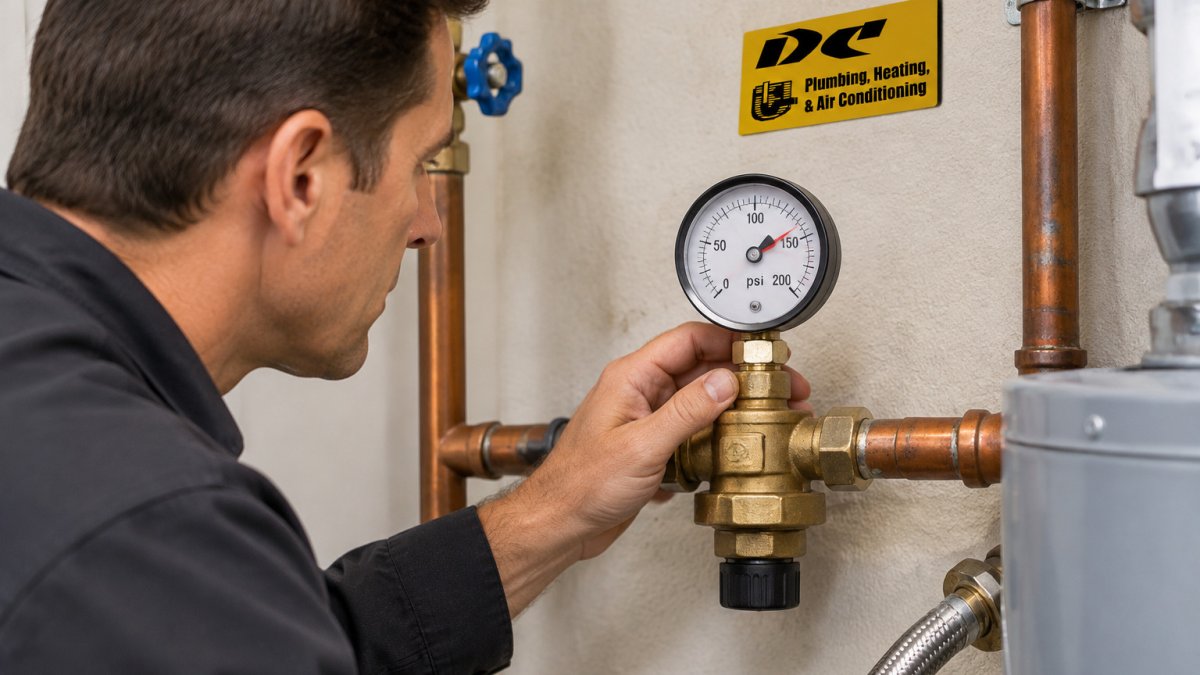
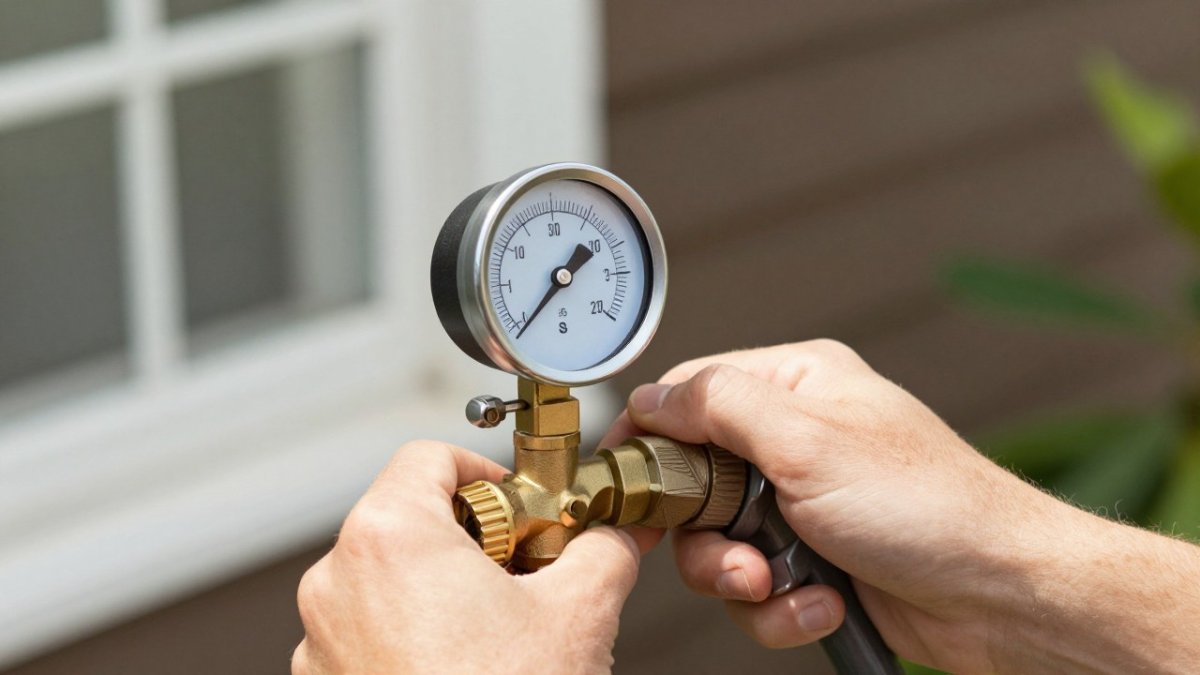
A water pressure gauge gives you a real number, so you aren't guessing. Before you test at the source, find your main shut-off valve so you can adjust or check pressure safely. Screw one onto an outdoor hose spigot, open the tap fully, and read the needle. Compare it to the 40 to 80 PSI range, then check again at a different time of day.
Why Is My Water Pressure So High All of a Sudden, and What Damage Can It Cause?
A sudden jump can come from a pressure-reducing valve (PRV) on the main line failing or from a change in street pressure. A hard freeze or burst line can cause a similar spike, so you can learn how to protect pipes from freezing. High pressure can also strain pipes and cause hidden leaks, so you may want to check for slab leak symptoms. Left alone, high pressure can damage pipes and appliances, so it is wise to have a licensed plumber look at it promptly. If you are already seeing damage, learn what to do when sewage backs up and other urgent steps.
Need help now? Call DC Plumbing Heating and Air Conditioning today.
Frequently Asked Questions
How do I know if my water pressure is too high?
The most reliable way is to measure it. Attach a water pressure gauge to an outdoor spigot or washing machine hose bib and read the PSI. Readings above 80 PSI are considered too high by most plumbers, and residential systems are generally kept between 40 and 80 PSI. If you also hear banging pipes, see dripping faucets, or notice appliances wearing out early, high pressure is a likely cause. Test the reading at a time when no water is running in the house.
Is 60 PSI water pressure too high?
No. A reading of 60 PSI falls within the typical residential range of 40 to 80 PSI, so it is generally considered acceptable. Problems tend to start when readings climb above 80 PSI. Even at 60 PSI, however, you may still notice symptoms such as water hammer if fixtures close quickly, so it is worth checking how the pressure behaves when you turn taps on and off.
How can I fix high water pressure in my house?
The usual fix is a pressure-reducing valve (PRV) installed where the main water line enters the home. A licensed plumber can test the incoming pressure, install or adjust the PRV, and confirm the final reading stays in a safe range. Attempting to adjust the valve without the right tools and knowledge can cause leaks or uneven pressure, so a professional installation is the safer choice. DC Plumbing Heating and Air Conditioning can assess your system; contact us for current service pricing and a quote.