 How-to
5 Slab Leak Symptoms Every Homeowner Should Know
Last Updated: November 3, 2026
Quick Summary
To detect a hidden slab leak, shut off every fixture and appliance, then read your water meter twice over 20 to 30 minutes, including the small leak dial. If the dial moves with nothing running, water is escaping and a slab leak is likely.
- A sudden water bill jump with no change in habits is the most common early clue.
- A warm spot on the floor that stays warm points to a hot-water line leak.
- Close the house-side shutoff valve and repeat the meter reading to isolate the service line.
- Rule out toilet flapper leaks with dye in the tank before assuming a slab leak.
- Do not pull up flooring or drill test holes yourself; call a licensed plumber for detection.
Table of Contents
- Slab Leak Symptoms: 5 Warning Signs Under Your Feet
- How to Detect Hidden Slab Leak in Home DIY: A Safe Water-Meter Test
- What to Do Immediately After You Suspect a Slab Leak
- Slab Leak Detection Methods: Purpose and Limitations Compared
- Slab Leak Repair Cost: What Drives the Price and What to Expect
- When Symptoms Require Urgent Professional Attention
- Schedule a Licensed Leak Inspection with DC Plumbing
- Frequently Asked Questions
Slab Leak Symptoms: 5 Warning Signs Under Your Feet
A slab leak is a water leak in a pipe running beneath your home's concrete foundation. Left alone, it can warp floors, crack the slab, and feed mold for months before you notice. A small hidden water leak can quietly damage a home's structure for weeks before it is noticed.
Here are the five symptoms we see most often:
- A water bill that jumps for no clear reason
- The sound of running water when everything is off
- Warm or hot spots on the floor
The first two usually show up together. The last three mean the leak has likely been running a while.
Unexplained Water Bill Spikes and Running-Water Sounds
Start with your water bill. A sudden jump in usage with no change in habits is the single most common early clue. Check the usage graph on your statement, not just the total.
Then listen. Turn off every faucet, appliance, and irrigation zone. In a quiet house, a hissing or rushing sound under the floor points to a pressurized pipe losing water.
- Hissing often means a pinhole leak in a hot-water line
- Rushing or trickling suggests a bigger break
- Nothing at all doesn't rule a leak out, especially under thick flooring
Warm Spots, Damp Flooring, and Foundation Cracks
A hot-water line leak heats the slab from below. Walk the floor barefoot in the morning and compare rooms.
Damp flooring, cupped tile, or a musty, mildew smell near baseboards are next. So are cracks that appear suddenly in tile grout or along the slab edge.
Watch out: covering a damp spot with a rug or sealer traps moisture and speeds up mold growth. Leave it exposed and call for an inspection.
How to Detect Hidden Slab Leak in Home DIY: A Safe Water-Meter Test
The safest homeowner test is a water-meter reading with every fixture shut off. It costs nothing, takes about 20 to 30 minutes, and tells you whether water is still moving through your plumbing system when nothing should be using it.
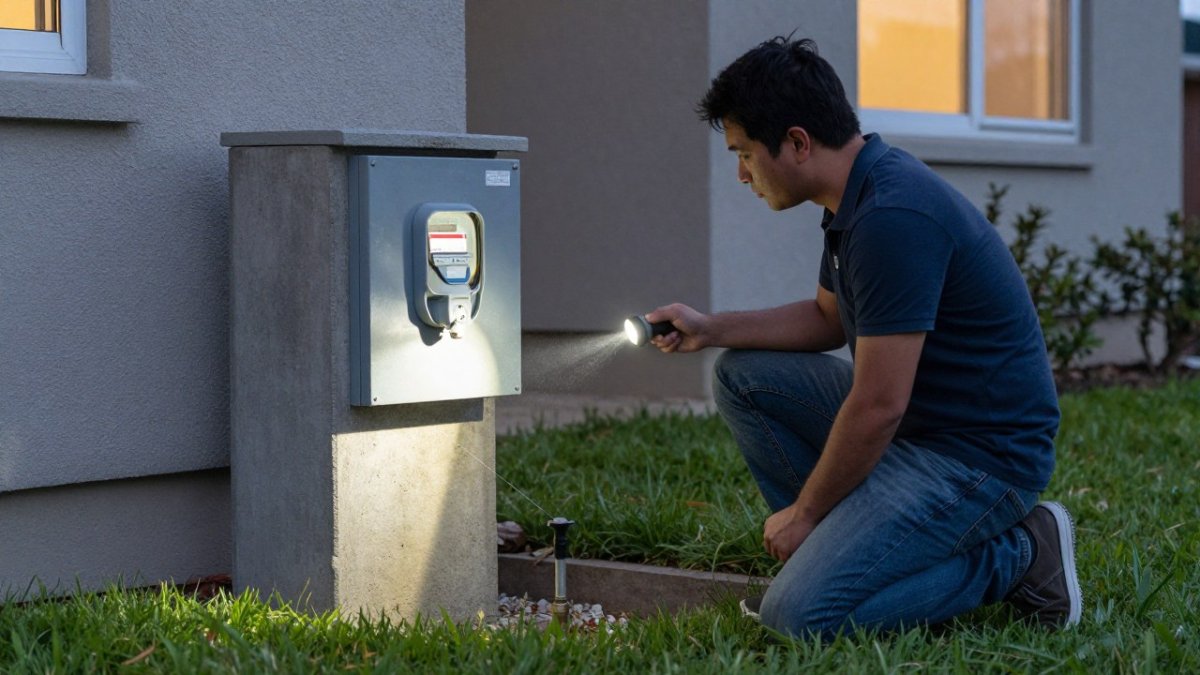
Step-by-Step: Shut Off Fixtures and Read the Meter
- Shut off every faucet, shower, and appliance that uses water.
- Turn off the ice maker, water softener, and irrigation timer at the controller, not just at the zone valve.
- Find your meter box, usually near the curb or side yard. Most residential meters sit in a concrete or plastic box under a round lid.
- Lift the lid carefully and note the reading on the register, including the small leak dial, often a triangle or low-flow indicator that spins at very low volumes.
- Wait 20 to 30 minutes with nothing running. Do not flush a toilet or run a load of laundry during the wait.
- Read the meter again, including the leak dial.
If the leak dial moved, water is escaping somewhere on the pressurized side of your plumbing.
A common pattern is a leak dial that creeps slowly rather than spins. A slow creep still counts: even a small pinhole leak under a slab can waste thousands of gallons over a billing cycle and quietly saturate the soil beneath the concrete.
Watch out: if the meter box is full of standing water or the lid is cracked, do not reach into it, call your water utility, because the leak may be on the service line between the meter and the house rather than under the slab.
Isolating the Service Line from the House Lines
A meter test tells you water is moving, but not which side of the meter it is moving on. To narrow it, close the house-side shutoff valve (usually where the service line enters the home, often near the water heater or in a utility closet) and repeat the reading.
This single extra step is what separates a useful homeowner test from a guess. It also tells a plumber where to start before anyone arrives.
How to Rule Out Other Sources of Water
Before you assume the worst, eliminate the easy culprits:
- Toilets: a flapper leak runs silently. Put dye in the tank, wait 15 minutes without flushing, and check the bowl for color.
- Irrigation: a broken sprinkler head or stuck valve can run underground and never show at the surface. Shut the irrigation at the controller and at the backflow preventer.
- Water softener or reverse-osmosis system: these cycle and backwash on their own timers. Bypass them for the test.
Rule these out first. A toilet flapper is a cheap fix; a slab leak is not. If every alternative is eliminated and the leak dial still moves with the house valve open, the next step is professional detection, not a hammer.
Reading the Result Correctly
A moving leak dial with all fixtures off is a hidden water leak until proven otherwise. A still dial after two tests is good news, but it does not fully rule out a slab leak: a leak on a line that is not currently pressurized, or one small enough to fall below the meter's sensitivity, can hide from this test.
What to Do Immediately After You Suspect a Slab Leak
The first hour matters more than the first week. If the hidden leak turns out to be a burst pipe in a wall, that guide covers the same emergency steps. Water under a slab wicks into flooring, baseboards, and framing, and mold can begin colonizing damp materials within 24 to 48 hours. The goal is to stop additional water from entering, protect people and electronics, and preserve evidence so a plumber and your insurer can see what happened.
Step 1: Decide Whether to Shut Off the Main
Shut off the main water valve immediately if any of these are true:
- Water is actively pooling on the floor or the floor feels spongy underfoot
- Water is near electrical outlets, panels, or appliances
- The floor is buckling, tenting, or separating at seams
If the leak is slow, a damp spot, a warm patch, a creeping meter dial, you can usually leave the main on long enough to shower and do laundry while you arrange an inspection, but shut it off before you leave the house for the day. Know where your main valve is before you need it; in most homes it is at the meter box, at the house-side entry point, or at a dedicated valve near the water heater.
Step 2: Limit Damage Without Hiding the Evidence
Move furniture, rugs, and cardboard off damp areas. Open windows and run fans to dry surfaces.
Photograph and video everything before you move it: the damp spot with a tape measure or coin for scale, the meter reading, the water bill usage graph, and any cracks or cupping.
Watch out: do not pull up flooring, drill test holes, or jackhammer the slab yourself.
Step 3: Call a Licensed Plumber for Detection, Not Repair
The first visit should be for detection, not demolition. Ask for a written scope that names the detection methods the plumber will use, and ask what happens if the first method is inconclusive.
If water is spreading fast, you smell gas, or you see water near an electrical panel, treat it as an emergency and call for same-day help. For active flooding, see emergency plumbing services for immediate help.
Urgency Guide: When You Can Wait and When You Cannot
| Situation | Urgency |
|---|---|
| Slow meter creep, no visible water, no mold | Schedule inspection within a few days |
| Damp spot or warm floor, no active flow | Schedule within 24 to 48 hours |
| Active pooling, spongy floor, or water near electrical | Shut off main and call same day |
| New widening foundation crack or door that suddenly sticks | Call same day; structural movement may be underway |
| Visible mold or musty odor in multiple rooms | Call within 24 hours; moisture has been present a while |
Slow drips can wait a day or two. Active water cannot. Our 24 hour emergency plumber guide explains what to expect from a fast response.
Slab Leak Detection Methods: Purpose and Limitations Compared
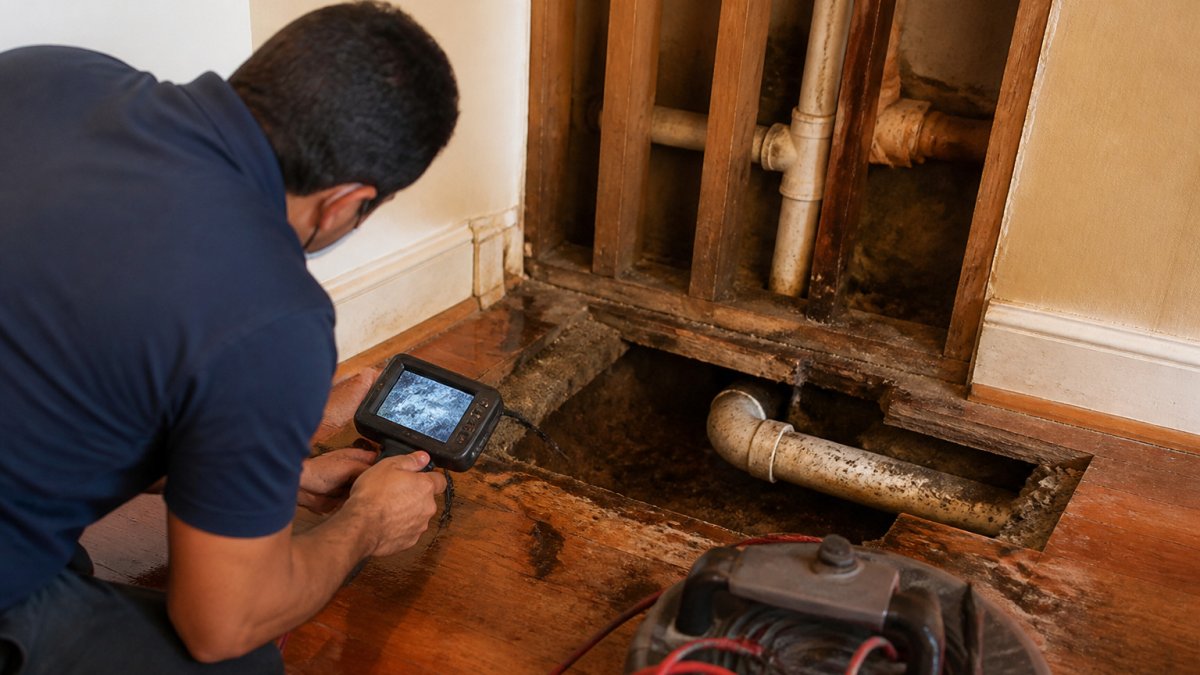
No single tool finds every leak. Good plumbers combine two or three methods to confirm the location before any concrete is cut.
| Method | What It Finds | Limitation |
|---|---|---|
| Water-meter test | Confirms a leak exists | Cannot locate it |
| Acoustic listening | Hissing or rushing pipe noise | Noisy homes confuse it |
| Thermal imaging | Warm spots from hot lines | Misses cold-water leaks |
| Pressure test | Isolates the leaking line | Needs partial system shutdown |
| Line tracing | Maps pipe routes under slab | Locates pipe, not the break |
The meter test tells you if. Acoustic listening and infrared cameras tell you where. A pressure test confirms which line is losing water.
Slab Leak Repair Cost: What Drives the Price and What to Expect
Slab leak repair pricing depends on your home and the specifics of the leak, so a current quote is best requested directly from DC Plumbing Heating and Air Conditioning.
- Leak location: under tile, carpet, or a finished floor adds removal and repair
- Pipe type and age: older galvanized lines often need more than a patch
- Repair method: spot repair, reroute, or repipe
Ask for a written scope before work starts, and ask what happens if a second leak appears. Our guide on how to avoid surprise plumbing charges explains the questions to ask upfront.
When Symptoms Require Urgent Professional Attention
Call for same-day help if any of these are true:
- Water is pooling or the floor feels spongy
- You smell gas or see water near electrical panels
- The main valve won't stop the flow
Slow drips can wait a day or two. Active water cannot. Our 24 hour emergency plumber guide explains what to expect from a fast response.
Schedule a Licensed Leak Inspection with DC Plumbing
Guessing at a slab leak gets expensive. A licensed inspection confirms the leak, locates it, and gives you a clear repair plan before anyone touches your floor. If you're comparing providers, our guide to choosing a reliable plumber covers what to look for.
DC Plumbing Heating and Air Conditioning serves San Clemente and South Orange County with licensed and certified technicians, upfront pricing, and 24/7 emergency service.
Frequently Asked Questions
How long can a slab leak go undetected?
A slab leak can go undetected for weeks or months because the pipe sits under concrete and the water often drains into the soil or seeps up slowly. Early signs are easy to miss: a small jump in the water bill, a faint hissing sound, or a warm patch on the floor. By the time mold, musty odors, or foundation cracks appear, the leak has usually been active for a while. Running a monthly water-meter test helps catch a hidden water leak before the damage spreads.
Can you check for a slab leak with your water meter?
Yes. Turn off every fixture and appliance that uses water, including the ice maker and irrigation system, then watch the meter's leak indicator or low-flow dial. If it keeps moving, water is still flowing somewhere in the plumbing system. Note the reading, wait a couple of hours without using water, and check again. A meter that advances confirms a leak, but it cannot tell you whether the leak is under the slab or in a wall, pool line, or irrigation run. A licensed plumber can isolate the source.
How do plumbers detect hidden leaks under a slab?
Plumbers combine several slab leak detection methods. Acoustic listening equipment picks up the sound of pressurized water escaping a pipe. Thermal imaging and infrared cameras reveal warm spots from a hot-water line leak. A pressure test isolates the hot and cold lines to confirm which one is failing. These tools locate the leak with minimal breaking of concrete, so repair work is targeted rather than guesswork. A professional plumbing inspection also rules out other water sources first.
When should you call a plumber about a suspected slab leak?
Call a licensed plumber as soon as a water-meter test confirms water is moving with all fixtures off, or if you notice a hot spot on the floor, standing moisture, or a musty odor that will not clear. Treat it as urgent if water is pooling near electrical outlets, if the foundation shows new cracks, or if you cannot shut off the water supply line. DC Plumbing Heating and Air Conditioning offers 24/7 emergency service for these situations.
A hidden leak under your slab won't fix itself, and every week it runs adds damage. Get started with DC Plumbing Heating and Air Conditioning and schedule a licensed leak inspection with upfront pricing and warranty-backed work. Call today.