 how-to
How to Avoid Surprise Plumbing Charges: 2026 Guide
Table of Contents
- Why Surprise Plumbing Charges Happen and What They Cost You
- Questions to Ask a Plumber Before Hiring
- How to Get a Written Plumbing Estimate
- Residential Plumbing Maintenance Checklist 2026
- Reading an Itemized Invoice: What to Look For
- How to Avoid Surprise Plumbing Charges in an Emergency
- When to DIY vs. Call a Professional Plumber
- Frequently Asked Questions
Last Updated: September 29, 2026
Why Surprise Plumbing Charges Happen and What They Cost You
Learning how to avoid surprise plumbing charges starts with understanding why they happen. Most shock invoices trace back to one thing: no written scope of work before the job began.
At DC Plumbing Heating and Air Conditioning, we've watched this play out across nearly 38 years of service calls in South Orange County. A homeowner approves a verbal quote, the technician opens a wall, and the final bill looks nothing like the estimate.
The pattern is predictable:
- Emergency calls carry higher rates than scheduled visits
- Hidden leaks add hours of diagnosis nobody quoted
- Material markup on parts gets added after the fact
- Scope creep turns a small repair into a bigger project
The fix isn't complicated. It's about asking the right questions, getting things in writing, and knowing what a fair invoice looks like. Below, we'll walk through each step.
Questions to Ask a Plumber Before Hiring
Ask these questions before you authorize any work. A licensed plumber will answer them without hesitation.
Is your pricing hourly or flat-rate? Flat-rate pricing quotes the job, not the clock. Hourly rates can balloon if the diagnosis takes longer than expected.
What does the diagnostic fee cover? Some companies waive it if you approve the repair. Others charge it separately. Get the answer in writing.
Is there a service fee just to show up? Many companies charge a trip fee on top of labor. Know this number before you book.
Are you licensed and insured? Ask for the license number. The California Contractors State License Board lets you verify it in minutes.
What's your warranty on parts and labor? A written warranty protects you if the same problem returns.
Will I get an itemized invoice? This is non-negotiable. You should see parts, labor, and fees listed separately.
How to Get a Written Plumbing Estimate
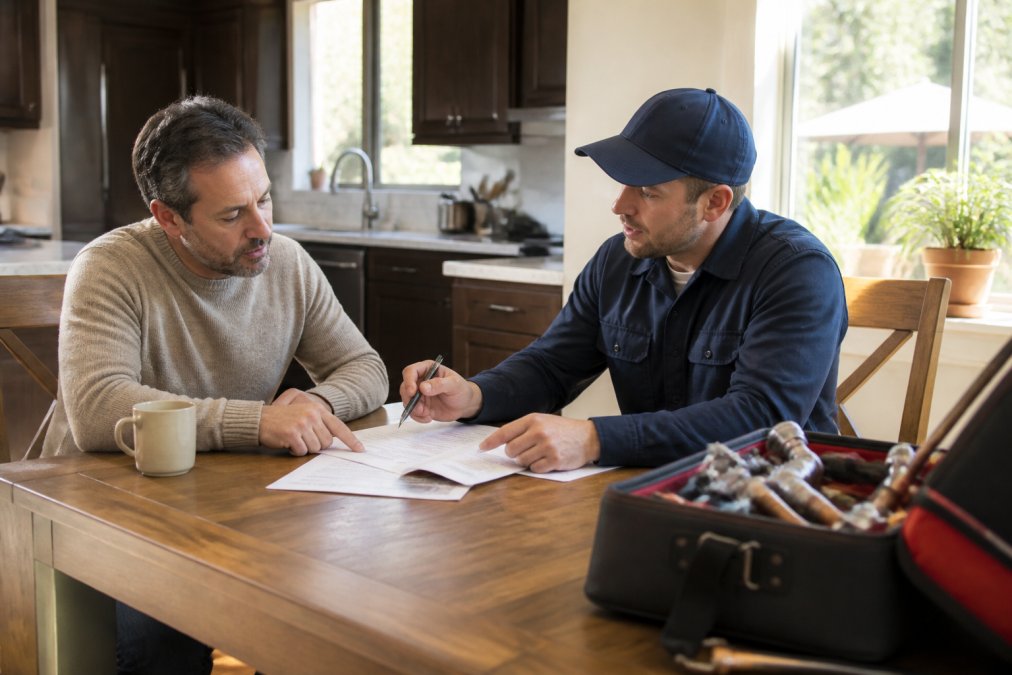
A written estimate is your best protection against plumbing charges that grow after the fact. Request one before any work begins, even for small jobs.
Here's how to get it:
- Describe the problem clearly. Note when it started and what you've already tried.
- Ask for a written scope of work. This should list exactly what will be fixed.
- Request a line-item breakdown. Parts, labor, and fees should appear separately.
- Ask about contingencies. What happens if the plumber finds something unexpected?
- Confirm the estimate's expiration. Most are valid for a set window.
- Get it in writing before work starts. A text or email confirmation works.
A good estimate states what's included and what isn't. If a company won't put it in writing, that's your answer.
Residential Plumbing Maintenance Checklist 2026
Preventative maintenance is the cheapest way to avoid emergency plumbing bills. Small issues caught early stay small.
Use this checklist each season:
- Check under every sink for slow drips or moisture
- Test water pressure at multiple faucets
- Run water in unused drains to keep traps filled
- Inspect the water heater for rust or pooling
- Look for hairline cracks in visible pipes
- Test the shut-off valves under sinks and toilets
- Clear slow drains before they clog fully
- Check the water bill for unexplained spikes
That last item matters more than most people realize. A rising water bill often signals a hidden leak before you see any damage.
Reading an Itemized Invoice: What to Look For
An itemized invoice shows every charge separately. If yours doesn't, ask for a revised one.
Check these line items:
| Line Item | What to Verify |
|---|---|
| Labor | Hours worked match the scope of work |
| Materials | Parts listed by name, not just "supplies" |
| Service fee | Matches what you were quoted upfront |
| Diagnostic fee | Charged once, not folded into labor |
| Permits | Only charged if a permit was actually pulled |
| Disposal | Reasonable for the materials removed |
Compare the invoice against your written estimate. If new line items appeared, ask why before you pay.
A legitimate company will explain every charge. One that won't is a red flag.
How to Avoid Surprise Plumbing Charges in an Emergency
Emergency calls carry the highest risk of a surprise bill because you have the least leverage: the water is running, the clock is ticking, and you have no time to comparison-shop. The way to control the bill is to control the process before the technician starts work.
Get the emergency rate and trip fee in writing before dispatch. Ask the dispatcher to text or email the after-hours rate, the trip fee, and the diagnostic fee. A common pattern is that the trip fee is waived if you approve the repair, but charged separately if you decline, confirm which applies to you.
Set a hard spending cap at dispatch. Tell the dispatcher your ceiling, for example, "Do not exceed $500 without calling me first." A reputable company will document that cap on the work order and have the technician call before crossing it. If the technician ignores the cap, that is grounds to dispute the overage.
Authorize in stages, not all at once. Approve the diagnostic first. When the technician reports findings, approve the repair as a separate authorization. This prevents a single verbal "go ahead" from being stretched to cover work you never agreed to.
Vet the company before you need it. The best time to choose an emergency plumber is before the emergency. Save one or two licensed companies in your phone now, verify their license through your state contractor board, and note their posted after-hours policy. When the pipe bursts at 11 p.m., you are calling a known quantity instead of the first result on a search page.
When to DIY vs. Call a Professional Plumber
Most guides give you two lists and call it a day. The real question is not "can I do this?" but "what happens to my costs, my warranty, and my insurance if I do?" That framing is what separates a genuine savings decision from a gamble.
Genuinely DIY-friendly jobs:
- Replacing a faucet aerator or showerhead
- Clearing a simple sink or tub clog with a plunger or hand snake
- Replacing a toilet flapper or fill valve
- Tightening a loose fixture or re-caulking a tub surround
- Insulating exposed pipes in an unconditioned space
Jobs that should always go to a licensed plumber:
- Anything involving gas lines or gas appliances
- Sewer line inspection, repair, or replacement
- Water heater repair or replacement
- Any leak behind a wall, under a slab, or in a ceiling
- Main water line work or shut-off valve replacement
- Anything your jurisdiction requires a permit for
Frequently Asked Questions
How can I tell if a plumber is overcharging me?
Compare the invoice to the written estimate. If labor hours or material costs are significantly higher without explanation, ask for a breakdown. Check if the plumber charges by the hour or flat rate; flat-rate pricing often bundles costs. A diagnostic fee should be disclosed upfront. If you feel overcharged, request an itemized invoice and compare it to local averages. Licensed plumbers should provide a clear scope of work before starting.
What questions should I ask before hiring a plumber to avoid hidden fees?
Ask about their hourly rate, service call fee, and whether they charge a diagnostic fee. Confirm if they provide a written estimate and if it includes parts and labor. Inquire about after-hours rates and if there are any additional charges for emergency plumbing. Ask for their license number and insurance. Also, ask if they offer a warranty on parts and labor. Getting these answers upfront helps you avoid surprise plumbing charges.
Is it common to negotiate prices with plumbing contractors?
A reputable plumber will be transparent about their pricing and willing to discuss options.
What are the most common causes of surprise plumbing repair costs?
Hidden leaks, pipe corrosion, and sewer line issues often lead to unexpected charges. Emergency plumbing calls after hours incur higher rates. If the plumber discovers additional problems during a repair, such as water damage or faulty fixtures, costs can rise. Material markups and labor costs for unexpected complications also contribute. Preventative maintenance, like regular plumbing inspections and drain cleaning, can reduce the risk of major surprises.
Plumbing charges shouldn't feel like a gamble. With a written estimate, an itemized invoice, and a maintenance routine, you stay in control of what you pay.
DC Plumbing Heating and Air Conditioning has served South Orange County since 1989 with upfront pricing, licensed technicians, and warranties on all parts and installation. No surprise fees, no guesswork. Call today to schedule service or get a written estimate before your next repair.