 How-to
Can You Improve HVAC Airflow in an Older Home?
Last Updated: November 5, 2026
Quick Summary
You can improve HVAC airflow in older homes by replacing the air filter, opening every supply and return vent, clearing obstructions, and sealing accessible duct joints with mastic or foil tape. If rooms still struggle, the cause is often undersized or crushed duct runs that need a professional evaluation.
- Check the air filter monthly and replace it every one to three months.
- Seal accessible duct joints with mastic or foil tape, not cloth duct tape.
- Never block return vents with furniture or boxes; each room needs a return path.
- High return-side static pressure points to undersized or blocked returns.
- Call a licensed technician if static pressure stays high after basic fixes.
Table of Contents
- Why Older Homes Struggle With HVAC Airflow
- A Safe, Ordered Workflow Before You Touch Anything
- How to Improve HVAC Airflow in Older Homes DIY
- How to Increase Airflow in a Duct
- How to Increase HVAC Airflow Upstairs
- How to Get More Airflow From Vents in a Bedroom
- Measuring Static Pressure and Reading the Numbers
- When to Call a Licensed HVAC Technician
- Frequently Asked Questions
Why Older Homes Struggle With HVAC Airflow
Most older houses were built before anyone worried much about air balancing. Ducts ran where they fit, not where they worked best.
The core problem is simple: a forced-air system pushes a set volume of air through ducts that may be undersized, leaky, or badly routed. When the air can't move, rooms stay hot or cold no matter what you set the thermostat to.
How Construction Era Changes the Diagnosis
The age of your home tells you where to look first.
- Pre-1950s homes: undersized ducts, no return air in many rooms, and original gravity-style layouts
- 1950s-1970s homes: flexible duct that sags or tears, plus thin insulation
- 1970s-1990s homes: undersized returns and long, winding runs to distant rooms
A common mistake is treating all three the same. A 1940s house with no return vent in the bedroom needs a different fix than a 1980s house with a crushed flex duct.
A Safe, Ordered Workflow Before You Touch Anything
Start with the cheap, safe checks before you climb into an attic or cut into drywall. This order saves money and keeps you out of danger.
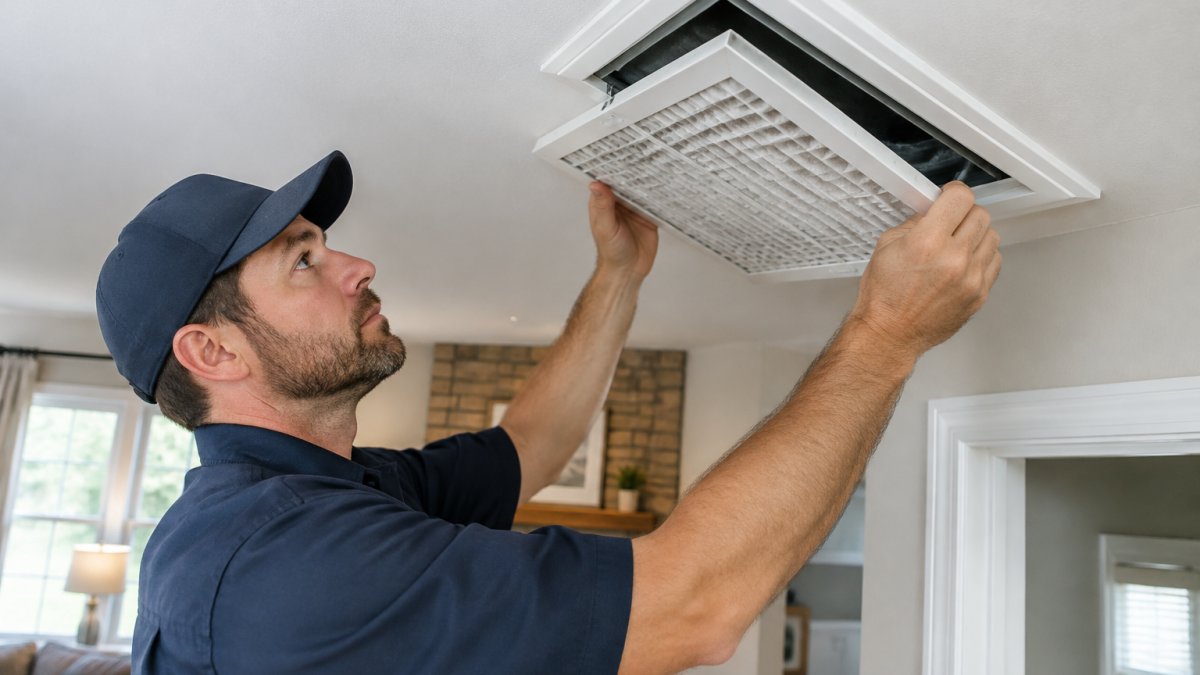
- Replace the air filter. A clogged filter chokes the whole system.
- Check every supply vent and return vent. Confirm they are open and unblocked.
- Look for crushed or disconnected ducts in accessible spaces.
- Test room temperatures with a simple thermometer.
- Call a licensed technician if the problem persists.
Watch out: never open the air handler cabinet or touch gas lines yourself. Those parts need a licensed pro.
How to Improve HVAC Airflow in Older Homes DIY
You can handle the simple fixes yourself. Most airflow problems in older houses come down to blocked filters, closed registers, and furniture in the way.
Start with the filter. A dirty air filter is the most common cause of weak airflow, and it is the easiest thing to fix.
Then walk every room and check the supply vent and return vent. Make sure nothing blocks them. Rugs, furniture, and curtains quietly kill air circulation.
Filters, Registers, and Return Vents
- Filter: use the size printed on the old one, and don't upgrade to a denser filter unless your system allows it
- Supply registers: open them fully and clear obstructions
- Return vents: never block them with furniture or boxes
Many older homes have too few returns. That traps pressure and starves distant rooms.
How to Increase Airflow in a Duct
The real gains usually hide in the ductwork. Duct leakage, sagging runs, and closed dampers rob airflow before it ever reaches a room. In older houses, the duct route itself is often the problem, and the construction type tells you where to look.
Read the House Before You Read the Duct
Older-home duct problems follow construction patterns:
- Balloon framing (common pre-1940s): wall cavities run full height with no fire blocking, so ducts and returns were often run through stud bays or chases that are narrow, unsealed, and shared with plumbing. Air leaks into the wall cavity instead of reaching the room.
- Additions and remodels: a later addition often taps into the original trunk with a long, undersized branch. The room feels starved because the run is an afterthought, not because the register is closed.
- Narrow chases and historic layouts: original gravity systems used large, short ducts; when a forced-air system was retrofitted, the old chases may be too tight for modern duct sizing, forcing crushed or flex runs.
A common mistake is sealing every joint you can reach and calling it done. If the branch feeding a distant room is undersized or crushed inside a chase, sealing won't restore the lost volume.
A Safe Inspection Sequence
Work from the air handler outward, and stop where access is unsafe:
- Confirm the blower and filter are clean before judging the ducts.
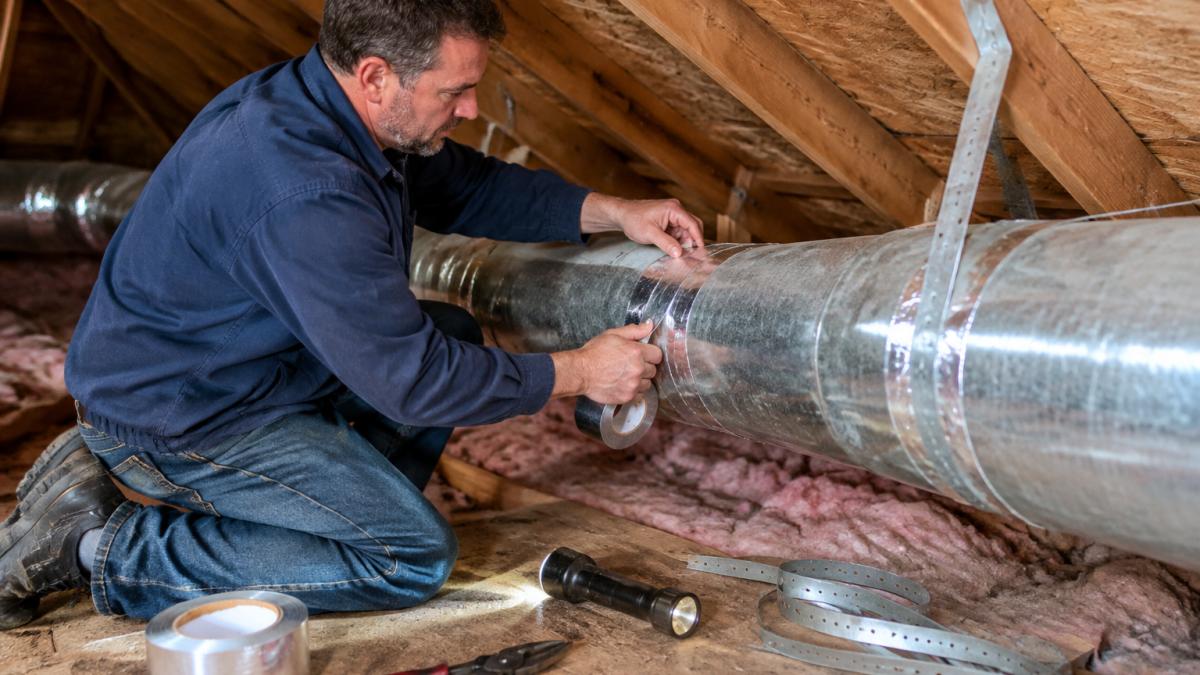
- Inspect accessible trunk and branch runs in the attic, basement, or crawlspace for crushed sections, disconnected joints, and sagging.
- Check dampers at the trunk and at each branch; open them fully, then adjust room by room.
- Seal accessible joints with mastic or foil tape, not cloth duct tape.
- Support sagging runs with duct straps so the duct stays straight and open.
- Repair torn insulation to stop heat gain or loss.
- Stop and call a licensed technician if a duct is crushed inside a wall or chase, if you find asbestos-wrapped duct insulation, or if the run is inaccessible.
Watch out: older duct insulation and some joint tapes may contain asbestos; do not disturb suspect material and have it evaluated before sealing or cutting.
What Sealing Cannot Fix
What most guides miss is duct design. A long, winding run to a distant room loses air volume no matter how well you seal it. If the run is badly sized, sealing alone won't fix it.
If the duct route is the core problem, the options are a duct redesign, a zone control system, or a ductless system for the problem area. Before committing to a redesign or a separate system, check whether clean air ducts and a clear path through the existing runs could address the airflow problem.
How to Increase HVAC Airflow Upstairs
Upstairs rooms are usually the coldest in winter and hottest in summer. The cause is often a mix of long duct runs, low static pressure, and poor return air.
Try these steps first:
- Open the upstairs registers fully
- Close or partly close basement and first-floor registers to push more air up
- Check that upstairs return vents are open
- Seal any obvious duct leaks in the attic
If upstairs still struggles, the fix may be a zone control system or a duct redesign. Humidity makes it worse, and balancing the system helps both. For a deeper look at moisture, see how to reduce humidity with central air.
How to Get More Airflow From Vents in a Bedroom
A stuffy bedroom usually has one of three problems: a blocked register, a closed damper, or a weak duct run feeding it.
Work through this checklist:
- Confirm the supply vent is fully open
- Move furniture and curtains away from the register
- Check the return path so air can escape
- Look for a damper near the branch and open it
A smart thermostat can help you manage comfort room by room. Our guide to the best smart thermostat for home heating covers which models handle this best.
Measuring Static Pressure and Reading the Numbers
Static pressure is the resistance air meets as it moves through your system. High static pressure means the blower fan is fighting the ducts, and airflow drops everywhere. The useful part is knowing what gets measured, what the numbers mean, and when the reading points to the ducts versus the equipment.
What a Technician Measures
A technician uses a manometer (a digital pressure gauge) to read static pressure at the air handler. The standard check is external static pressure, the resistance of the supply and return duct systems combined, measured just before and after the blower. The target is to keep total external static pressure within the equipment manufacturer's rated limit, which is printed on the air handler's data plate.
Useful companion measurements:
- Return static pressure: high return-side resistance points to an undersized or blocked return path, not the supply ducts.
- Supply static pressure: high supply-side resistance points to undersized, crushed, or leaky supply runs.
- Airflow at registers: a technician can use a flow hood or balometer to compare actual cubic feet per minute (CFM) at each register against the system's design airflow.
- Temperature split: the difference between return-air and supply-air temperature helps confirm the system is moving and conditioning air as intended; a low split can indicate airflow or refrigerant problems.
Reading the Numbers
| Reading | What It Suggests | Likely Next Step |
|---|---|---|
| Within the equipment's rated limit | Air moves as designed | No action needed |
| Slightly above rating | Filter or coil partly blocked | Replace filter, clean coil, recheck |
| High, return side | Undersized or blocked returns | Add return capacity or clear blockage |
| High, supply side | Undersized, crushed, or leaky supply ducts | Seal, resize, or reroute |
| Very high overall | Major restriction | Professional duct evaluation |
Why This Matters for Older Homes
Older houses often have return-air paths that were never sized for a modern system.
Watch out: a dirty evaporator coil can mimic a duct problem. Dirty coils are a hidden cause of high bills, which our article on signs dirty coils are driving up your electric bill explains.
When you hire a technician, ask for the external static pressure reading, the return and supply split, and register airflow in the problem rooms.
When to Call a Licensed HVAC Technician
Call a pro when the simple fixes don't work. If you've changed the filter, opened the registers, and sealed obvious leaks, and rooms still won't heat or cool evenly, the problem is likely in the duct design or the equipment itself.
Signs it's time to call:
- Static pressure stays high after basic fixes
- You find crushed or disconnected ducts you can't safely reach
- Some rooms get no air at all
- The blower runs but airflow stays weak
Our licensed HVAC technicians in South Orange County can measure static pressure and inspect the duct system. If duct fixes aren't enough, it may be worth weighing alternatives to traditional central air systems before you commit to a big repair.
Frequently Asked Questions
Can closing vents in unused rooms improve airflow elsewhere?
Usually not, and it can backfire. Closing registers raises static pressure in the duct system, which pushes more air out through leaks and can make the blower work harder. In older homes with undersized or leaky ducts, the rooms you leave open often get less air, not more. If you want to shut off a room, use the balancing damper at the duct branch instead of the stamped-face register, and only close it partway.
Will duct cleaning improve HVAC airflow?
Duct cleaning removes dust and debris, but it rarely fixes weak airflow on its own. The bigger culprits are crushed or disconnected ducts, closed dampers, dirty filters, and undersized returns. Have the ducts inspected first. If a technician finds a disconnected run in the attic or a collapsed flex duct, reconnecting and sealing it will do far more for HVAC airflow than cleaning ever will.
What causes weak airflow from HVAC vents?
The common causes are a clogged filter, a closed or partly closed damper, duct leakage or disconnection, sagging flex duct, and too few return-air pathways. In older homes, undersized duct design and added rooms that were never properly tied into the system also play a role. Work through them in order: filter, registers, dampers, then ducts. A static pressure reading tells you whether the problem is in the ducts or the equipment.
When should I call an HVAC professional about low airflow?
Call a licensed technician if you have checked the filter, opened the registers, and confirmed the dampers are set correctly and airflow is still weak. Also call if you see disconnected or crushed ducts, hear the blower straining, or notice uneven temperatures that no register adjustment fixes. A technician can measure static pressure, test the blower, and confirm whether the duct system needs sealing, resizing, or a return-air upgrade.
Older homes rarely have one single airflow problem. They have several small ones stacked together, and fixing them in the right order is what finally makes the house comfortable. That is the work we do every day, backed by upfront pricing, licensed and certified technicians, and warranties on parts and installation. Get started with DC Plumbing Heating and Air Conditioning and get even airflow from the bedroom to the back room.