 How-to
How to Reduce Humidity With Central Air
Table of Contents
- Why Your Central Air Conditioner Struggles With Humidity
- How to Reduce Humidity With Central Air: A Step-by-Step Diagnostic Flow
- Central Air Not Removing Humidity? Common Causes and Fixes
- How to Adjust Humidity on Air Conditioner: Thermostat and Fan Settings
- How Long Should AC Take to Lower Humidity?
- Whole-House Dehumidifier With Central AC: When You Need One
- Maintenance That Keeps Your Central Air Removing Moisture
- Frequently Asked Questions
Last Updated: October 12, 2026
Why Your Central Air Conditioner Struggles With Humidity
Your central air conditioner is one of the best tools you have for reducing humidity, but only when it runs long enough to pull moisture from the air.
At DC Plumbing Heating and Air Conditioning, we have spent nearly 38 years getting systems back on track. This guide shows how to reduce humidity with central air, step by step, using controls you already have.
How Air Conditioning Removes Moisture From Your Home
Dehumidification is the process of removing water vapor from the air. Your AC does this when warm, moist air passes over the cold evaporator coil; water condenses, drips into a drain pan, and exits through the condensate drain line.
The catch: this only happens while the system is actively cooling. If your AC short cycles, it never runs long enough to wring out much moisture.
Signs Your Central Air Is Not Removing Humidity
Watch for these signals that your system is cooling but not dehumidifying:
- The house feels clammy even when the thermostat reads 72°F
- Windows and mirrors fog up or sweat
- The air feels cold but heavy and sticky
If two or more sound familiar, your central air is not removing humidity as it should, but most causes are fixable.
How to Reduce Humidity With Central Air: A Step-by-Step Diagnostic Flow
Here is the practical flow we walk homeowners through. Work through it in order to find the cause instead of guessing.
Step 1: Measure Your Indoor Humidity
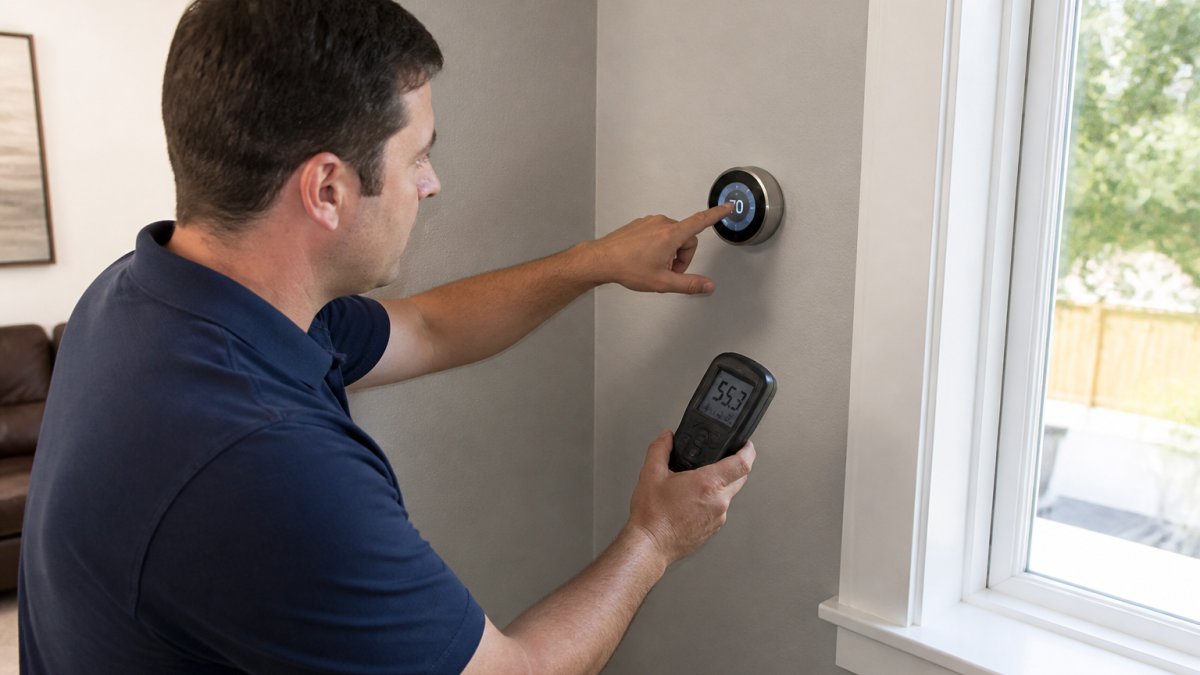
Start with numbers, not feelings. Buy an inexpensive hygrometer and place it mid-home, away from vents and direct sun.
Aim for indoor relative humidity between 30% and 50%. Anything above 60% invites sticky air, mold, and dust mites. Read it morning and late afternoon, since humidity swings through the day.
Step 2: Check Thermostat Settings and Fan Mode
Set your fan to Auto, not On. This is the single most common fix we see.
When the fan runs continuously, it blows moisture collected on the wet coil back into your home after the cooling cycle ends. On Auto, the fan stops with the compressor, so the coil drains instead of re-humidifying your air.
Step 3: Inspect Airflow and System Runtime
A system that cools too fast cannot dehumidify. Check these:
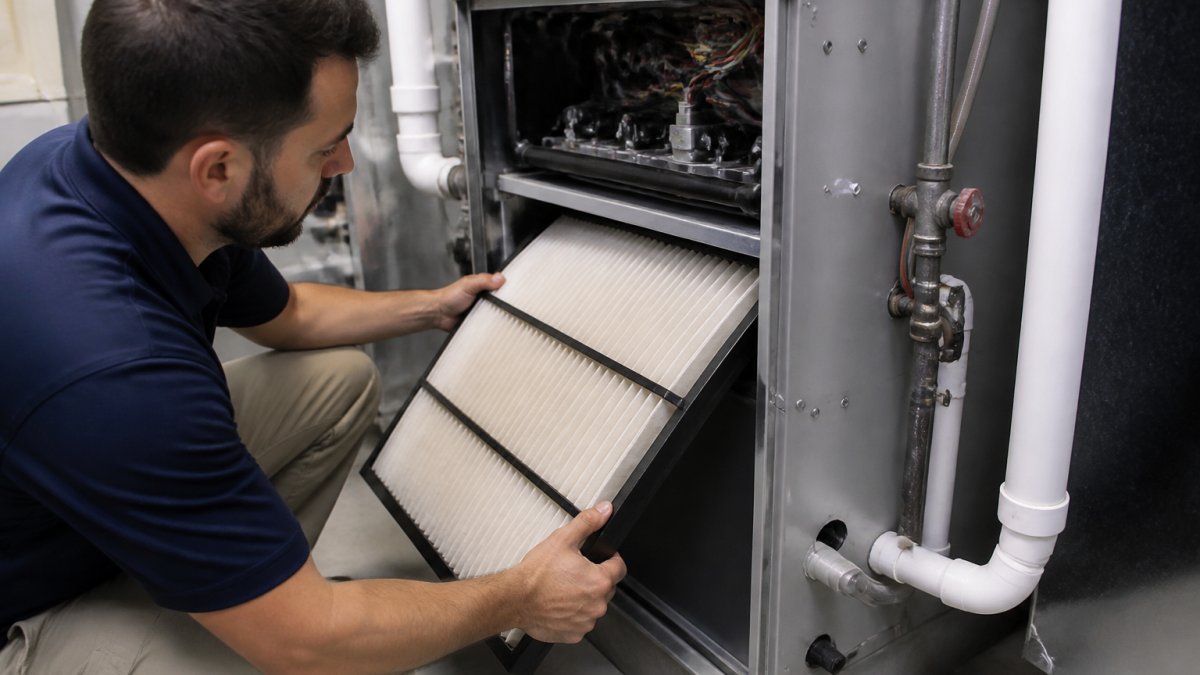
- Replace a clogged air filter; a dirty filter chokes airflow
- Confirm every supply vent is open and unblocked
- Listen for short cycling: runs under 10 minutes, then off
Lower airflow across the coil removes more moisture per minute, so a clean filter matters more than most people realize.
Central Air Not Removing Humidity? Common Causes and Fixes
When central air is not removing humidity, the culprit is usually one of five things. Match the symptom to the fix.
| Symptom | Likely Cause | Fix |
|---|---|---|
| Clammy air, short runtimes | Oversized system | Ask a tech to check sizing |
| Humidity returns after cooling | Fan set to On | Switch fan to Auto |
| Weak airflow, warm vents | Clogged air filter | Replace filter monthly |
| Musty smell, water nearby | Dirty evaporator coil | Schedule a coil cleaning |
| Water pooling, high humidity | Clogged condensate drain | Clear the drain line |
A dirty evaporator coil is easy to overlook. When grime coats it, the coil cannot pull heat or moisture from the air, so performance drops on both counts.
How to Adjust Humidity on Air Conditioner: Thermostat and Fan Settings
Learning how to adjust humidity on air conditioner controls comes down to two levers: temperature setting and fan mode. Safe ranges depend on your equipment, so treat the numbers below as starting points, not universal settings.
What You Can Change Yourself
- Fan mode: set it to Auto. This is the highest-value change most homeowners can make. On Auto, the blower stops with the compressor, so the wet evaporator coil drains into the pan instead of blowing residual moisture back into the living space. On On, the fan keeps running between cycles and re-humidifies the air it just dried.
- Temperature setting: lower it by 2-3 degrees, not more. A longer cooling cycle removes more moisture because the coil stays below dew point longer. Dropping the setpoint 8-10 degrees to 'force' dehumidification is the classic mistake, it can ice the evaporator.
- Schedule longer cooling blocks. A programmable or smart thermostat lets you run one 45-60 minute cooling block during the most humid part of the day instead of many short bursts. Two 20-minute cycles remove far more moisture than six 6-minute cycles at the same total runtime.
What Depends on Your Equipment
Not every thermostat exposes the same controls, and the labels vary by manufacturer. Look for these features and read your model's manual before enabling them:
- Dehumidify mode (sometimes labeled 'Dry' or 'Cool to Dehumidify'). When active, the thermostat typically slows the indoor blower to increase contact time between air and coil. This removes more moisture per pass but reduces sensible cooling, so the room may feel slightly warmer while feeling drier.
- Variable-speed or multi-stage blowers. These can run at a lower CFM during part-load conditions, which is exactly what you want for dehumidification. If your air handler supports it, ask your technician whether the low-speed profile is enabled.
- Reheat dehumidification. Some higher-end systems run the cooling cycle and then reheat the air before it enters the ducts. This dries the space without overcooling it, but it is a factory feature, not a thermostat setting.
When Lowering Airflow Becomes a Problem
Reducing blower speed increases moisture removal up to a point. Past that, the coil surface drops below freezing, condensate freezes on the fins, and airflow collapses. Watch for these signs you have gone too far:
- The supply air feels barely cool or the vents seem weak
- Ice is visible on the refrigerant lines or the indoor coil cabinet
- The system runs continuously but the space never reaches setpoint
If you see any of these, return the fan to Auto, restore the previous blower setting, and let the coil thaw before running the system again. Persistent icing points to a refrigerant charge issue or a blower setting needing a technician's attention.
If your thermostat has a dedicated dehumidify mode, use it before you start lowering the temperature setpoint. It targets moisture directly instead of forcing the compressor to do extra work it was not sized for.
How Long Should AC Take to Lower Humidity?
Most systems need 20 to 30 minutes of continuous cooling to make a noticeable dent in indoor humidity, with a drop of several percentage points within the first hour of steady runtime.
If your AC runs an hour and your hygrometer barely moves, the problem is not time, it is airflow, coil condition, or fan mode.
Outdoor humidity sets the floor. On a hot, humid day, your system fights a losing battle if doors and windows stay open, so expect slower progress than on a dry day.
Whole-House Dehumidifier With Central AC: When You Need One
A whole-house dehumidifier with central AC makes sense when the air conditioner works correctly but still cannot keep up. The key word is correctly, adding a dehumidifier to a system that is short cycling, has a dirty coil, or is set to fan On masks a fixable problem expensively.
Rule Out These First
Before you price a dehumidifier, confirm the AC itself is not the bottleneck:
- Fan is set to Auto, not On
- Air filter is clean and every supply and return vent is open
- The system runs at least 15-20 minutes per cooling cycle
If all five are true and your hygrometer still reads above 55% after a full cooling cycle, the AC has hit its design limit for your climate and envelope. That is when supplemental dehumidification earns its cost.
Central AC vs. Portable vs. Whole-Home
| Option | Best For | Limits |
|---|---|---|
| Central AC alone | Removing moisture as a byproduct of cooling | Cannot dehumidify without also cooling; output drops in mild, humid weather |
| Portable dehumidifier | One room, a basement, or a closet | Needs a drain or frequent emptying; adds heat and noise; does not treat the whole house |
| Whole-home dehumidifier tied into ducts | Entire home, especially in shoulder seasons when cooling demand is low | Requires a dedicated drain and a technician to integrate with the air handler |
| Standalone ducted dehumidifier (not tied to AC) | Homes with no central cooling, or as a fully independent moisture system | Separate ducting or a dedicated return; higher install cost |
A whole-home unit ties into your duct system and treats the entire house at once, the main advantage over portables. It can also run when the AC is off, handling mild, humid days when your thermostat never calls for cooling.
Signs the AC Alone Is Not Enough
- Your AC is properly sized and maintained, yet humidity stays above 55%
- You run the AC mostly for comfort, not extreme cooling, so cycles are short
- Your home has a basement or crawlspace that adds moisture to the whole envelope
Control the Sources Before You Buy Equipment
Dehumidification is the second line of defense. Source control is the first, and it is free:
- Bathrooms: Run the exhaust fan for 15-20 minutes after every shower, and confirm it vents outdoors, not into the attic.
- Kitchen: Use the range hood while cooking, especially for boiling and simmering.
- Laundry: Vent the dryer outdoors and avoid hanging wet clothes inside.
Ventilation Tradeoff
Tighter homes hold humidity longer, but opening windows to 'air out' the house on a humid day makes it worse. The right move is mechanical ventilation with a dehumidifying path, an ERV/HRV paired with a dehumidifier, or a whole-home dehumidifier that treats incoming air. A licensed technician can tell you which fits your setup and whether your ducts can handle the added static pressure.
If your AC passes the five-point check and humidity still sits above 55%, a whole-home dehumidifier is the right next step. If it fails the check, fix the AC first, a dehumidifier will not compensate for short cycling, a dirty coil, or a fan set to On.
Maintenance That Keeps Your Central Air Removing Moisture
Moisture removal depends on a clean, well-tuned HVAC system. Schedule these tasks:
- Replace the air filter every 1-3 months
- Check the condensate drain line for clogs each season
- Keep the outdoor unit clear of leaves and debris
Annual maintenance catches small problems before they become high humidity and higher bills. Our team at DC Plumbing Heating and Air Conditioning handles tune-ups, coil cleanings, and drain service across the area.
If your home still feels sticky after you set the fan to Auto, change the filter, and run longer cooling cycles, the next step is a professional inspection of the coil, drain, and system sizing.
Frequently Asked Questions
Is 70% humidity too high in a house?
Yes, 70% indoor humidity is too high for most homes. The ideal range is 30% to 50% relative humidity. Levels above 55% create conditions for mold growth, dust mites, and musty odors. If your central air is running but humidity stays at 70%, the system is not removing enough moisture. Check for oversized equipment, dirty coils, or continuous fan operation, and consider a standalone or whole-house dehumidifier to bring levels down.
How do I adjust humidity on my air conditioner?
You cannot directly set a humidity level on most air conditioners, but you can influence it. Set the thermostat to Auto fan mode so the blower stops when cooling ends, preventing moisture from evaporating back into the air. Lower the temperature setting by 2 to 3 degrees to extend cooling cycles. Keep the fan on Auto rather than On, and avoid short cycling by ensuring proper system sizing. These adjustments help the central air remove more moisture during each cooling cycle.
How long should it take an AC unit to decrease humidity?
A properly sized central air conditioner typically lowers indoor humidity by 5% to 10% within the first 30 to 60 minutes of continuous operation, assuming doors and windows are closed. Reaching a target of 45% to 50% relative humidity may take several hours in a hot-humid climate. If humidity does not drop after 2 to 3 hours of runtime, the system may have low airflow, dirty evaporator coils, or a refrigerant issue that requires professional HVAC troubleshooting.
When should you use a dehumidifier with central air?
Use a whole-house dehumidifier with central AC when your air conditioner runs but indoor humidity stays above 55% for extended periods. This happens in hot-humid climates where the AC satisfies the thermostat before removing enough moisture, or when the system is oversized. A whole-house dehumidifier integrates with your HVAC system and ductwork to remove excess moisture independently of cooling. Portable dehumidifiers work for single rooms but struggle with whole-home humidity control.
High humidity is stubborn, but it is rarely a mystery once you know where to look. If your central air is not removing humidity after you have checked the basics, DC Plumbing Heating and Air Conditioning can help. We offer licensed, certified technicians, upfront pricing with no surprise fees, and warranties on all parts and installation work, plus 24/7 emergency service when you need it. Call today and let us get your home comfortable again.