 How-to
7 Signs Dirty Coils Are Driving Up Your Electric Bill
Last Updated: October 29, 2026
Quick Summary
Yes, dirty coils can cause high electric bills because dust-coated coils force your system to run longer to reach the same thermostat setting, and longer runtime means more electricity used. The U.S. Department of Energy makes the same point: dirty coils and filters force equipment to work harder than it should.
- The condenser coil is the outdoor coil that releases heat into the air.
- The evaporator coil is the indoor coil that absorbs heat and moisture from your home's air.
- Signs include the outdoor unit running almost constantly on hot days and bills climbing while habits stay the same.
- Check your filter monthly during cooling season and change it on schedule to protect the coil.
- Never use a pressure washer on condenser fins because it bends them flat and permanently cuts airflow.
Table of Contents
- How Dirty Coils Turn Into High Electric Bills
- Signs of Dirty Condenser Coils You Should Not Ignore
- How Dirty Coils Make Your AC Work Harder and Cost More
- How to Inspect and Clean Your Coils Safely
- AC Coil Cleaning Cost and When to Call a Professional
- How Often to Service HVAC System Coils by Environment
- How to Verify Your Energy Savings After Cleaning
- Book a Coil Inspection Before Your Next Bill Arrives
- Frequently Asked Questions
How Dirty Coils Turn Into High Electric Bills
Yes, dirty coils can cause high electric bills, and they are one of the most overlooked culprits behind a power bill that climbs month after month. The system may still run and the house may still cool, but the meter can spin faster than it should. Here is the short version of why that happens.
Your air conditioner moves heat. It does not create cold. It grabs heat from inside your home and dumps it outside, and coils are the metal surfaces where that transfer happens. A condenser coil is the outdoor coil that releases heat into the air. An evaporator coil is the indoor coil that absorbs heat and moisture from your home's air. Both rely on clean metal and steady airflow to do their job.
Coat either coil in dust and the whole cooling cycle gets harder. The system runs longer to hit the same thermostat setting. Longer runtime means more electricity used, and that shows up on your bill. The U.S. Department of Energy guidance on maintaining your air conditioner makes the same point plainly: dirty coils and filters force equipment to work harder than it should.
Condenser Coils and Heat Rejection
The condenser coil is the outdoor coil that releases heat into the air.
Evaporator Coils and Indoor Cooling
The evaporator coil is the indoor coil that absorbs heat and moisture from your home's air. For a closer look at how coil performance affects comfort, see how to reduce humidity with central air.
Signs of Dirty Condenser Coils You Should Not Ignore
Possible signs include:
- The outdoor unit runs almost constantly on hot days
- The top of the unit blows warm air instead of hot air
- The system takes far longer to reach the thermostat setting
- Utility bills climb while your habits stay the same
- The outdoor cabinet feels unusually hot to the touch
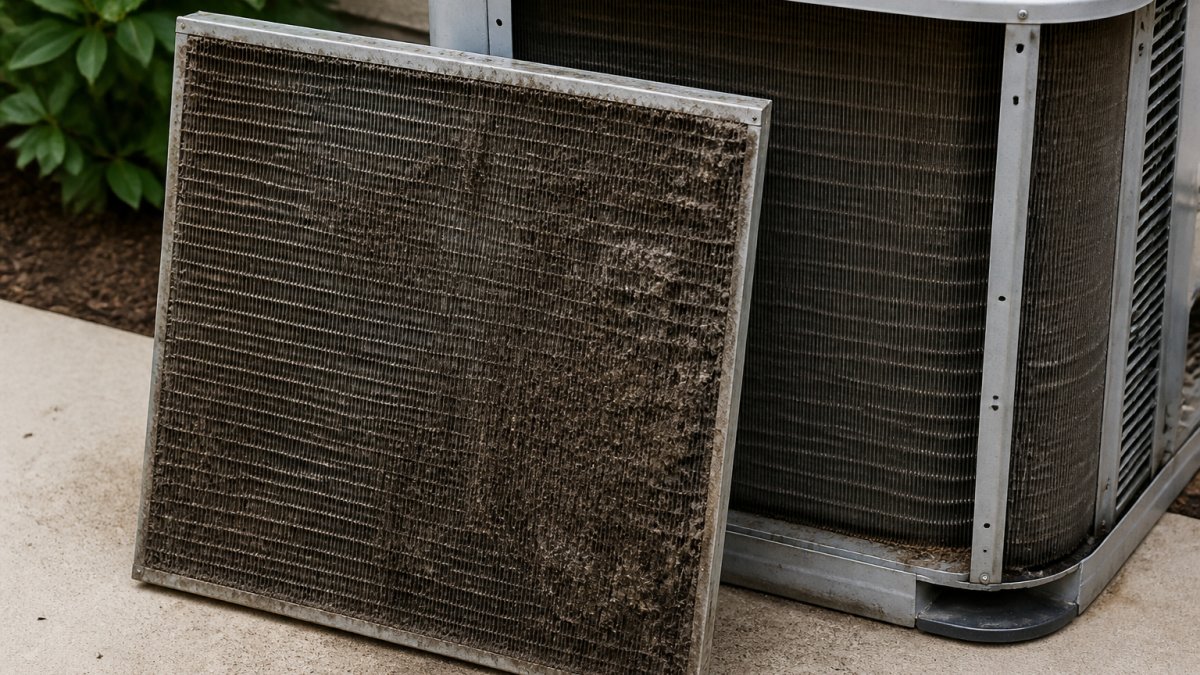
- You can see a mat of dust, lint, or grass on the fins
- The unit cycles on and off more often than it used to
How Dirty Coils Make Your AC Work Harder and Cost More
The downstream effects stack up:
- Higher head pressure at the compressor, which raises amp draw
- Longer system runtime to satisfy the same thermostat setting
- Reduced cooling output even though the unit is working harder
- More wear on the compressor, the most expensive part to replace
Restricted Airflow and the Clogged Filter Connection
So the first move is always the filter. Check it monthly during cooling season, and change it on schedule. A clean filter protects the coil and keeps airflow where it belongs.
Other HVAC Problems That Raise Energy Bills
If your system is running but not cooling, that pattern points somewhere specific. Our breakdown on why your AC is blowing warm air walks through the diagnostics step by step, including how to tell a coil problem from a refrigerant or compressor problem.
How to Inspect and Clean Your Coils Safely
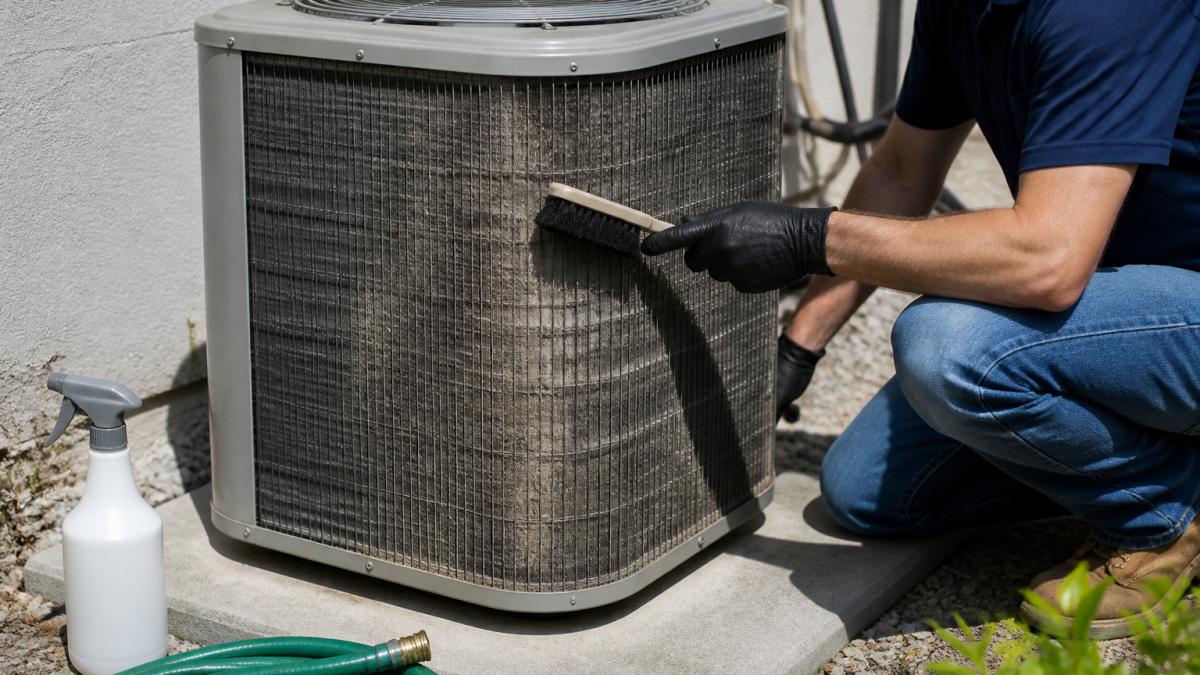
Watch out: do not use a pressure washer on condenser fins. It bends them flat, and bent fins permanently cut airflow. That mistake turns a cheap cleaning into a coil replacement.
AC Coil Cleaning Cost and When to Call a Professional
Pricing depends on the service and system. You can reach our licensed HVAC technicians in South Orange County for a quote.
We offer upfront pricing.
How Often to Service HVAC System Coils by Environment
| Environment | Condenser Coil Check | Evaporator Coil Check |
|---|---|---|
| Coastal home with salt air | Every 6 months | Yearly |
| Home near trees or open fields | Every 3-4 months | Yearly |
| Home with pets | Every 3 months | Yearly |
| Home near construction or dirt roads | Every 2-3 months | Every 6 months |
| Rental property with heavy turnover | Every 3 months | Yearly |
How to Verify Your Energy Savings After Cleaning
One honest caveat: cleaning restores performance, it does not add capacity. To confirm the savings afterward, see our guide to the best smart thermostat for home heating. If your bill stays high after a clean coil and a fresh filter, the cause is somewhere else, and that is worth diagnosing properly.
Book a Coil Inspection Before Your Next Bill Arrives
DC Plumbing Heating and Air Conditioning has served homeowners, property managers, and commercial clients across South Orange County since 1989, with licensed and certified technicians, upfront pricing, and warranties on parts and installation. We offer 24/7 emergency service.
Call today.
Frequently Asked Questions
How much do dirty coils increase electricity usage?
Dirty coils can push energy consumption up by roughly 15-25%, and in severe cases as much as 30%. The reason is that restricted heat transfer forces the compressor to run longer to reach the thermostat setpoint. That extra runtime shows up directly on your electric bill. A coil that cannot reject heat also reduces cooling output by 7-25%, so your system works harder just to deliver the same comfort.
Can I clean my own AC condenser coils?
You can handle light surface cleaning on the outdoor condenser coil. Turn off power at the disconnect, remove debris from around the unit, and rinse the fins gently with a garden hose from the inside out. Avoid high-pressure spray, which bends the fins. Indoor evaporator coils sit behind panels and near refrigerant lines, so leave those to a licensed technician to avoid damaging the coil or refrigerant circuit.
How often should HVAC coils be professionally cleaned?
Most homes benefit from professional coil cleaning once a year as part of routine HVAC maintenance. Homes near the coast, in dusty areas, or with pets and heavy pollen may need service every six months. Commercial units and systems running long cooling seasons often need more frequent attention. Pairing coil cleaning with filter changes every one to three months keeps airflow strong between visits.
Does a dirty evaporator coil cause the AC to freeze up?
Yes. A dirty evaporator coil restricts airflow across the coil, which drops the coil temperature below freezing and lets condensation turn to ice. The result is reduced cooling, water damage risk, and a compressor that runs constantly without satisfying the thermostat. If you see ice on the indoor unit or refrigerant lines, shut the system off and have a technician inspect and clean the coil before restarting it.