 blog
How to Choose Alternatives to Traditional Central Air Systems
Last Updated: October 30, 2026
Quick Summary
Alternatives to traditional central air include ductless mini-splits, heat pumps, window units, portable air conditioners, whole-house fans, and ducted mini-duct systems. Each trades whole-home cooling for a different balance of cost, comfort, and installation effort, so the right pick depends on your home's layout, climate, and how you use your rooms.
- A ductless mini-split uses an outdoor compressor and wall-mounted indoor heads to cool single zones without ducts.
- The cost to install a ductless mini-split depends on zones, line-set routing, electrical work, and permits.
- A heat pump heats and cools, while central air only cools and needs a separate heating system.
- A whole-house fan pulls in outdoor moisture, so it works poorly in humid conditions.
- Compare purchase, energy use, maintenance, and service life rather than anchoring on the quoted price.
Table of Contents
- Why Homeowners Are Rethinking Traditional Central Air
- Ductless Mini-Splits and the Cost to Install a Ductless Mini-Split
- Heat Pump vs Central Air: Which Makes More Sense
- Portable Air Conditioner Pros and Cons
- Whole-House Fan vs Central Air: Ventilation as a Cooling Strategy
- Window Units, Ducted Mini-Ducts, and Other Room Cooling Options
- Comparing Lifecycle Costs, Climate Fit, and Installation Constraints
- Planning Your Cooling Upgrade with a Local HVAC Contractor
- Frequently Asked Questions
Why Homeowners Are Rethinking Traditional Central Air
The biggest shift in home cooling isn't a new refrigerant or a smarter thermostat.
The reasons are practical. Ducts leak. Attics bake. Rooms that nobody uses still get cooled.
Alternatives to traditional central air systems range from ductless mini-splits and heat pumps to window units, portable air conditioners, and even whole-house fans.
Below, we break down each option, what it costs to run and install, and where it falls short.
The Real Costs of Ductwork and Whole-Home Cooling
Ductwork is the hidden expense in central HVAC. A ducted system doesn't just cool air; it pushes that air through a network of runs that lose energy along the way.
The duct system itself can be the reason a house never feels comfortable, no matter how good the air conditioner is. If cooled air escapes before it reaches the bedroom, you're paying to cool the attic.
Ductless Mini-Splits and the Cost to Install a Ductless Mini-Split
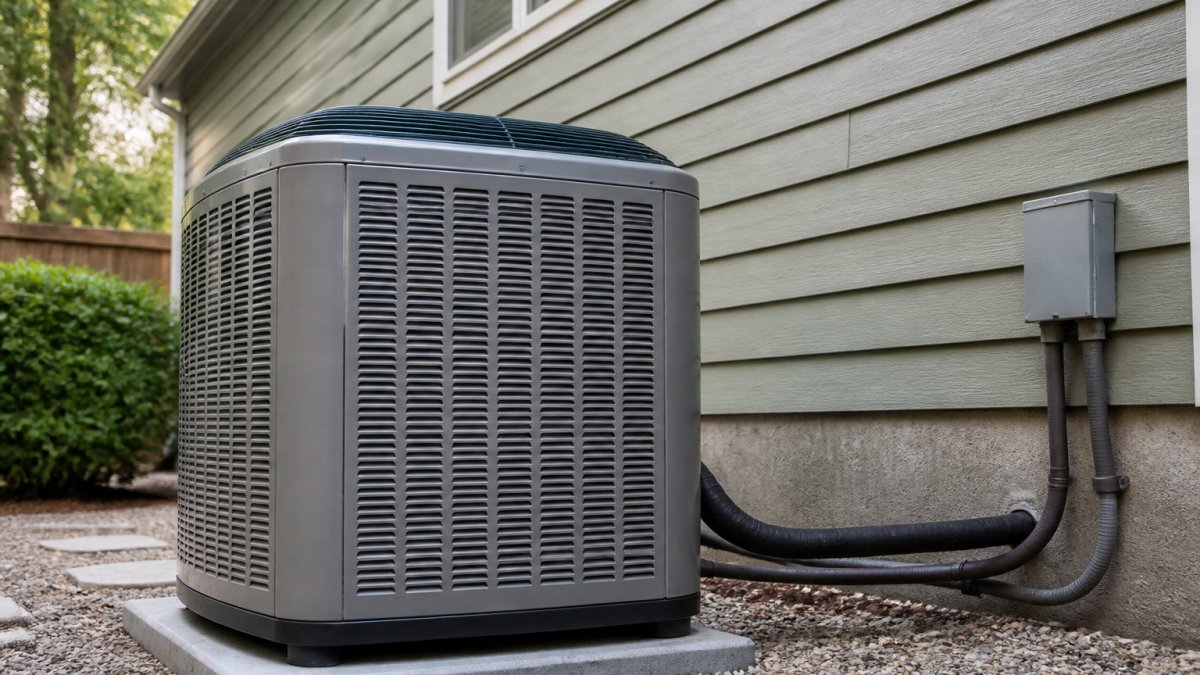
A ductless mini-split is a heat pump system with an outdoor compressor and one or more wall-mounted indoor heads, each cooling a single zone.
The cost to install a ductless mini-split is not a single number.
The main variables that affect the price are:
- Zones and heads. Each indoor head needs its own refrigerant line set, condensate drain, and power feed. Going from one head to four multiplies the labor and materials, and multi-zone outdoor units cost more than single-zone units of the same nominal capacity.
- Line-set routing. Short runs through an exterior wall are cheap. Long runs that cross a finished ceiling, chase through a closet, or climb an exterior wall add labor and sometimes require a line-set cover to protect the refrigerant lines from weather and physical damage.
- Electrical capacity. A single-zone mini-split often runs on a dedicated 15- or 20-amp 240-volt circuit. A multi-zone system may need a larger circuit or a subpanel. If the main electrical panel has no open breaker spaces or insufficient service capacity, a panel upgrade becomes part of the project, and that is a separate trade with its own permit and cost.
A panel sized for a furnace, a water heater, and a few general circuits can be pushed past its limit by a multi-zone heat pump. A qualified installer checks the panel and performs a load calculation before quoting, because the electrical answer can change the project scope more than the equipment choice does.

Room-by-Room Zoned Cooling Without Ducts
Zoned cooling lets you condition only the rooms you're using. That's the real advantage of a ductless system: the guest room stays off until guests arrive.
If you're planning zoned cooling, you'll want to compare thermostat options that can manage each zone.
One practical constraint: each indoor head needs a clear wall area for mounting and airflow, and the outdoor unit needs a level pad or wall bracket with clearance for service.
Heat Pump vs Central Air: Which Makes More Sense
The heat pump vs central air decision comes down to one question: do you want heating and cooling from one system? A heat pump moves heat rather than generating it, and reversible operation means it heats in winter and cools in summer (Pump Up Your Savings with Heat Pumps).
For mild climates, a heat pump can be more economical to operate than a furnace because it delivers more heating per unit of electricity. In colder regions, a cold-climate heat pump or a hybrid setup paired with a furnace may be a better fit.
Portable Air Conditioner Pros and Cons
Portable air conditioner pros and cons are easy to summarize: they're cheap to buy, easy to move, and require no installation. They're also noisy, less efficient than a mini-split, and need a window or vent kit for exhaust. A single-hose unit pulls conditioned air out of the room, which works against it.
Best for renters, temporary spaces, and one-room cooling. Skip it if you need quiet operation or whole-home comfort.
Whole-House Fan vs Central Air: Ventilation as a Cooling Strategy
A whole-house fan pulls cooler evening air through the house and pushes hot air out through the attic. On mild nights, it can replace air conditioning entirely. During a hot afternoon, it can't.
The whole-house fan vs central air comparison isn't really a contest; it's a pairing. Many homeowners run the fan at night and the AC during the day.
Window Units, Ducted Mini-Ducts, and Other Room Cooling Options
Window air conditioners and wall-mounted units remain the simplest single-room cooling option. They're inexpensive and install in a window frame, but they block light, add noise, and cool only the room they're in. A room air conditioner is best treated as a stopgap, not a whole-home strategy.
Ducted mini-duct systems sit between the two extremes. They use small, flexible ducts that fit inside existing walls, which makes them a genuine retrofit option for an older home without standard ductwork. They're quieter than window units and less visible than wall-mounted heads, but installation is more invasive than a ductless system.
Comparing Lifecycle Costs, Climate Fit, and Installation Constraints
Lifecycle cost is where the real comparison happens. Purchase price is only the first number; operating cost, maintenance, and expected service life decide the total. A cheaper system that runs inefficiently for a decade often costs more than a better one.
The four cost components to compare side by side are:
- Purchase and installation. Equipment, labor, line sets or ductwork, electrical work, and permits. This is the number most quotes show, and the one most homeowners anchor on.
- Annual energy use. Driven by efficiency ratings, climate, how many hours the system runs, and how well the house is insulated and air-sealed. A system that cools one room uses far less energy than one that cools a whole house, but it also delivers less comfort.
- Maintenance. Ductless and heat pump systems need periodic coil cleaning, filter changes, and refrigerant checks. Window and portable units need filter cleaning and, for portables, drain management. Ducted systems add duct sealing and insulation to the list.
- Replacement and service life. Equipment life varies by system type and by how hard it runs. A system that is oversized or undersized tends to fail earlier, which raises the effective annual cost.
| System | Best For | Installation Effort | Key Constraint |
|---|---|---|---|
| Ductless mini-split | Room-by-room zoned cooling | Moderate | Electrical capacity, line-set routing |
| Heat pump | Year-round heating and cooling | Moderate to high | Sizing, cold-climate performance |
| Window unit | Single-room cooling | Low | Window fit, noise, efficiency |
| Portable AC | Renters, temporary spaces | None | Exhaust venting, noise |
| Whole-house fan | Mild, dry climates | Moderate | Humidity, attic ventilation |
| Ducted mini-duct | Older homes without ducts | High | Wall access, retrofit complexity |
Climate Fit: Humidity, Extreme Heat, and Winter Cold
Climate fit matters as much as cost, and it is the factor most broad guides skip. Three climate variables change which system wins:
- Humidity. A whole-house fan pulls in outdoor air, including outdoor moisture, so it works poorly in humid conditions. A cooling system that runs long enough to remove moisture is more comfortable than one that blasts cold air and shuts off. For practical guidance, see How to Reduce Humidity With Central Air. Oversized equipment can cool too quickly to dehumidify well, leaving a clammy house in humid climates.
- Extreme heat. In sustained high heat, a system's capacity matters more than its efficiency rating. A single-zone mini-split sized for a mild climate may struggle during a heat wave, and a portable unit's exhaust hose dumps heat back into the room it is trying to cool. Window units and mini-splits hold up better when sized correctly for design conditions.
- Winter cold. A standard heat pump loses capacity as outdoor temperatures fall (Residential Cold Climate Heat Pump Challenge). In colder regions, a cold-climate heat pump or a hybrid setup paired with a furnace makes more sense. Central air only cools, so it always needs a separate heating system, a cost that belongs in the lifecycle comparison.
If you're weighing whether a higher-efficiency system pays back over its life, compare its purchase price against expected energy savings over the equipment's service life.
Electrical, Permitting, and Installation Constraints
Every cooling upgrade runs into the same practical constraints, and they often decide the project more than the equipment does.
- Electrical service. A heat pump or multi-zone mini-split may need a dedicated circuit or a panel upgrade. Check the main panel for open breaker spaces and available service capacity before choosing equipment. A panel upgrade is a separate trade with its own permit and cost.
- Refrigerant-line routing. Ductless and heat pump systems need a path from the outdoor unit to each indoor head. Short exterior runs are simple; runs through finished ceilings or across long wall spans add labor and may require protective covers.
- Permits. Most jurisdictions require a permit for new HVAC equipment and for the electrical circuit that feeds it. The permit fee and inspection time are real line items, and skipping the permit creates problems at resale.
If you're adding equipment, it helps to understand what a tripped breaker can indicate before you assume the worst.
Planning Your Cooling Upgrade with a Local HVAC Contractor
A cooling upgrade is a sizing and load-calculation problem before it's a shopping problem. The right contractor measures the house, checks the panel, and confirms what the ductwork, if any, can actually support.
At DC Plumbing Heating and Air Conditioning, our licensed, certified technicians serve South Orange County and quote projects with upfront pricing. Our warranties cover parts and installation services.
Frequently Asked Questions
What are the best alternatives to traditional central air systems?
The main options are ductless mini-splits, heat pumps, window air conditioners, portable air conditioners, and whole-house fans. Each works best in different situations: mini-splits suit homes without ducts, heat pumps handle both heating and cooling, window units fit single rooms, and whole-house fans work well in mild climates with cool evenings. The right choice depends on your home size, layout, existing ductwork, and budget.
Can a ductless mini-split cool an entire house?
A single mini-split is designed for one room or a defined zone. To cool a whole house, you need a multi-zone system with several indoor heads connected to one outdoor unit, or multiple single-zone systems. The cost to install a ductless mini-split rises with each zone, but zoned cooling often uses less energy than cooling unused rooms. A contractor can assess your layout to size the system correctly.
Is a heat pump a good alternative to central air conditioning?
Yes. In a heat pump vs central air comparison, a heat pump works like a central air conditioner in summer and reverses to provide heat in winter. It runs on electricity and can be more efficient than a furnace plus AC combination. Heat pumps work best in homes with existing ductwork or as ductless units, and performance drops in extreme cold, so climate matters when deciding.
What should I consider before replacing central air with another system?
Check your home's ductwork condition, electrical panel capacity, room layout, and local permit requirements. Weigh upfront installation cost against long-term operating cost and maintenance. Consider humidity control and indoor air quality, especially in coastal climates. A licensed HVAC contractor can evaluate your home and recommend a system that fits your budget and comfort needs.
The hard part isn't picking a system; it's knowing which one your home can actually support. That takes a load calculation, an electrical check, and an honest look at your ducts. DC Plumbing Heating and Air Conditioning offers 24/7 emergency service, transparent upfront pricing, and warranty-backed installation from certified local technicians. Get started with DC Plumbing Heating and Air Conditioning and cool the rooms that matter, without paying for the ones that don't.