 How-to
Licensed HVAC Technicians in South Orange County
Table of Contents
- What Licensed HVAC Technicians Do
- How to Verify an HVAC License in California
- Questions to Ask an HVAC Technician Before Hiring
- HVAC Repair or Replacement: How to Decide
- HVAC Maintenance: Preventive Care That Saves Money
- Why Licensed Technicians Matter for Your Home and Business
- Finding Reliable HVAC Service in Your Area
- Frequently Asked Questions
Last Updated: October 16, 2026
What Licensed HVAC Technicians Do
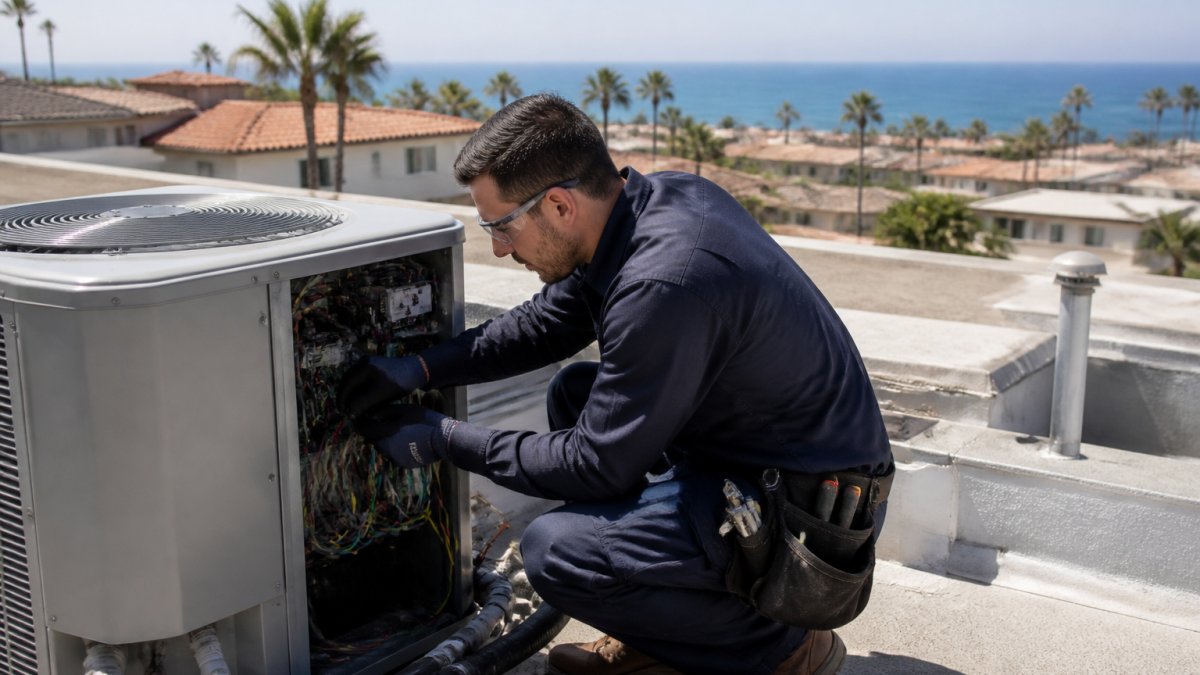
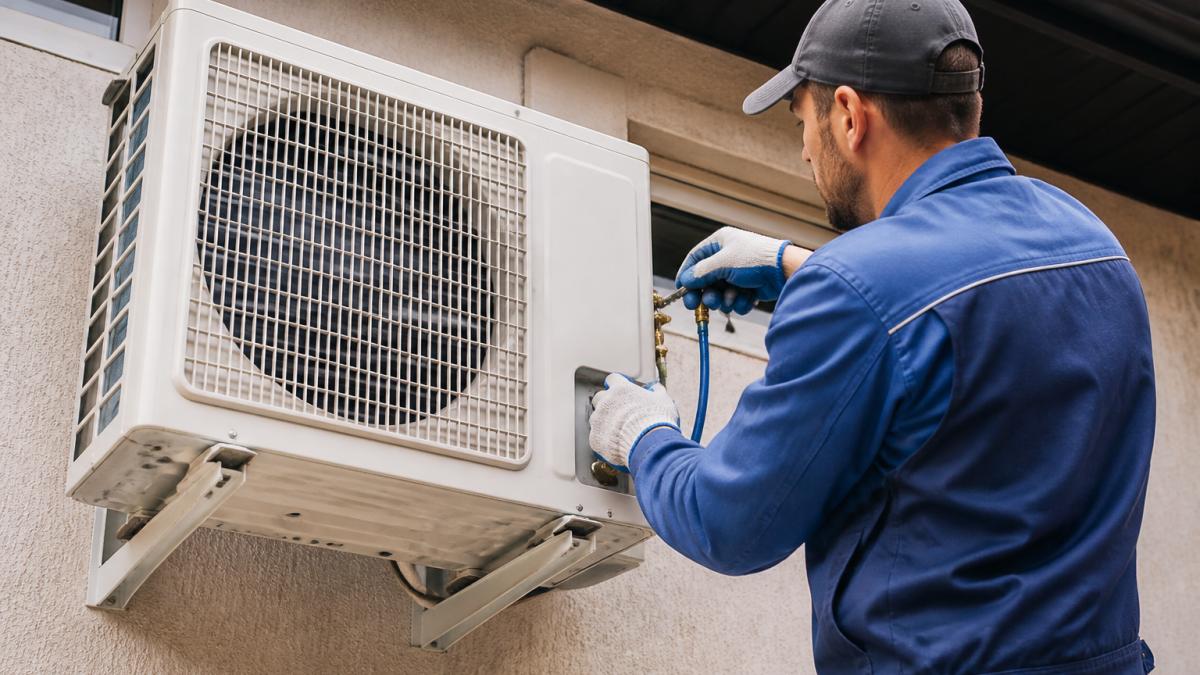
Licensed HVAC technicians install, maintain, and repair heating, cooling, and ventilation systems in residential and commercial properties, handling everything from routine maintenance to emergency repairs.
The scope is broader than many realize.
What separates a licensed technician from an unlicensed one is certification and accountability. Licensed professionals carry insurance, follow safety protocols, and are held to industry standards, so when something goes wrong, you have recourse.
At DC Plumbing Heating and Air Conditioning, our licensed technicians bring nearly 38 years of experience to every job, handling HVAC repair, replacement, and maintenance for residential and commercial clients across South Orange County, with transparent upfront pricing, warranty-backed work, and a commitment to leaving your space clean.
How to Verify an HVAC License in California
Verifying a license is the single most important step before you let anyone touch your heating or cooling system. In California, HVAC work is regulated at the state level, and the license you want is a C-20 Warm-Air Heating, Ventilating and Air-Conditioning Contractor license issued by the Contractors State License Board (CSLB), which operates under the Department of Consumer Affairs. A C-20 authorizes a contractor to install, modify, and repair warm-air heating, ventilating, and air-conditioning systems. If a company cannot produce a C-20 number, they are not licensed for the work.
Where to check
Go to the CSLB's online license lookup at Contractors State License Board license search and search by license number, business name, or the name of the individual you are dealing with. The lookup is free, updates continuously, and takes about two minutes. You can also call the CSLB's automated phone line if you prefer to verify by phone.
What the record actually tells you
Do not stop at 'active.' Read the whole record:
- License status. You want Active or Current. Expired, Suspended, Revoked, or Inactive means the contractor cannot legally contract for work in that classification right now.
- Classification. Confirm C-20 specifically. A general B license or a C-36 plumbing license does not authorize HVAC work on its own.
- Issue date and expiration. A recently issued license isn't automatically a red flag, but it means a short track record worth probing with references.
- Bond and insurance on file. The CSLB record shows whether the contractor has a bond and workers' compensation coverage on file. A contractor with employees and no workers' comp is a serious liability exposure for you.
- Disciplinary actions and complaints. The record lists citations, arbitration awards, and formal accusations. One old citation isn't disqualifying; a pattern is.
- Personnel listed. The record names the qualifying individual who passed the trade and law exams. Ask whether that person will be on your job or the work handed to unlicensed helpers.
Warning signs that should end the conversation
- They ask for a large cash deposit up front, or want the check made out to a person rather than the licensed business entity.
- They won't show a written contract with the license number, scope, and payment schedule.
- They offer to 'pull the permit later' or say the work needs no permit.
- The name on the truck, estimate, and license don't match.
- They pressure you to sign the same day to 'lock in' a price.
Why this matters for HVAC specifically
HVAC work touches refrigerant handling, gas connections, electrical circuits, and, on replacements, the permit and inspection process. Refrigerant work is regulated under federal Clean Air Act rules, and only technicians with the appropriate EPA Section 608 certification may legally purchase and handle regulated refrigerants. A C-20 license alone doesn't prove Section 608 certification, so ask both: 'What is your C-20 number?' and 'Are your technicians EPA 608 certified?' A licensed, insured, EPA-certified crew is the baseline, not a bonus.
Questions to Ask an HVAC Technician Before Hiring
Before you schedule service, ask these questions to separate qualified professionals from those cutting corners.
First, confirm licensing and insurance.
Second, understand the diagnostic process. Ask what they'll check and how they'll explain findings.
Third, ask about pricing transparency. Request an upfront estimate before work begins, confirm whether it includes parts, labor, and diagnostic fees, and ask whether the price changes if additional issues surface.
Fourth, ask about warranties. What's covered, for how long, and does it apply to parts, labor, or both?
Fifth, confirm emergency availability. Ask whether they offer 24/7 service and what response time looks like.
HVAC Repair or Replacement: How to Decide
The repair-or-replace decision is where homeowners most often feel pressured, so understand the mechanics before a technician is standing in your hallway. No single age threshold settles it; the answer comes from weighing four factors: equipment age, repair cost relative to replacement, the efficiency gap between your system and a new one, and how long you plan to stay in the home.
The age factor
Most residential furnaces and air conditioners are designed for roughly 15 to 20 years with regular maintenance, and heat pumps land in a similar range. That's a planning number, not a cliff: a 12-year-old system maintained twice a year with no major failures is a very different repair candidate than one with three service calls in two years.
The cost-ratio rule of thumb
A common industry guideline is the $5,000 rule: multiply the age of the equipment by the cost of the repair. If the result is more than roughly $5,000, replacement is usually the better financial move. So a $900 repair on a 12-year-old unit ($10,800) points toward replacement, while the same $900 repair on a 4-year-old unit ($3,600) points toward repair. Treat this as a starting point for the conversation, not a verdict.
The efficiency gap
This is the factor homeowners most often underestimate. Older air conditioners and furnaces were built well below today's efficiency minimums, and the difference shows up monthly on your utility bill. When comparing a replacement quote against a repair, ask the contractor to show the SEER2 rating of the proposed equipment (cooling) and the AFUE rating (gas furnaces) alongside your existing unit's ratings. A meaningful jump in either, combined with age, often tips the math toward replacement even when the repair looks affordable.
The 'how long will you stay' factor
If you plan to sell within two or three years, a repair that gets you to the sale may be rational, but disclose it. If you plan to stay five years or more, efficiency savings and warranty coverage usually make replacement the better long-term decision. Buyers and inspectors will ask about system age, and a documented recent replacement is a selling point.
What a good technician will actually do
A licensed technician evaluating this decision should:
- Measure actual performance, not just eyeball it, static pressure, refrigerant charge, temperature split across the evaporator coil, and combustion analysis on a gas furnace.
- Show you the failed or failing component and explain the cause.
- Give written repair and replacement estimates side by side, with model numbers, efficiency ratings, and warranty terms.
- Tell you plainly which option they'd choose for their own home and why.
If you get a quote for replacement without a diagnosis of the current system, or a repair quote with no explanation of the underlying cause, ask for both in writing before you decide.
A note on South Orange County homes
South Orange County housing ranges from mid-century ranch homes inland to newer coastal construction, and the right call depends on what's already installed. Coastal properties deal with salt air and condenser coil corrosion; inland properties deal with longer cooling seasons and higher run times. A technician who works this area regularly factors both in rather than applying a one-size-fits-all rule.
HVAC Maintenance: Preventive Care That Saves Money
Regular maintenance keeps your system running efficiently and prevents expensive emergency repairs, paying for itself many times over.
Schedule professional maintenance twice yearly, before heating season and before cooling season.
Change your air filter every 30-90 days depending on usage and air quality. A clogged filter forces the system to work harder, consuming more energy and reducing efficiency, the simplest maintenance task and one of the most effective (HVAC Proper Installation of Filters).
Keep outdoor units clear of debris. Leaves, dirt, and vegetation restrict airflow and reduce performance, so clear the area around your condenser at least monthly, especially in fall and spring.
Listen for unusual sounds. A well-functioning system runs quietly; grinding, squealing, or rattling indicates worn bearings, loose belts, or other problems. Call a technician early, prompt diagnosis prevents system failure.
Maintain consistent thermostat settings.
Why Licensed Technicians Matter for Your Home and Business
Hiring a licensed HVAC technician protects your investment and your safety. Unlicensed operators may offer lower prices, but those savings disappear when the work fails.
Safety is the primary concern. HVAC systems involve electrical components, refrigerants, and gas connections. Improper handling creates fire hazards, electrical risks, and refrigerant leaks that harm the environment and your health.
Code compliance is another critical factor.
Accountability matters when something goes wrong. Licensed contractors carry liability insurance and are subject to regulatory oversight. If a repair fails, you have recourse. If an unlicensed contractor disappears, you're responsible for fixing their mistakes.
Finding Reliable HVAC Service in Your Area
Start by asking neighbors and friends for recommendations.
Check online reviews on Google, Yelp, and the Better Business Bureau.
Verify licensing through the California Department of Consumer Affairs database. It takes minutes and confirms the contractor is legitimate, never skip it.
Get estimates from at least two contractors and compare pricing, warranty terms, and scope of work.
Ask about service guarantees. A contractor confident in their work backs it with written warranties; if they offer none, question why.
DC Plumbing Heating and Air Conditioning serves South Orange County with licensed, certified technicians ready for repairs, replacements, and maintenance.
Finding the right licensed HVAC technician means the difference between a system that runs smoothly for years and one that fails unexpectedly.
Frequently Asked Questions
How can I verify an HVAC technician's license?
In California, all HVAC contractors must hold a valid C-20 license issued by the Contractors State License Board (CSLB). Visit the CSLB website and search the contractor's name or license number to confirm current status, any disciplinary actions, and bonding information. Ask the technician for their license number before work begins and verify it matches their identification. Licensed technicians should also carry proof of insurance and current certifications.
What should I ask an HVAC technician before hiring them?
Ask about their California contractor license and how long they've been in business. Request references from recent residential or commercial clients and inquire about warranty coverage on parts and labor. Ask whether they provide upfront, written estimates before starting work and how they handle unexpected issues discovered during service. Confirm they're insured and bonded, and ask about their emergency service availability if you need after-hours support.
When should I repair or replace my HVAC system?
If your heating or cooling system is over 15 years old and requires frequent repairs, replacement often makes financial sense. A rule of thumb is to consider the repair cost in relation to the system's age and the cost of a new unit; if the repair cost is a large fraction of replacement, replacement is often the better choice. Also consider replacement if your system uses R-22 refrigerant (being phased out), has lost efficiency, or cannot maintain consistent temperatures. A licensed technician can assess your system and provide a professional recommendation.
What is the most common HVAC problem homeowners face?
Clogged or dirty air filters are the most frequent issue, reducing airflow and forcing systems to work harder. This leads to higher energy bills and potential system damage. Other common problems include refrigerant leaks, thermostat malfunctions, and compressor failures. Regular maintenance, including monthly filter changes and seasonal tune-ups by a licensed technician, prevents most of these issues and extends system life significantly.