 How-to
Why Sewer Line Maintenance for Older Homes Matters
Last Updated: November 17, 2026
Quick Summary
Sewer line maintenance for older homes matters because the buried pipes were never built to last this long, and regular sewer line maintenance is the only way to stay ahead of them. Original lines can be well past the age at which they start to fail, so catching problems early is far cheaper than waiting for a backup.
- Cast iron, common before the 1970s, rusts from the inside out until walls thin and the pipe cracks or collapses.
- Tree-root intrusion is the leading cause of older sewer line failure, forming mats that trap waste.
- A camera inspection report should tie every defect to a distance marker and depth, with recorded footage.
- Cast iron lines need camera inspection every year and professional cleaning every one to two years.
- Orangeburg pipe crushes easily, so plan for replacement rather than relying on maintenance.
Table of Contents
- Why Older Homes Need Extra Sewer Line Attention
- Pipe Materials in Older Homes and How They Fail
- Signs of Sewer Line Damage You Should Never Ignore
- Tree Roots, Soil Movement, and Other Causes of Pipe Deterioration
- What a Sewer Line Inspection Reveals and How Often to Schedule One
- Sewer Line Cleaning: DIY Checks vs. Professional Service
- Sewer Line Repair vs Replacement: How to Decide
- Building a Maintenance Plan for Your Home's Sewer Line
- Frequently Asked Questions
Why Older Homes Need Extra Sewer Line Attention
Sewer line maintenance for older homes matters because the pipes buried under an older property were never built to last this long, and regular sewer line maintenance is the only way to stay ahead of them. Original sewer lines in older homes can be well past the age at which they start to fail. This guide explains what to watch for and how to protect your line before a small problem becomes a flooded basement.
Older homes carry hidden risks. The pipe under your yard may be cracked, root-filled, or sagging, and you would never know until waste backs up into the house. A slow drain or a faint smell is often the first warning. By then, the damage has usually been growing for years.
Aging Pipes, Bigger Risks
Age alone does not break a pipe. Time plus soil, water, and roots do. An older line has had decades to collect those problems.
Three things make older lines riskier:
- The material itself is weaker than modern plastic
- Joints loosen and let roots and soil in
- The ground around the pipe has shifted many times
Catching these issues early is far cheaper than waiting for a backup.
Pipe Materials in Older Homes and How They Fail
The material of your pipe tells you how it will likely fail. Each type has a known weak spot, and knowing yours helps you plan ahead.
Cast iron was common in homes built before the 1970s. It rusts from the inside out.
Clay tile shows up in very old homes. It is brittle.
Orangeburg is a tar-paper pipe used in some mid-century homes. It crushes easily and often fails completely.
PVC is the modern standard. It resists roots and corrosion well. Older PVC can still develop loose joints, but it holds up far better than the rest.
A common mistake is assuming a slow drain means a simple clog. In an older home, it often points to a failing pipe instead.
Signs of Sewer Line Damage You Should Never Ignore
The signs of sewer line damage are easy to dismiss until they get serious. Watch for these warnings:
- Slow drains in more than one fixture
- Gurgling sounds from toilets or tubs
- Sewage odors inside or in the yard
- Wet, sunken, or unusually green patches in the lawn
- Backups that keep returning after snaking
- Cracks in the foundation or walls near the line
If two or more of these appear together, treat it as a real problem. Recurring plumbing problems rarely fix themselves. A small leak today can turn into property damage and an emergency repair tomorrow.
Tree Roots, Soil Movement, and Other Causes of Pipe Deterioration
Tree-root intrusion is the leading cause of older sewer line failure. Roots find tiny cracks and joints, then grow inside the pipe to reach the water. Once inside, they form a mat that traps waste and causes blockages.
Soil movement is the second big cause. Settling ground shifts the pipe and opens joints. In some yards, the soil also holds moisture that speeds corrosion.
Other causes include:
- Corrosion from years of waste and water
- Poor original installation with weak slopes
- Heavy loads, like vehicles, pressing on the line
- Grease and debris building up over decades
If roots are your problem, how to prevent tree roots in sewer pipes for good walks through the long-term fixes.
EPA guidance on household wastewater and sewer systems
What a Sewer Line Inspection Reveals and How Often to Schedule One
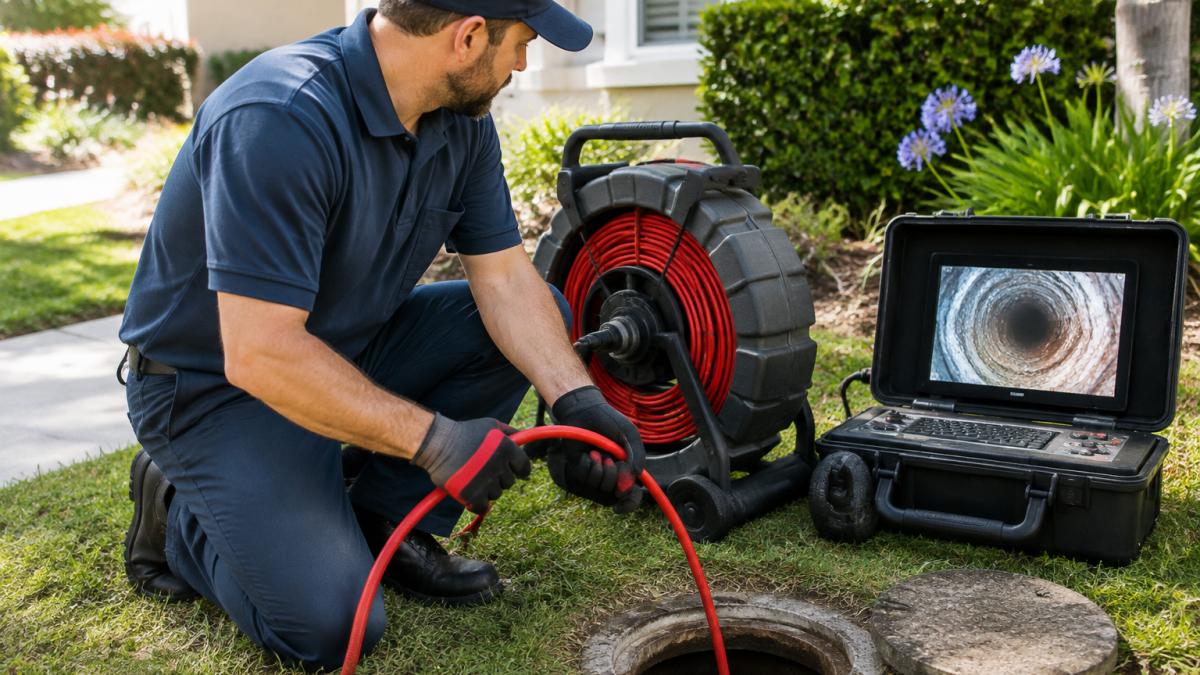
A sewer camera inspection can show the inside of the pipe in real time, and it is one way to see hidden pipe problems before they fail.
Older homes benefit from periodic inspection, and it is sensible to book one right away if you notice warning signs or are buying or selling the property.
Reading Your Camera Inspection Report
The inspection report should tell you the pipe material, the location of any defects, and how serious they are. A useful report ties every defect to a distance marker and a depth so you can find the spot in your yard. Ask for the recorded footage, not just a summary.
Look for these terms and what they usually mean:
- Cracks and fractures: the pipe is broken but may still be repairable if the break is short and the surrounding pipe is sound.
- Root intrusion: roots are inside the line and need clearing. Light root hair at a joint is a maintenance item; a dense root mat means the joint has opened and will keep letting roots back in.
- Offsets: joints have shifted out of line. A small offset traps debris; a large one can snag a cable and needs repair.
- Sags or bellies: the pipe dips and traps water. Standing water in a belly accelerates corrosion and root growth, so these tend to worsen.
- Corrosion or scale: the walls are thinning or clogged. In cast iron, heavy scale is a sign the pipe is near the end of its life.
- Collapse or deformation: the pipe has lost its round shape. This is a replacement signal, not a cleaning one.
Turning Findings Into a Decision
A common pattern is to sort findings into three buckets. Monitor means the defect is minor and stable, so you clean and re-inspect on schedule. Repair means a defined section is failing, so a spot repair or lining makes sense. Replace means damage runs along most of the line or the material itself is failing, so patching will keep costing money.
Watch out: a report that lists defects without distances or footage is hard to act on, and a second opinion from another camera inspection is cheaper than repairing the wrong section.
Not sure how often your line needs cleaning? how often sewer lines should be cleaned explains the schedule. If you are weighing the cost, see what a sewer camera inspection costs in 2026.
HUD guidance on home maintenance and inspections
Sewer Line Cleaning: DIY Checks vs. Professional Service
You can handle a few simple checks yourself. Most real cleaning needs a pro.
Safe DIY checks:
- Test each drain for slow flow
- Listen for gurgling after you run water
- Check the yard for wet or sunken spots
- Smell for sewage near cleanouts
- Keep grease and wipes out of the drains
Call a professional for:
- Repeated backups
- Root intrusion
- Camera inspections
- High-pressure jetting
- Any repair work
Chemical drain cleaners can damage weak pipes and rarely clear a root blockage, so they are not a substitute for a proper assessment.
Sewer Line Repair vs Replacement: How to Decide
Sewer line repair vs replacement comes down to the pipe's condition and how much of it is failing. A spot repair fixes one small section. Replacement swaps out the whole line.
Use this simple guide:
| Situation | Best Choice | Why |
|---|---|---|
| One small crack or joint | Spot repair | Cheaper and fast |
| A few isolated root points | Cleaning plus spot repair | Fixes local issues |
| Orangeburg or collapsed pipe | Full replacement | Pipe cannot be saved |
| Widespread cracks or sags | Full replacement | Repairs keep failing |
| Line near the end of its life | Replacement | Stops repeat problems |
A patch on a failing line often means another repair soon. If an inspection shows damage along most of the run, replacement may be the better long-term option. For realistic figures, see the average cost of sewer line repair in 2026.
Consumer Financial Protection Bureau on home repair financing
Building a Maintenance Plan for Your Home's Sewer Line
A good maintenance plan matches your pipe's age and material. The same calendar does not fit a 1950s cast iron line and a 1990s PVC line, because they fail in different ways and at different speeds.
A Material-Aware Schedule
Use the row that matches your pipe, then adjust for what your last inspection found.
- Cast iron (common before the 1970s): camera inspection every year, professional cleaning every one to two years. Scale and rust build up from the inside, so cleaning removes the buildup that speeds corrosion.
- Clay tile: camera inspection every one to two years, with a root-focused check each spring. Brittle tile cracks when the ground shifts, and roots find the joints first.
- Orangeburg: inspection every year and plan for replacement. This tar-paper pipe crushes easily and rarely lasts, so maintenance is mostly about timing the replacement before a backup.
- PVC (modern standard): inspection every two to three years if the line is in good shape. Loose joints are the main risk, and they show up as offsets on camera.
- Unknown material: start with one inspection to identify the pipe, then follow the matching row.
What Each Action Prevents
- Camera inspection catches cracks, offsets, and roots before they cause a backup. It is the only way to see the pipe without digging.
- Professional cleaning removes grease, scale, and root hair that trap waste. On older lines, cleaning also buys time by keeping the pipe flowing while you plan a repair.
- Seasonal DIY checks catch slow drains and yard sinkholes early, when a repair is still small.
- Pre-sale inspection gives buyers a clear picture and protects you from surprises during a transaction.
Cost Context for Planning
Preventive maintenance is generally less costly than emergency repair, because a backup that reaches finished space can add cleanup and restoration on top of the repair itself. For realistic figures, see the average cost of sewer line repair in 2026.
Keep a Simple Log
Write down each inspection date, the findings, and what was done. A simple log helps you spot patterns, shows whether a defect is stable or growing, and gives future owners a clear history. It also tells the next technician exactly where to look.
For a full home routine, the residential plumbing maintenance checklist for 2026 covers the rest of your system.
FEMA guidance on preventing water damage at home
Frequently Asked Questions
Why do older homes have more sewer line problems?
Older homes often still have their original sewer lines made from cast iron, clay, or Orangeburg, materials that degrade over decades. Cast iron rusts and flakes, clay cracks under soil pressure, and Orangeburg collapses entirely. Combined with mature trees whose roots seek out pipe joints, these aging lines face constant stress.
How often should a sewer line be inspected in an older home?
For homes with original or aging pipes, schedule a sewer line inspection sooner if you notice slow drains, gurgling, or sewage odors. A camera inspection catches fractures and root intrusion before they turn into a sewage backup that damages floors and walls.
Should an old sewer line be repaired or replaced?
The decision comes down to pipe condition and how widespread the damage is. A single crack or isolated root intrusion can often be handled with a spot repair or sewer line cleaning. But if the inspection shows widespread corrosion, collapsed sections, or repeated failures along the run, replacement may be the better option over time. Ask for the camera footage and a written recommendation so you can compare repair vs replacement honestly.
What are the warning signs of sewer line damage?
Watch for slow drains in multiple fixtures, gurgling sounds from toilets, sewage odors indoors or in the yard, and soft or unusually green patches of grass above the line. Repeated clogs that return soon after sewer line cleaning are another red flag. Any of these signs of sewer line damage warrants a professional assessment before the problem escalates into a backup or a sewage leak.