 Comparison
Average Cost of Sewer Line Repair in 2026
Table of Contents
- Average Cost of Sewer Line Repair: What Homeowners Actually Pay
- Cost by Repair Type: Clog Service, Partial Repair, and Full Replacement
- Sewer Line Replacement Cost and When Replacement Beats Repair
- Trenchless Sewer Repair Cost vs Open-Trench Excavation
- Main Sewer Line Clog Repair Cost and Root Intrusion
- Sewer Line Inspection Cost and Why a Camera Scope Comes First
- What a Sewer Repair Estimate Should Include
- Permits, Property Responsibility, and Insurance Coverage
- Frequently Asked Questions
Last Updated: October 18, 2026
Average Cost of Sewer Line Repair: What Homeowners Actually Pay
Sewer line repair is the process of restoring a damaged section of the pipe that carries wastewater from a home to the municipal main, and the average cost of sewer line repair depends almost entirely on how much pipe is damaged and how deep it sits. Published national averages mask a huge spread. Angi's sewer line cost guide reports professional replacement work in the range of roughly $1,388 to $5,323, while Modernize's sewer line cost breakdown puts full replacement closer to $3,000 to $7,000. Neither number is wrong. They describe different jobs.
Below, we break down what drives the price, how repair methods compare like for like, and what a legitimate estimate should contain.
Published Cost Benchmarks for 2026
Benchmark figures are a starting point for budgeting, not a quote. The major cost guides publish ranges that vary by a factor of three or more because each defines "repair" differently. A spot repair on a shallow line and a full replacement under a driveway are not the same project, and no single average reconciles them. Use these numbers to sanity-check a bid, then ask your contractor what specifically is included.
Price Per Linear Foot and Project Size
Per-foot pricing is the most useful unit for comparing bids. Cost guides commonly report a per-foot range for sewer line work, with the low end covering accessible, shallow runs and the high end covering deep excavation, hard surfaces, or difficult soil. Project size multiplies that figure: ten feet of damaged pipe costs far less than sixty. When a contractor quotes a lump sum, ask for the linear footage and the per-foot rate behind it. That single question exposes padded bids faster than anything else.
Cost by Repair Type: Clog Service, Partial Repair, and Full Replacement
Three distinct jobs get lumped under "sewer line repair," and they carry very different price tags. A main line clog cleared by drain cleaning is the cheapest. A partial or sectional repair, where one damaged span is cut out and replaced, sits in the middle. Full replacement is the most expensive and the most permanent. NuFlow's residential repair estimates separates minor spot repairs from broader project costs for exactly this reason, and that distinction matters when you are reading a bid.
Like-for-Like Comparison of Repair Methods
| Repair Type | What It Addresses | Relative Cost | Typical Lifespan |
|---|---|---|---|
| Drain cleaning | Clogs, grease, roots at the opening | Lowest | Months to a few years |
| Sectional repair | One cracked or collapsed span | Moderate | Matches surrounding pipe |
| Pipe lining | Cracks and joint failures along a run | Moderate to high | Long-term |
| Pipe bursting | Worn pipe replaced in place | High | Long-term |
| Open-trench replacement | Fully failed or collapsed line | Highest | Long-term |
The mistake often made is comparing a drain cleaning quote against a replacement quote and concluding one contractor is ripping you off. They are not the same service.
Sewer Line Replacement Cost and When Replacement Beats Repair
Replacement wins when the damage is widespread, the pipe is at the end of its life, or repairs keep recurring in the same line. Sewer line replacement cost runs higher than a single repair, but repeated patch jobs on a failing line add up fast. The decision is not really "repair versus replace" in the abstract, it is a comparison of upfront price against expected lifespan, disruption, and the probability of a second failure.
A decision framework you can apply to a real bid:
- Localized damage, sound pipe elsewhere. A single crack, offset joint, or root entry point in an otherwise healthy run is a sectional repair or spot lining candidate. Replacement is overkill.
- Widespread cracking, recurring bellies, or multiple failures along the run. This is the replacement signal. Patching one span while the rest of the line is failing buys time, not a solution.
- End-of-life material. Older cast iron, clay, and Orangeburg lines that have already failed once are prone to failing again nearby. Lifespan expectations for the surrounding pipe should weigh as heavily as the price of the immediate fix.
- Recurring failure in the same section. If the same span has failed twice within a few years, the underlying condition, soil movement, root mass, or pipe deterioration, is not being addressed by another patch.
Lifespan and long-term value by method. Rather than comparing only upfront price, compare expected durability and maintenance needs. Drain cleaning restores flow for months to a few years and is a maintenance item, not a fix. A sectional repair matches the lifespan of the surrounding pipe, if that pipe is near end of life, the repair inherits its remaining life, not a fresh one. Pipe lining and pipe bursting are long-term solutions intended to outlast the original line. Open-trench replacement installs new pipe with a full service life.
Cost scenarios by damage and property conditions. Transparent examples help readers see why two quotes for "sewer line repair" can differ by thousands of dollars:
- Shallow line under lawn, short damaged section. Lowest total: minimal excavation, straightforward restoration, sectional repair or spot lining.
- Deep line under landscaping or a driveway, short damaged section. Moderate total: the pipe work is small but excavation, shoring, and surface restoration dominate the bill.
- Long damaged run under hardscape. High total: footage, depth, and restoration all stack, and trenchless methods often narrow the gap once restoration is counted.
- Fully failed or collapsed line. Highest total: replacement is the realistic path, and the decision shifts from "which repair" to "which replacement method."
If the same section has failed twice within a few years, or a camera scope shows cracking along most of the run, replacement is often the better long-term value. A repair that buys six months is not a bargain. But a full replacement quoted for a single localized crack is equally poor value, which is why the camera scope, not the sales pitch, should drive the recommendation.
Trenchless Sewer Repair Cost vs Open-Trench Excavation
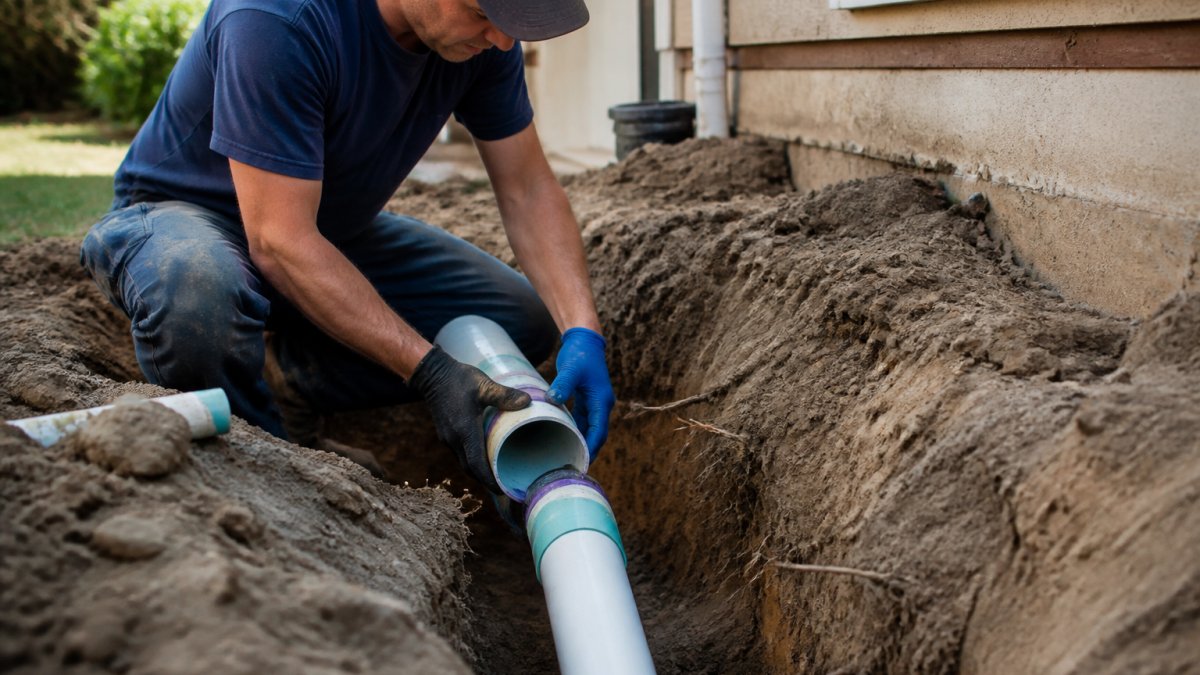
Trenchless sewer repair cost usually sits above a simple dig-and-replace on paper, but the gap narrows once restoration is counted. Trenchless methods, including pipe lining and pipe bursting, work through small access points rather than a long open trench. Open-trench replacement is often cheaper on the pipe itself but adds landscaping restoration, driveway repair, and longer disruption. For lines under mature trees, patios, or hardscaping, trenchless frequently wins on total cost even when the line-item price looks higher.
Main Sewer Line Clog Repair Cost and Root Intrusion
Main sewer line clog repair cost is the lowest of the three categories, and it is the right first step when the symptom is a backup rather than a collapse. Root intrusion is the usual culprit in older residential lines: roots find a joint, work inside, and slowly choke the pipe. Clearing the clog restores flow, but it does not fix the cracked joint the roots came through. If roots return within a season, the underlying damage needs a sectional repair or lining, not another round of drain cleaning.
Sewer Line Inspection Cost and Why a Camera Scope Comes First
Sewer line inspection cost is small compared with the price of guessing wrong. A camera scope, sometimes called a sewer scope, sends a camera down the line to record the actual condition of the pipe: cracks, bellies, offsets, root masses, and collapsed sections. Every accurate estimate starts here. Without footage, a contractor is pricing a symptom. With it, you get a repair scoped to the real damage and a record you can compare against a second bid.
What a Sewer Repair Estimate Should Include
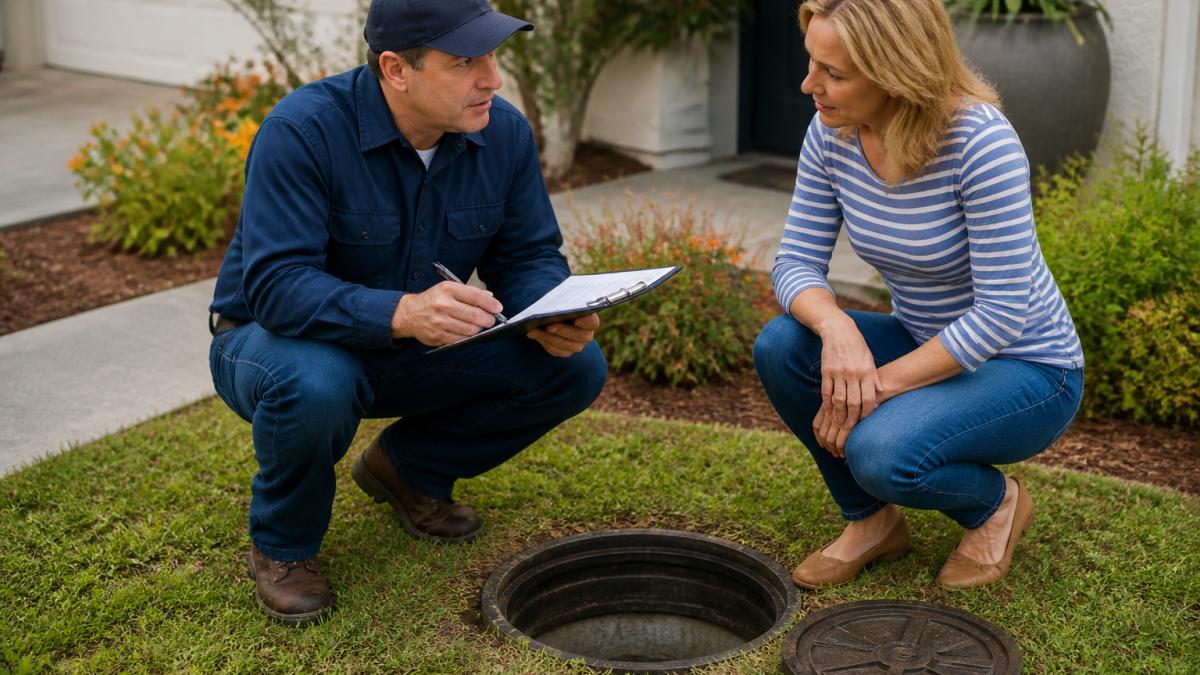
A proper estimate is itemized, not a single number on a business card. It should list the linear footage, the repair method, the pipe material and fittings, excavation depth, permit costs, restoration of landscaping or hardscape, and any warranty terms. Ask whether the price is fixed or subject to change if conditions differ from the scope. We put the scope in writing before work starts so there are no surprise line items when the trench opens.
Permits, Property Responsibility, and Insurance Coverage
Permits and responsibility are where budgets quietly blow up. Most municipalities require a permit for sewer line replacement and for work in the public right-of-way, and the homeowner is typically responsible for the line from the house to the property boundary or connection point. Homeowner's insurance rarely covers pipe failure from age or roots, though some policies or add-on riders cover sudden damage. Warranty coverage on the work itself matters just as much: confirm in writing how long the repair is guaranteed and what it covers. Ask before you sign, not after.
Frequently Asked Questions
Can a sewer line be replaced without digging?
Yes. Trenchless methods such as pipe lining and pipe bursting replace or rehabilitate a sewer line through small access pits rather than a continuous trench. Published benchmarks put minor spot repairs at $600-$1,500, while trenchless work typically costs more than a small open-trench patch because of the equipment involved. Trenchless is not right for every line: collapsed pipe, severe bellies, and offsets can rule it out. A camera inspection confirms whether the pipe can be lined before anyone quotes a method.
How much does sewer line repair typically cost?
Published 2026 benchmarks put most residential sewer line repair projects between $1,388 and $5,323, with an average project cost near $3,319 and a per-foot range of $60-$250. Broader repair-or-replace estimates run $3,000-$15,000. Those figures are national reference points, not quotes. Your number depends on pipe length, material, depth, accessibility, and whether the fix is a spot repair, a sectional repair, or a full replacement.
How much does it cost to repair a main sewer line clog?
A main sewer line clog repair cost is usually the lowest line item on a sewer bill because it is a cleaning job, not a structural one. Drain cleaning and root cutting clear the blockage; they do not fix a cracked pipe or a collapsed section. If the camera shows root intrusion or a broken pipe behind the clog, the job moves into partial repair or replacement territory and the price climbs accordingly. Ask for the camera footage before approving anything beyond a clean-out.
Does replacing a sewer line increase home value?
A new sewer line does not add square footage or curb appeal, but it removes a defect that shows up in inspections and can stall a sale. Buyers and their agents treat an active sewer line clog, root intrusion, or a failing main sewer line as a negotiating item. A documented replacement with a warranty gives you something concrete to show. Treat it as protecting the sale price rather than raising it, and keep the paperwork.
What factors affect the cost of sewer line repair?
The big ones are pipe length and extent of damage, pipe material, excavation depth, and accessibility. A shallow line under a lawn costs less to reach than one under a driveway, finished patio, or mature landscaping that needs restoration. Property location and regional labor rates move the number too, as does the repair method: drain cleaning, pipe lining, pipe bursting, or open-trench replacement. Get a written estimate that lists each of these so quotes are comparable.
A sewer line problem is stressful enough without wondering whether the quote you got is fair or whether the fix will hold. DC Plumbing Heating and Air Conditioning has served South Orange County since 1989 with upfront pricing, licensed and certified technicians, and warranties on parts and installation, so you know exactly what you are paying for before we start. Call today to schedule a camera inspection and get a written estimate you can trust.