 How-to
How to Prevent Tree Roots in Sewer Pipes for Good
Last Updated: November 15, 2026
Quick Summary
Prevent tree roots in sewer pipes by keeping new trees planted at least as far from the lateral as their mature canopy will spread, and by fixing the cracks and loose joints roots exploit. Install root barriers at planting time, and base any chemical treatment on a camera inspection.
- Clay tile laterals are the highest-risk pipe because their mortar joints crack and separate as the ground shifts.
- Call 811 before you dig so buried utility lines are marked before any trenching or barrier work.
- Chemical root killers kill root tips rather than dissolving a mature root mass, and the label sets the dose and interval.
- Never pour chemicals into a fully blocked line because they won't reach the root mass and can back up into the house.
- A cable or hydro jetting clears the symptom, but relining or spot repair fixes the entry point so roots don't return.
Table of Contents
- Why Tree Roots Invade Sewer Pipes and What It Costs You
- Signs of Root Intrusion: Slow Drains, Gurgling, and Sewage Backup
- How to Stop Tree Roots From Getting Into Drains Before They Spread
- What Dissolves Tree Roots in Sewer Lines? Chemical Treatments Explained
- Foaming Root Killer: Safe Use, Limits, and Evidence
- Roots in Pipes Removal Cost and Your Repair Options
- When to Call a Professional and What to Expect
- Booking a Sewer Camera Inspection With DC Plumbing
- Frequently Asked Questions
Why Tree Roots Invade Sewer Pipes and What It Costs You
Tree roots in sewer pipes are one of the most common causes of repeated drain blockages in older homes, and tree roots in sewer pipes rarely fix themselves.
The reason is simple. A sewer lateral carries warm water, nutrients, and condensation vapor. Roots hunt those conditions.
Root intrusion is often treated as a tree problem, but it is usually a pipe problem. Roots exploit weakness, and fixing the weakness removes the entry point.
Pipe Material, Age, and Joint Condition Decide Your Risk
Clay tile laterals, common in older neighborhoods, are the highest-risk pipe for root intrusion. They're laid in short sections with mortar joints, and those joints crack and separate as the ground shifts.
PVC and ABS plastic laterals resist roots far better because the joints are solvent-welded or gasketed into near-continuous runs.
Age matters as much as material. A lateral past its fourth decade has likely shifted, settled, or developed offset joints. That's your inspection priority.
Signs of Root Intrusion: Slow Drains, Gurgling, and Sewage Backup
The first sign is usually a drain that slows in one fixture, not all of them. A toilet that gurgles when the sink drains points to a venting or partial blockage issue downstream.
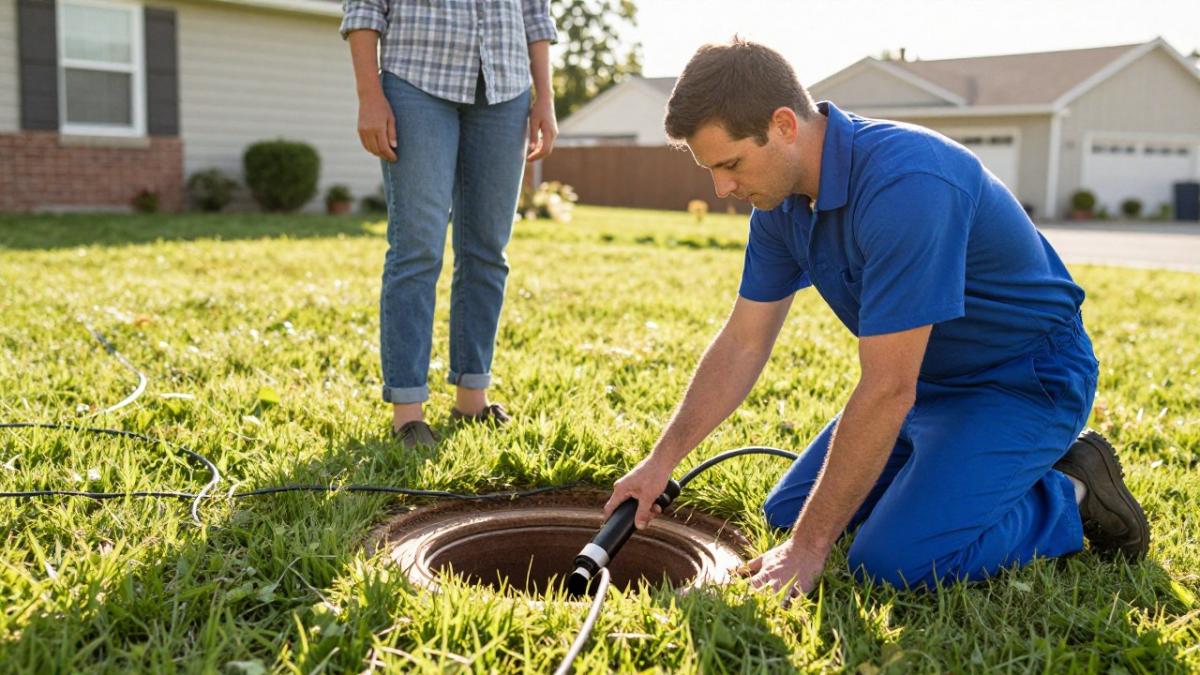
Watch for these signals, in the order they usually appear:
- One drain draining slower than the rest
- Gurgling sounds from toilets or floor drains
- Sewer odors in the yard or near the cleanout
That last one is an emergency. If raw sewage is backing up, stop using water immediately. Our guide on what to do when sewage backs up walks through the safe steps before a technician arrives.
How to Stop Tree Roots From Getting Into Drains Before They Spread
Prevention beats treatment every time, and it starts with the tree, not the drain. If you're planting, or planning landscaping near a known lateral, a few decisions now save thousands later.
Planting Distance and Tree Selection
Keep new trees well away from the lateral. A common rule of thumb is to plant at least as far from the pipe as the tree's mature canopy will spread. Fast-growing species with aggressive root systems, like willows, poplars, maples, and elms, need the widest berth. Species with slower, deeper, less invasive roots, such as certain ornamental varieties and smaller understory trees, are safer choices near utilities.
Root Barriers and Their Installation
A root barrier is a physical shield, usually rigid plastic or a copper-sulfate-impregnated panel, installed vertically between the tree and the pipe. It must be deep enough to redirect roots downward and long enough to span the tree's root zone. Barriers work best installed at planting time. Retrofitting one means trenching near the lateral, which is why most homeowners only consider it when a tree is already a known problem.
Know Your Pipe Before You Dig
Before any trenching or barrier work, confirm two things: which section of lateral you own, and where the public utilities run. Ownership of the lateral and permit requirements vary by locality, so confirm the boundary and any permit rules with local authorities. Call 811 before you dig so buried utility lines are marked (811 Before You Dig). A barrier installed through a utility line is a far more expensive mistake than a root clog.
A Practical Decision Tree Based on Inspection Findings
The right prevention step depends on what the camera shows, not on the size of the tree:
- No roots, sound pipe: keep planting distances, schedule an inspection every 18 to 24 months if you have mature trees near the line, and skip chemical treatment.
- Light root growth, sound pipe: mechanical cutting or hydro jetting, then a labeled root-killer on the label's maintenance interval, with a re-inspection in 12 months.
- Roots plus cracked, offset, or bellied pipe: cleaning buys time, but relining or spot repair is the durable fix; a barrier alone won't solve a damaged pipe.
Maintenance Timeline and What to Expect
There is no universal inspection schedule. A common pattern is an annual camera inspection for lines with prior root intrusion or mature trees nearby, and every two to three years for sound plastic laterals with no history. Treatment intervals depend on the product label, the tree species, and how fast roots regrow in your soil.
The right prevention step depends on what the camera shows, not on the size of the tree.
| Inspection finding | What to do | Follow-up |
|---|---|---|
| No roots, sound pipe | Keep planting distances, skip chemical treatment | Inspection every 18 to 24 months with mature trees |
| Light root growth, sound pipe | Mechanical cutting or hydro jetting, then labeled root-killer | Re-inspection in 12 months |
| Roots plus cracked, offset, or bellied pipe | Cleaning buys time; relining or spot repair is durable fix | Barrier alone won't solve a damaged pipe |
| Collapsed or badly deteriorated lateral | Replacement, not prevention | Replacement is the conversation |
What Dissolves Tree Roots in Sewer Lines? Chemical Treatments Explained
Nothing "dissolves" a mature root mass instantly, and any product claiming to is overselling.
Copper sulfate is the classic treatment. It kills roots on contact, but it is toxic to aquatic life and to the beneficial bacteria in a septic system.
A common mistake is pouring chemicals into a fully blocked line. For a fuller breakdown of when chemicals are and aren't appropriate, read our guide on using chemicals for main line clogs.
Reading the Label Before You Pour
Every root-killer label carries three pieces of information you need: the active ingredient and concentration, the maximum application frequency, and the warnings about septic systems, wells, and surface water. Following the label dose exactly, and never exceeding the stated interval, is the safest way to use a root-killer. If the label says not for use in septic systems, believe it; the same biocide that kills roots can upset the bacterial balance your tank depends on.
Watch out: household salt and rock salt are not a substitute for a labeled root-killer. They are not dosed for sewer lines, they can corrode cast iron and copper, and they salinate soil along the pipe route.
What Chemicals Can and Cannot Do
Chemicals slow regrowth. They do not remove a root mass that is already restricting flow, and they do not seal the crack or joint the roots entered through. That takes mechanical work and, often, a repair. Treat chemical treatment as one layer of a plan that also includes inspection, mechanical cleaning, and, where the pipe is damaged, relining or spot repair.
Foaming Root Killer: Safe Use, Limits, and Evidence
Foaming root killer is a preventive product, not a rescue tool. It's designed for lines with minor root intrusion that you want to keep in check between professional cleanings. The foam clings to pipe walls and root hairs, giving the active ingredient longer contact time than a liquid pour.
Use it correctly and it's a reasonable part of a maintenance plan. Use it wrong and you waste money and risk your pipes:
- Apply only after a camera inspection confirms light root growth
- Never use it on a fully blocked or slow-draining line
- Follow the label dose exactly, and don't repeat more often than directed
The honest limit: foaming treatments slow regrowth. They don't remove a root mass that's already restricting flow. That takes mechanical work.
Roots in Pipes Removal Cost and Your Repair Options
Cost depends on what the camera finds, not on the size of the tree. A light root cleaning costs far less than a collapsed section that needs replacement, and the inspection tells you which you're facing. We don't quote prices blind, and we don't recommend a repair before we've seen the pipe. For real cost ranges before you book, see our breakdown of the average cost of sewer line repair.
Mechanical Cutting, Hydro Jetting, and Trenchless Repair
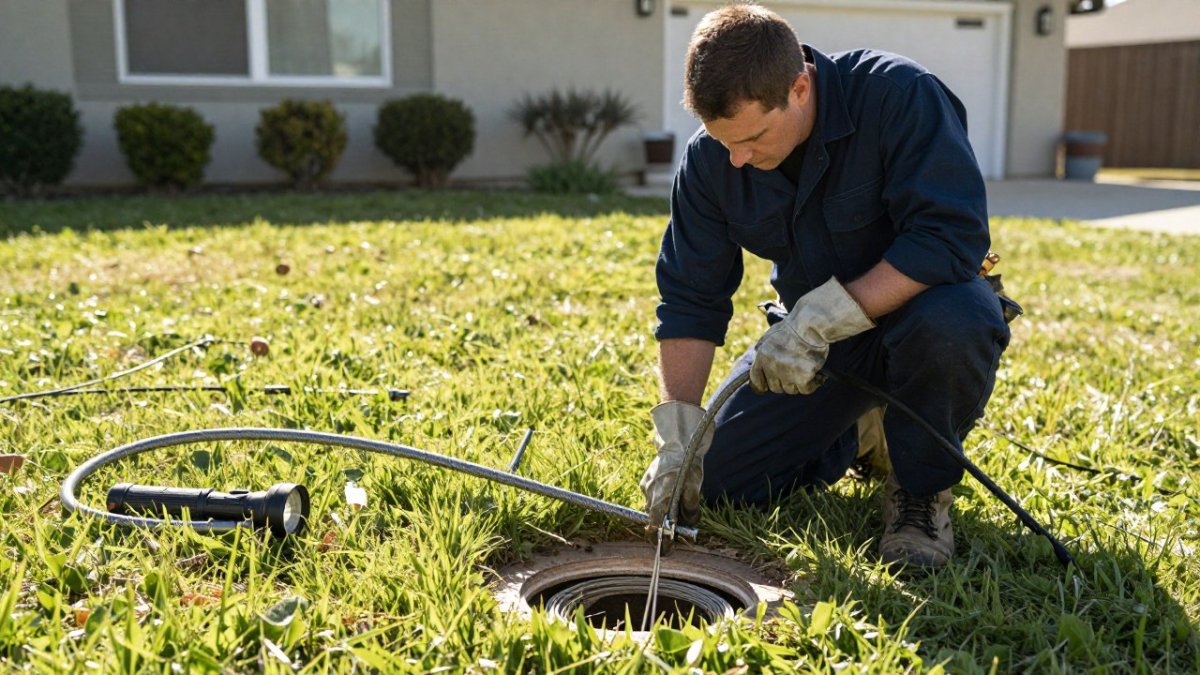
- Mechanical root cutting uses a drain-cleaning cable with a root-cutting head to shear roots from the pipe wall. Fast and effective for light to moderate growth.
- Hydro jetting uses a high-pressure water jetter to scour roots, grease, and scale from the full pipe diameter. It clears what a cable leaves behind. Curious how long it takes? Our guide on how long hydro jetting takes covers the appointment timeline.
- Trenchless repair can address the cause. A pipe liner or spot repair seals the cracks and joints roots were exploiting, without digging up the whole yard.
- Pipe replacement is the last resort, reserved for collapsed or badly deteriorated laterals.
A cable or jetting clears the symptom. Relining or repair fixes the entry point. Skipping the second step is why roots come back.
When to Call a Professional and What to Expect
Call a licensed plumber when you have repeat clogs in the same line, a sewage backup, or a drain that won't clear. Those point to a main-line problem a plunger can't touch.
What to expect:
- An inspection to locate the root mass and any pipe damage
- A recommendation on the appropriate repair approach
- Pricing discussed before work begins
- Warranty coverage on parts and installation
DC Plumbing Heating and Air Conditioning has served South Orange County since 1989, and offers warranties on parts and installation services with upfront pricing and no surprise fees.
Booking a Sewer Camera Inspection With DC Plumbing
A camera inspection is one of the most reliable ways to see what is happening inside your lateral. If you want to know what an inspection costs before you call, our guide on sewer camera inspection cost lays it out.
Ready to stop the cycle of repeat clogs? Call DC Plumbing Heating and Air Conditioning for an inspection and a straight answer about your sewer line.
Tree roots in sewer pipes won't fix themselves, and another round of snaking only buys you weeks. The fix is finding the entry point and sealing it.
Frequently Asked Questions
Does homeowners insurance cover tree root damage to sewer lines?
Most standard homeowners policies exclude damage caused by tree roots because it is considered a maintenance issue. Some policies cover the resulting water damage inside the home or the cost of accessing the pipe, but coverage varies widely by carrier and endorsement. Check your policy language and ask your agent specifically about sewer line and root intrusion coverage before you file a claim.
How common are tree roots in a sewer line?
Root intrusion is one of the most frequent causes of sewer line blockages that plumbers find, especially in older neighborhoods with mature trees and clay or cast iron pipes. Roots enter through joints, cracks, and loose fittings where moisture escapes. Any property with large trees within roughly 10 to 20 feet of the lateral is a candidate for tree roots in sewer pipes, so a camera inspection is the only way to confirm.
Are foaming root killers safe for sewer pipes?
Foaming root killer products are formulated to kill roots on contact without harming the pipe when used as directed. The risk comes from misuse: over-application, mixing with other chemicals, or using them on pipes already weakened by cracks and root pressure. They also do not remove the dead root mass, which can still cause a blockage. A camera inspection before and after treatment is the safest approach.
Who is responsible for tree roots in a sewer line?
Responsibility usually depends on where the blockage sits. The homeowner typically owns and maintains the sewer lateral from the house to the property line or the connection at the main. Roots in that section are your cost. Roots in the public main or the shared connection may fall to the utility. Call your local utility first to confirm the boundary before you authorize any work.