 How-to
How to Tell if Your Sewer Line Is Clogged
Last Updated: November 11, 2026
Quick Summary
The clearest sign of a sewer line clog is trouble in more than one fixture at once, such as several drains slowing together or water backing up in a tub when the toilet flushes. Gurgling sounds and sewage odors indoors also point to a main-line blockage. If two or more fixtures misbehave, stop using water and arrange an inspection.
- A single slow sink usually means a local trap clog, not a main-line problem.
- Run the two-minute fixture test before calling anyone to locate the blockage.
- Stop using water the moment you suspect a main-line blockage.
- Never pour chemical drain cleaner into a main line; it can damage pipes.
- A licensed plumber confirms a sewer line clog with a camera, not a guess.
Table of Contents
- Warning Signs of a Sewer Line Clog
- Main Sewer Line Clog vs. Single-Fixture Clog
- Main Sewer Line Clog Causes
- Safe First Steps and What Not to Do
- How to Clear a Main Sewer Line Clog Yourself
- How Professionals Confirm the Diagnosis
- Main Sewer Line Clog Repair Cost
- Calling a Licensed Plumber for Sewer Line Service
- Frequently Asked Questions
Warning Signs of a Sewer Line Clog
A sewer line clog is a blockage inside the main pipe that carries waste from your home to the city sewer.
Here is the key point most homeowners miss: one slow sink is usually a local problem.
Below, we walk through the warning signs, the safe first steps, and the repair options so you can act with confidence instead of guesswork.
Multiple Drains Draining Slowly or Backing Up
The clearest sign of a main sewer line clog is trouble in more than one place. A single slow sink often means hair or soap scum in that trap. When the tub, the shower, and the toilet all drain slowly, the blockage sits further down the line.
Watch for these patterns:
- Two or more drains slowing at the same time
- Water pooling in the shower pan after a few minutes
- A sink that drains fine, then backs up when the washer runs
A common mistake is treating each fixture separately. If water backing up shows up in several rooms, stop plunging and read the whole picture.
Gurgling, Bubbling, and Foul Odors
Gurgling sounds mean air is trapped. When a blockage narrows the sewer pipe, air cannot move freely, so it pushes back through traps and makes that bubbling noise.
Foul odor is the other red flag. A sewage smell indoors or near a floor drain usually means waste is sitting in the line instead of flowing away. Outside, a wet patch or an unusually green strip of grass over the sewer route can point to a partial blockage leaking into the soil.
Main Sewer Line Clog vs. Single-Fixture Clog
A single-fixture clog affects one drain. A main-line clog affects the whole plumbing system in the house. That is the short answer, and it is worth testing before you spend money.
The reason the distinction matters is mechanical. Every fixture drains into a branch line that feeds the main stack, and the main stack empties into the sewer lateral that runs to the city main.
The Two-Minute Fixture Test
Run this test before you call anyone. It tells you where the blockage sits without opening a wall.
- Fill the bathroom sink and the tub with a few inches of water, then release both at once. If both drain slowly, the problem is downstream of both, likely the main line.
- Flush a toilet in a different bathroom while the first bathroom's water is still draining. If the flush causes gurgling or backup in the other bathroom, the two fixtures share a blocked line below the branch.
- Run the washing machine through a drain cycle and watch the floor drain or tub. If water rises elsewhere when the washer discharges, the main line is restricted.
- Check the lowest fixture in the house, usually a basement floor drain or a first-floor tub. A backup there while upper fixtures drain normally points to a main-line blockage near the exit.
If two or more of these tests show cross-fixture effects, treat it as a main-line problem. If only one fixture misbehaves and the others are unaffected, start with that fixture's trap and branch.
Reading the Pattern
| What You Notice | Likely Cause | First Move |
|---|---|---|
| One sink or tub drains slowly | Local clog in the trap or branch | Plunge or snake that fixture |
| Toilet flushing weak, no other issues | Toilet trap or flapper problem | Check the toilet first |
| Several drains slow at once | Main sewer line clog | Stop using water, inspect the main line |
| Water backs up in tub when toilet flushes | Main-line blockage | Call a licensed plumber |
| Sewage smell plus gurgling | Blockage or vent issue | Professional inspection |
| Floor drain backs up when washer runs | Main-line restriction downstream | Stop water use, schedule inspection |
Watch out: a fixture that drains fine on its own but backs up when another appliance runs is the classic signature of a partial main-line clog, plunging that fixture will not fix it and can push waste into the branch.
If two or more rows describe your home, treat it as a main-line problem. Guessing wrong wastes time and can make the backup worse.
Main Sewer Line Clog Causes
Most main sewer line clogs come from a short list of culprits. Knowing them helps you prevent the next one.
- Tree roots: Roots seek moisture and crack into old pipes, then grow inside them.
- Grease buildup: Cooking fat cools and sticks to pipe walls, narrowing the flow over time.
- Foreign objects: Wipes, paper towels, and hygiene products do not break down.
Recurring backups usually mean one of these causes was never fixed. If your line has backed up before, a step-by-step plan to stop recurring sewer backups helps you break the cycle instead of paying for the same cleanup twice. If your line has backed up before, a step-by-step plan to stop recurring sewer backups helps you break the cycle instead of paying for the same cleanup twice.
Safe First Steps and What Not to Do
Stop using water the moment you suspect a main-line blockage. Every flush and every load of laundry adds volume the clogged pipe cannot handle.
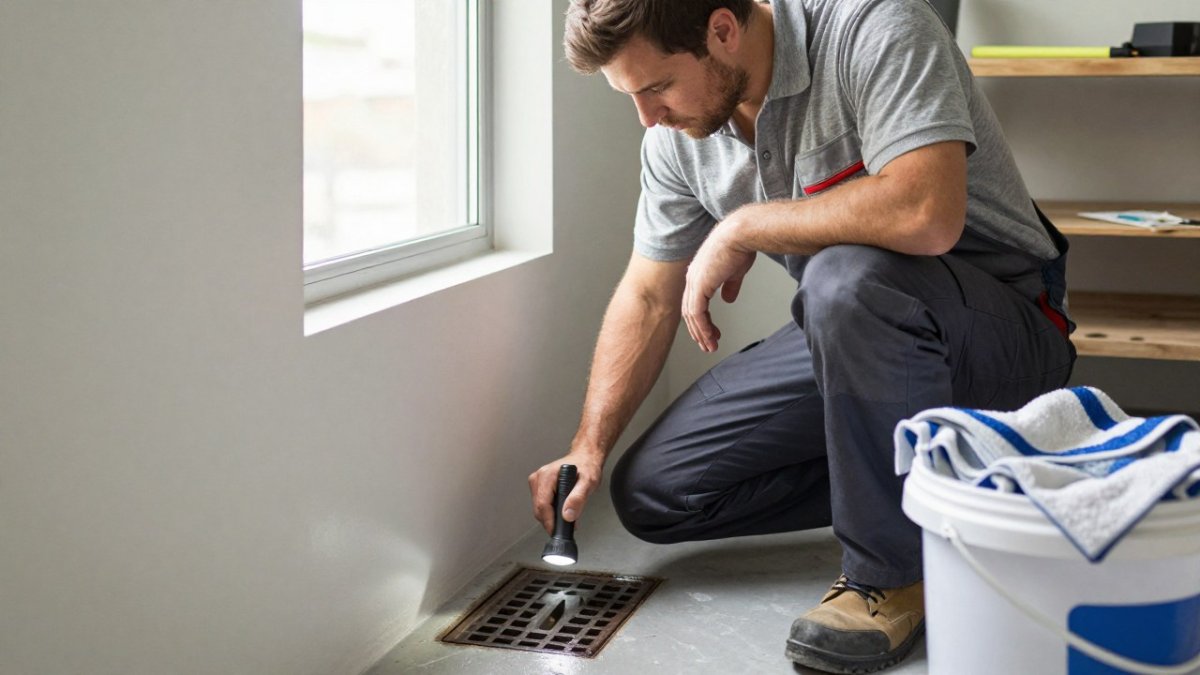
Do these first:
- Shut off water to appliances like the washer and dishwasher
- Stop flushing toilets until the line is checked
- Keep children and pets away from standing water
Avoid these moves:
- Do not pour chemical drain cleaner into a main line; it can damage pipes and splash back
- Do not keep plunging a fixture that is already backing up
- Do not ignore sewage water; it carries health risks, so wear gloves and wash up
If sewage is already backing up, follow safe steps for a sewage backup before you touch anything else.
How to Clear a Main Sewer Line Clog Yourself
You can clear a simple blockage yourself if the clog is close to a cleanout. A cleanout is the capped access pipe, often near the foundation or in the yard.
Follow these steps:
- Locate the cleanout and remove the cap slowly, since water may rush out.
- Put on gloves and place a bucket under the opening.
- Feed a hand auger or manual snake into the line and crank it forward.
- Pull back when you feel resistance, then push again to break the clog.
- Flush with a bucket of water and watch how fast it drains.
- Replace the cap tightly when done.
Watch out: never force a snake past a hard stop. That usually means roots or a broken pipe, and forcing it can crack the line further. If the water still backs up after two attempts, stop and call a professional.
How Professionals Confirm the Diagnosis
A licensed plumber confirms a sewer line clog with a camera, not a guess. A sewer camera is a flexible scope that travels the pipe and sends video back to a monitor. The camera’s view of the pipe can also reveal conditions worth addressing before they lead to another blockage, making preventing sewer backups in older homes part of the same maintenance conversation.
Step 1: Locate and Open the Cleanout
The cleanout is the capped access pipe, usually near the foundation or in the yard. A technician removes the cap slowly, because water may be standing against it. If the cleanout is full of water, that alone confirms a blockage downstream of that point, no camera needed to know the line is restricted.
Step 2: Feed the Camera and Read the Line
The technician feeds the camera through the cleanout and watches the monitor as it travels. What the camera shows determines the repair:
- The clog itself, grease, wipes, or a root mass, and how far down the line it sits
- Pipe condition, cracks, offset joints, bellies (low spots where water pools), and scale buildup
- Root intrusion, roots entering at a joint or crack, which is common in older clay and cast-iron lines
A camera inspection also separates a simple clog from a broken sewer line. Before you agree to one, it helps to know what a sewer camera inspection costs. That distinction changes the fix from a clearing job to a repair or replacement job, and it changes the cost accordingly.
Step 3: Confirm the Diagnosis Before Work Starts
A good technician shows you the footage and explains what it means before recommending a fix. You should see the clog, hear where it sits, and understand whether the line is sound behind it. If the camera shows a collapsed section or a belly, clearing the clog will not solve the problem, the line will back up again.
Why Urgency Matters
A main-line backup is not just an inconvenience. Sewage carries bacteria, viruses, and parasites, and standing sewage in a basement or crawl space can contaminate surfaces and drywall. Continued use of water while the line is blocked pushes more waste into the home and can turn a contained backup into a flooded floor. If sewage is already backing up, stop using water, keep children and pets away, and arrange an inspection the same day.
Main Sewer Line Clog Repair Cost
The cost of a main sewer line clog repair depends on the cause. Pricing depends on the cause of the blockage, so contact DC Plumbing Heating and Air Conditioning for a current quote.
Cost factors include:
- Depth of the pipe and ease of access
- Whether roots or a broken sewer line are involved
- Pipe material and length of the damaged section
For a realistic budget, ask for a quote before the technician begins work. You can also review the average cost of sewer line repair to plan for the fix.
Calling a Licensed Plumber for Sewer Line Service
Some backups are safe to handle yourself. Others need a licensed plumber the same day. Call right away if you see sewage backing into the home, smell gas, or have water rising in multiple fixtures.
A good plumber will inspect before quoting a repair, explain the cause in plain language, offer options with clear prices, and back the work with a warranty. Before you hire, read up on how to choose a reliable plumber so you avoid the cycle of repeat callouts.
Before you hire, read up on how to choose a reliable plumber so you avoid the cycle of repeat callouts.
A clogged main line rarely fixes itself, and every flush makes it worse.
Frequently Asked Questions
How can I tell if the clog is in my main sewer line or just a single fixture?
Run water in several fixtures at once, such as two sinks and a toilet. If only one drain is slow, the clog is likely in that fixture's trap or branch line. If multiple drains back up, gurgle, or drain slowly at the same time, the blockage is probably in the main sewer line. Foul odors from several drains and backups in a tub or shower when you flush a toilet also point to a main-line clog rather than a single-fixture problem.
Are there DIY methods to safely clear a main sewer line clog?
For a partial blockage, you can try a plunger on the lowest fixture, a hand auger through a cleanout, or a sewer-safe enzyme treatment. Never pour chemical drain cleaners into a main line, and never open a cleanout cap if water is backed up behind it. If the clog returns after one attempt or multiple drains are affected, stop and call a licensed plumber. A sewer camera inspection finds the real cause, whether it is grease buildup, tree roots, or pipe damage.
What are the risks of ignoring a clogged sewer line?
A partial blockage rarely fixes itself. Pressure from continued use can push sewage back into tubs, showers, and floor drains, which exposes your home to bacteria and contaminated water. Standing water damages flooring, drywall, and cabinets, and recurring backups can eventually crack or shift the sewer pipe, turning a drain cleaning job into a sewer line replacement. Addressing a main sewer line clog early usually costs far less than repairing water damage and pipe failure.
When should I call a professional plumber for a sewer line issue?
Call a licensed plumber when more than one fixture backs up, when sewage is backing into the home, when you smell sewage indoors or outdoors, or when a soggy patch or unusually green strip appears in the yard. You should also call if a DIY attempt did not clear the clog or the backup returns within days. A plumber can confirm the diagnosis with a sewer camera and recommend drain cleaning, repair, or replacement based on what the camera shows.