 How-to
Can You Use Chemicals for Main Line Clogs?
Last Updated: November 12, 2026
Quick Summary
No, you cannot use chemicals for main line clogs. A chemical drain cleaner only acts where it touches waste, so it dilutes and stalls in the trap or first stretch of pipe without ever reaching a main line clog, and it can damage PVC, joints, and older metal pipes. Mechanical clearing with a sewer snake, hydro jetting, or a camera inspection is the real fix.
- A main line clog is a blockage in the large pipe carrying all wastewater from your home to the sewer.
- Sodium hydroxide cleaners release heat that can soften PVC and speed rust in older metal pipes.
- Run the multi-fixture test for two to three minutes to tell a fixture clog from a main line clog.
- A sewer snake reaches 50 to 100 feet through a cleanout and clears grease, paper, and soft roots.
- Never plunge or snake a line that already holds caustic cleaner, and tell the plumber what you used.
Table of Contents
- Why Chemical Drain Cleaners Fail on Main Line Clogs
- Pipe Damage, Heat, and Safety Risks of Chemical Cleaners
- How to Unclog a Main Sewer Line: Diagnosis and Mechanical Methods
- Best Drain Cleaner for Old Pipes and Septic Compatibility
- Where to Pour Main Line Cleaner (and When Not To)
- Main Line Drain Cleaner Reviews: What Homeowners Should Know
- Schedule a Main Line Inspection With DC Plumbing
- Frequently Asked Questions
Why Chemical Drain Cleaners Fail on Main Line Clogs
Can you use chemicals for main line clogs? Short answer: no. A chemical drain cleaner can eat through a small hair clog in a sink trap, but it cannot clear a main line clog.
A main line clog is a blockage in the large pipe that carries all wastewater from your home to the sewer. It sits far from any drain opening. That distance is the whole problem.
How Drain Cleaners Work and Whether They Reach the Clog
Most liquid drain cleaners rely on sodium hydroxide or potassium hydroxide. These are alkaline cleaners. They generate heat as they dissolve grease and hair. Enzymatic cleaners work differently: they use bacteria to break down organic debris over days.
Here is the catch. A chemical drain cleaner only acts where it touches waste. In a main line, the standing water and the clog sit several feet away.
Why Chemical Cleaners May Fail on Severe Clogs
Severe clogs are rarely pure hair or grease. Main line blockages often come from tree roots, collapsed pipe sections, or heavy grease buildup mixed with paper. No caustic product dissolves a root. None rebuilds a broken pipe.
So the bottle goes down, nothing changes, and the homeowner pours in a second one. That is how small problems become pipe damage.
Pipe Damage, Heat, and Safety Risks of Chemical Cleaners
Chemical drain cleaners are not pipe-safe in every situation. The risks fall into two groups: damage to the plumbing system and harm to the person pouring.
How Heat From Chemical Reactions Can Affect PVC
Sodium hydroxide creates an exothermic chemical reaction, meaning it releases heat. In a confined pipe, that heat has nowhere to go. PVC pipe softens when it gets hot. Joints and pipe seals are even more vulnerable.
Over time, repeated exposure can cause pipe corrosion, warping, and leaks. On older metal pipes, the caustic mix speeds up rust. A slow drain treated monthly for years can turn into a cracked line under the floor.
Toxic Fumes, Chemical Burns, and Safe Handling
The label warnings are real. Mixing cleaners can release chlorine gas or sulfur compounds. Both are dangerous in a small bathroom. Splashback causes chemical burns, and the damage can be serious.
If you must use any drain product, follow the product label and manufacturer instructions exactly. Wear protective gloves and eye protection, and open a window for ventilation. Never mix two products.
Watch out: pouring a second cleaner into a drain that already holds the first can trigger a violent reaction. If a backup is active or chemicals are already in the line, follow safe steps for sewage backup first.
How to Unclog a Main Sewer Line: Diagnosis and Mechanical Methods
Before you reach for any product, confirm what you are dealing with. A main line clog and a fixture clog look similar at the drain but behave differently in the rest of the house. The fastest way to tell them apart is to run a controlled test.
Step 1: Run the multi-fixture test
Turn on the cold water at the sink closest to the suspected blockage and let it run for two to three minutes. Then flush the toilet in the same bathroom. Then start the washing machine on a drain cycle. Watch what happens at each fixture.
- If only the sink drains slowly and the toilet and washer are fine, the clog is local to that fixture or its trap.
- If the sink gurgles when the toilet flushes, or water backs up in a tub or floor drain when the washer drains, the blockage is in the main line.
- If sewage backs up at the lowest drain in the house, usually a basement floor drain or a first-floor tub, stop testing. That is a confirmed main-line backup.
Homeowners often test one fixture, see slow drainage, and assume the worst. The multi-fixture test takes only a few minutes and helps prevent pouring a caustic product into a drain that only needed a simple clog removed at the trap.
Step 2: Stop using water and chemicals
Once you suspect a main-line clog, stop running water at every fixture. Every gallon you send down adds to the standing column behind the blockage and raises the chance of a sewage backup.
Watch out: if you have already poured a cleaner and the drain is still backed up, do not plunge or snake the line. Residual chemical can splash back onto skin and eyes, and a technician who opens the line without knowing what is in it can be burned.
Step 3: Choose the right mechanical method
Mechanical clearing is the real fix because it reaches and removes the obstruction rather than dissolving part of it. The right tool depends on the clog:
- Drain auger or hand snake, best for a clog within about 25 feet of the access point, such as hair and soap in a branch line. A hand snake is adequate for a fixture; a drum auger or power snake is needed for a main line.
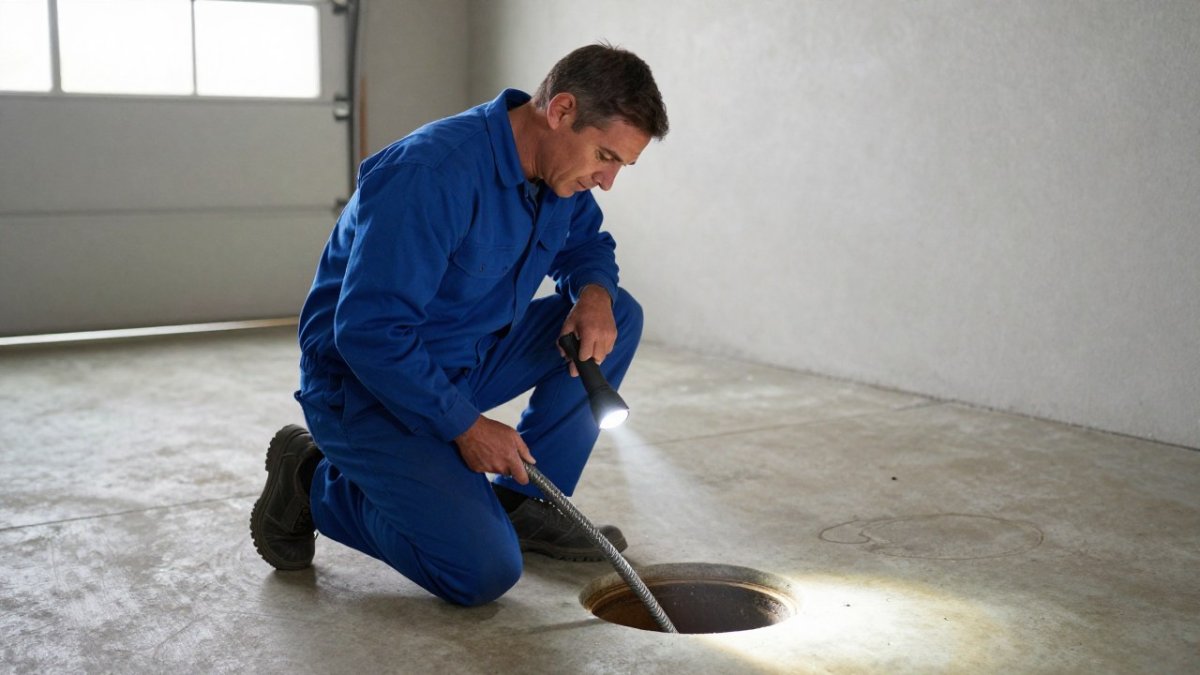
- Sewer snake (power auger), reaches 50 to 100 feet through a cleanout and breaks through grease, paper, and soft roots. It clears a channel but does not scour the pipe walls.
- Hydro jetting, uses high-pressure water, typically 3,000 to 4,000 psi, to scour grease, scale, and roots from the pipe walls. It is the better choice for recurring grease or root clogs, but it requires a professional and a camera check first to confirm the pipe can handle the pressure.
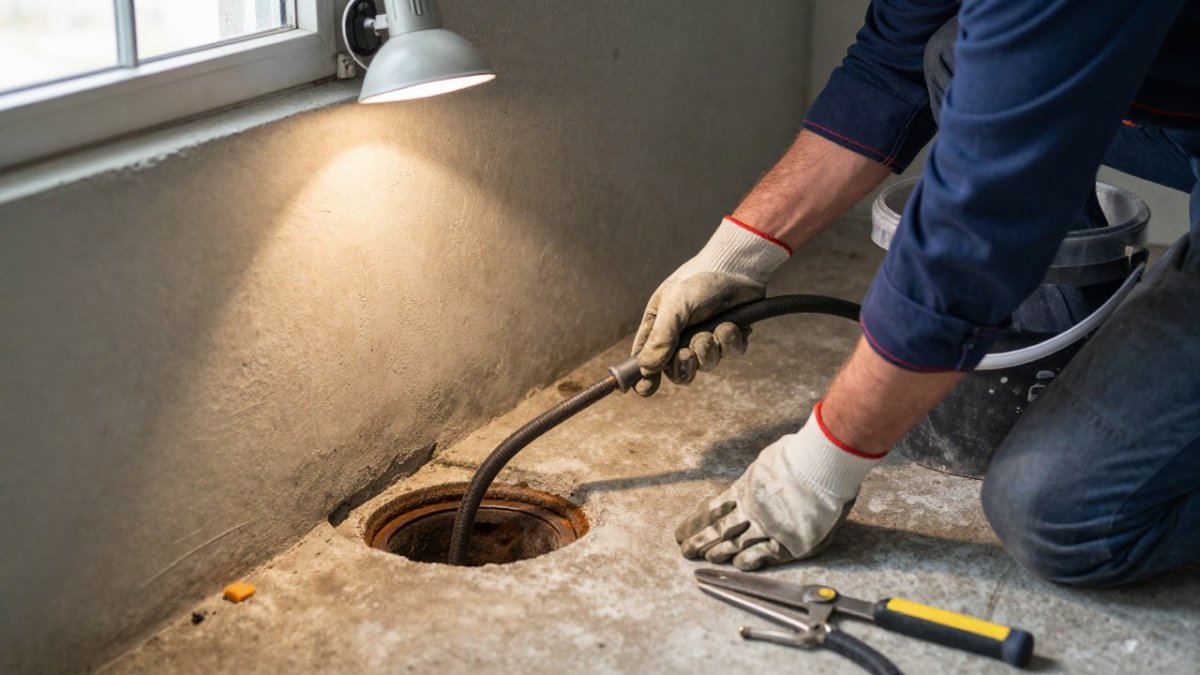
If you want to know what hydro jetting involves, here is how long hydro jetting takes. For the symptom checklist in more detail, see our guide on how to tell if your sewer line is clogged.
Step 4: Know when to stop and call
Stop DIY clearing and call a licensed plumber when:
- Sewage is actively backing up into the house
- You have snaked the line and the clog returns within days
- The cleanout is full of standing water that will not drain
A camera inspection settles the question in about an hour and shows you the cause directly. That is cheaper than a repeat emergency call and far cheaper than replacing a section of line that a snake damaged because the operator could not see a collapsed joint.
Best Drain Cleaner for Old Pipes and Septic Compatibility
For old pipes, the best drain cleaner is often none at all. Cast iron, galvanized steel, and aging PVC all react badly to caustic products. If you want a gentler option for routine maintenance, an enzymatic cleaner is the safer pick.
Septic system owners should be careful too. Some chemical drain cleaners can disrupt the bacteria your tank depends on. Look for a product labeled septic-safe, and use it sparingly.
| Method | Reaches Main Line Clog | Pipe-Safe on Old Pipes | Septic Friendly | Best Use |
|---|---|---|---|---|
| Caustic liquid cleaner | No | Risky | Often no | Small fixture clogs |
| Enzymatic cleaner | No | Yes | Usually yes | Routine maintenance |
| Drain auger or sewer snake | Yes | Yes | Yes | Clearing blockages |
| Hydro jetting | Yes | Yes, when done right | Yes | Grease and scale removal |
| Camera inspection | Finds it | Yes | Yes | Confirming the cause |
Where to Pour Main Line Cleaner (and When Not To)
There is no correct place to pour main line cleaner, because no drain opening leads straight to the clog. The floor drain is the closest access point in many homes, but the chemical still dilutes in standing water and stalls before it arrives. The label directions assume a fixture trap a few inches from the clog; a main line is a different problem.
When not to pour, and what to do instead
Never pour a cleaner when:
- Raw sewage is backing up into the house
- You have already used one product on the same clog
- The drain has standing water that will not move
In those cases, stop and call a professional plumber. If a backup is active, follow safe steps for sewage backup before doing anything else.
If chemicals are already in the drain
This is the situation most guides skip. If you have already poured a cleaner and the line is still blocked, the product is sitting in the pipe, possibly still reacting.
- Stop adding anything. Do not pour a second cleaner, hot water, or a home remedy. Mixing a caustic product with an acid or another cleaner can release chlorine gas or trigger a violent reaction.
- Ventilate the area. Open windows and run a bathroom fan if one is present. Keep children and pets out of the room.
- Do not plunge or snake. Plunging a line that holds caustic liquid can splash it back onto skin and eyes. A snake can carry residual chemical up onto the floor and onto the operator.
- Wear gloves and eye protection if you must be near the drain. If the product contacted skin, flush with cool water for at least 15 minutes and follow the label's first-aid instructions. For eye contact, flush and seek medical attention.
- Tell the plumber before they arrive. State the product name, the approximate amount, and when it went in. A technician who knows the line holds caustic will wear the right PPE and handle the cleanout differently.
- Wait before mechanical clearing if the line is still reacting. Most caustic liquids need time to neutralize in standing water, but the safe rule is to let a professional assess it rather than assume it is spent.
Watch out: a cleaner that appears to have done nothing may still be active in the trap or the first stretch of pipe. The absence of heat or fumes at the drain does not mean the chemical is neutralized.
The placement question, answered directly
If you are determined to use a product on a fixture-level clog, the only defensible placement is the drain closest to the clog, following the label exactly, typically a sink or tub drain, not a floor drain or cleanout. For a main line, no drain opening is the right one. The cleanout is the access point a plumber uses, and it is not a place for a homeowner to pour caustic liquid, because the product will sit against the clog and against the pipe with no dilution and no way to monitor it.
Main Line Drain Cleaner Reviews: What Homeowners Should Know
Main line drain cleaner reviews tend to praise products that cleared a slow bathroom sink.
What most guides miss is the follow-up. A cleaner that "worked" often just pushed the clog a little further down. Weeks later, the backup returns.
This is also why cleaning frequency matters. Our article on how often sewer lines should be cleaned explains the schedule that keeps lines clear.
Schedule a Main Line Inspection With DC Plumbing
A camera inspection can help settle the question.
At DC Plumbing Heating and Air Conditioning, we aim for upfront pricing with no surprise fees.
If you want to know the cost before you book, here is what a sewer camera inspection costs.
Chemical cleaners are a gamble your main line cannot afford. They miss the clog, stress the pipes, and put you at risk.
Frequently Asked Questions
What is the best chemical to unclog a main sewer line?
No chemical is a reliable choice for a main line clog. Caustic liquid drain cleaners made with sodium hydroxide or potassium hydroxide can melt grease and hair in a fixture trap, but they sit in standing water and rarely reach a blockage deep in the main. They also generate heat that can soften PVC joints and damage pipe seals. Mechanical clearing with a sewer snake or drain auger, or professional hydro jetting, is the safer and more effective route for main line clogs.
Can chemical drain cleaners damage sewer pipes?
Yes. Caustic cleaners produce an exothermic reaction when they contact water, and that heat can warp PVC pipe and weaken rubber gaskets and seals over time. Repeated use accelerates pipe corrosion, especially in older metal lines. If a chemical cleaner fails to clear the clog, it stays in the line and keeps attacking the pipe walls. A licensed plumber can inspect the line to confirm whether damage has already occurred.
Where do you pour main line drain cleaner?
Homeowners often pour cleaner into the lowest floor drain or the main cleanout, but neither is a good idea. Cleanouts give direct access to the main line, yet pouring caustic liquid there puts a concentrated dose against the pipe and can splash back. If a clog affects multiple fixtures, the blockage is in the main, and a cleaner poured down one drain will not reach it. Call a plumber to snake or jet the line instead.
What should you do if multiple drains are clogged at once?
Multiple slow or backed-up drains point to a main sewer line blockage, not a fixture clog. Stop using water in the house, do not pour chemical cleaner, and keep everyone away from the affected drains. Call a licensed plumber for an emergency visit. They can locate the clog with a camera, clear it mechanically, and check for sewage backup or pipe damage before the problem worsens.
Can you use main line drain cleaner outside?
Outdoor cleanouts and exterior drains still connect to the same sewer line, so the same risks apply. Caustic cleaners can harm PVC, damage seals, and kill beneficial bacteria in a septic system. If you suspect a blockage in an exterior line, a plumber can inspect it with a camera and clear it with a snake or hydro jetter. For septic systems, enzymatic cleaners are gentler but slow and not suited to a full blockage.