 blog
How to Decide if a Night Emergency Plumber Is Worth the Cost
Last Updated: November 4, 2026
Quick Summary
Calling an emergency plumber at night is worth the emergency plumber cost when water is actively flowing, sewage or gas is present, or an essential service is lost, because a night premium of roughly $150-$400 is small next to water-damage restoration that can run into the thousands. For a stable nuisance like a dripping faucet or a running toilet, wait until morning and pay the standard rate.
- An after-hours premium covers on-call technicians, dispatch at inconvenient hours, and overtime wages, not the repair itself.
- The emergency plumber call-out fee is a flat charge for showing up and usually does not include the repair.
- Shut off the fixture supply valve or main shutoff, then open a low faucet to drain residual pressure while you decide.
- Never use a plunger or chemical drain cleaner on a backed-up drain if you suspect a blocked main line.
- Ask whether the call-out fee is credited toward the repair and get an itemized estimate in writing before work starts.
Table of Contents
- The Real Emergency Plumber Cost at Night vs. Waiting Until Morning
- Emergency Plumber Call-Out Fee: What It Covers and What It Doesn't
- Emergency Plumber Cost per Hour and the Charges That Add Up
- Plumbing Emergency vs. Non-Emergency: A Call-Now-or-Wait Framework
- How to Stop a Plumbing Leak Temporarily While You Wait
- The Total-Cost Case: Immediate Repair vs. Delayed Repair
- Questions to Ask Before You Agree to an After-Hours Visit
- Call DC Plumbing for Upfront Pricing on Your Night Emergency
- Frequently Asked Questions
The Real Emergency Plumber Cost at Night vs. Waiting Until Morning
Picture the moment it happens: water pooling under the sink at 11 p.m., or a toilet that won't stop running, or a water heater that's gone cold in the middle of winter. The first question most homeowners ask is whether calling an emergency plumber at night is worth the cost.
Here's the part most people miss. The night rate isn't a penalty. It reflects the cost of having a technician available outside normal hours.
What the After-Hours Premium Actually Pays For
An after-hours premium is the extra charge a plumbing company adds for work scheduled outside normal business hours.
The premium is not the same as the repair itself. Overtime rates and after-hours fees vary by company, so ask for your specific terms before you book.
Many plumbing companies publish their after-hours terms on their websites, so it pays to look before you call. For current pricing or a quote, contact DC Plumbing Heating and Air Conditioning directly.
Emergency Plumber Call-Out Fee: What It Covers and What It Doesn't
The emergency plumber call-out fee is a flat charge for showing up, and it usually does not include the repair. Ask up front what the call-out fee covers, including whether it is credited toward the repair if you approve the work, and get the answer in writing.
Emergency Plumber Cost per Hour and the Charges That Add Up
Because pricing varies by company and by job, contact DC Plumbing Heating and Air Conditioning for current rates or a quote. Ask for a cost estimate before work begins and get it in writing.
Plumbing Emergency vs. Non-Emergency: A Call-Now-or-Wait Framework
Whether the night premium is worth it comes down to four triage questions. Answer them in order before you dial.
1. Is water actively flowing where it should not be? A burst pipe, a supply line spraying, or a fixture that will not stop running is an active loss.
**2.
**3.
4. Can you isolate the problem? If a supply valve or the main shutoff stops the water and the damage is contained, you have bought yourself time.
The cost math behind the framework
Run the same ratio the total-cost section describes. A night visit adds a dispatch fee and a labor premium on top of the standard rate. Against that, weigh the plausible damage from hours of an active leak, which can include extraction, drying, and drywall or flooring repair. When the downside is measured in restoration, the premium is usually worth it. When the downside is a towel and a bucket, it may not be.
Safe temporary steps while you decide
- Shut off the fixture supply valve, or the main shutoff if the leak is inside a wall or you cannot find a local valve.
- Open a low faucet to drain residual pressure from the lines.
- For a leaking water heater, shut off the power or gas to the unit and the cold-water inlet.
- Move rugs, furniture, and electronics away from the wet area and put a bucket under the drip.
- Photograph the damage and note the time before you clean up, for insurance and warranty purposes.
Watch out: do not use a plunger or chemical drain cleaner on a backed-up drain if you suspect a blocked main line, you can push sewage into other fixtures or damage pipes. And never open a wall to chase a leak yourself; you can release more water than you contain.
When waiting is the right call
A dripping faucet, a slow drain that still drains, a running toilet that flushes, or a second working bathroom all point to waiting. You will pay the standard rate, and the problem is unlikely to escalate overnight.
If you are facing a true disaster, know the steps before you call. Our emergency plumbing services guide walks you through what to do right now while help is on the way.
How to Stop a Plumbing Leak Temporarily While You Wait
Shutting off the water is one of the most useful things you can do while you wait for a technician. Find your main shutoff valve now, before you need it, and know how to turn it.
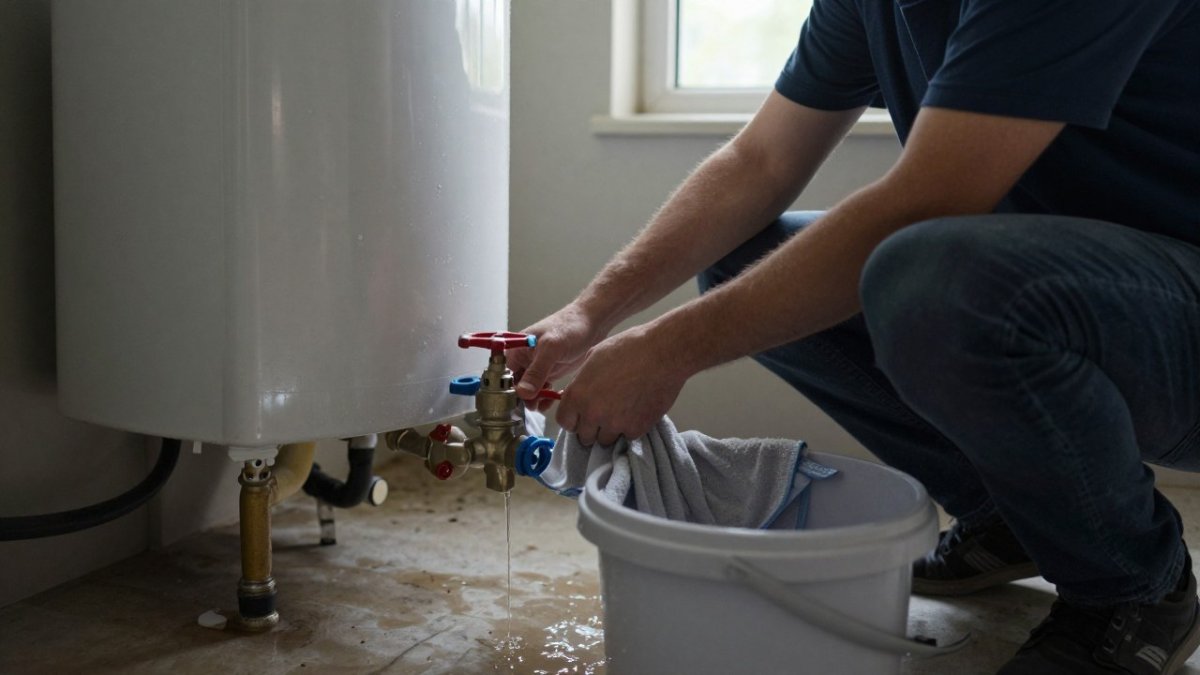
Quick steps to limit the damage:
- Turn off the main water valve.
- Open a low faucet to drain pressure from the lines.
- Wrap the leak with a towel or bucket to catch drips.
- Move furniture and rugs away from the area.
- Shut off power to a water heater if it's leaking.
If the leak is inside a wall, you need more than a bucket. Read what to do when a pipe bursts in a wall to contain the leak before the plumber arrives.
The Total-Cost Case: Immediate Repair vs. Delayed Repair
The lowest invoice is not always the lowest total cost. To decide whether the night premium is worth it, compare the after-hours upcharge against the plausible cost of letting the problem run until morning.
| Cost line | Immediate night repair | Delayed until morning |
|---|---|---|
| Dispatch or call-out fee | Commonly $75-$200 after hours | Commonly $50-$125 in business hours |
| Labor rate | Often 1.5x-2x the standard hourly rate | Standard hourly rate |
| Minimum charge | Often a one-hour minimum at the premium rate | Often a one-hour minimum at the standard rate |
| Repair itself | Same parts and scope | Same parts and scope, unless damage spreads |
| Water extraction and drying | Usually unnecessary | Commonly $500-$3,000+ if a room floods |
| Drywall, flooring, and trim repair | Usually unnecessary | Commonly $300-$2,500+ depending on area |
| Mold remediation | Usually unnecessary | Commonly $1,000-$6,000+ if moisture sits |
| Damaged belongings | Usually none | Varies widely; often the largest uninsured line |
| Hotel or displacement | Rare | Possible if water or sewage makes the home unusable |
Treat those ranges as planning figures. The point is the ratio: a night premium that adds, say, $150-$400 to the bill is small next to a water-damage repair that can run into the thousands. That ratio flips only when the problem is stable, a slow drip into a bucket, a running toilet, a single slow drain.
How the damage actually accumulates
Water damage can accumulate over time. A pressurized supply line leaking inside a wall can release several gallons per hour. Once drywall and insulation are saturated, the clock shifts from plumbing to restoration: extraction, drying equipment, removed drywall, and sometimes mold remediation if the cavity stays wet.
That is why the honest comparison is not "night rate versus day rate." It is "night rate versus night rate plus restoration." For an active leak, the premium is usually the cheaper line item. For a stable nuisance, the premium buys you nothing but convenience.
The break-even question to ask yourself
Ask one question: if I wait eight hours, what is the realistic worst case? If the answer is "a wet cabinet floor I can dry with a towel," wait. If the answer is "water reaching the subfloor, the ceiling below, or a finished basement," call. The after-hours premium is worth paying when the plausible downside is measured in hundreds or thousands of dollars of restoration, not when it is measured in a mop and a bucket.
Watch out: a leak that looks stable at 11 p.m. can open up when pressure cycles overnight or when a fixture is used in the morning. If you cannot isolate the water to the affected fixture with a supply valve, shutting off the main is the safer default while you decide.
What insurance does and does not change
Coverage for water damage depends on your policy and the cause of the loss. Document the damage with photos and timestamps before cleanup, keep receipts, and read your policy or call your agent before assuming a repair or resulting damage is covered.
Questions to Ask Before You Agree to an After-Hours Visit
A transparent quote is your best protection. Ask these before you say yes:
- What is the call-out fee, and is it credited toward the repair?
- What is the hourly rate tonight versus during the day?
- Is there a minimum charge?
- Can I get an itemized estimate before work starts?
- Are parts included, and are they under warranty?
- Is the technician licensed and insured?
Getting clear answers up front is how you avoid a surprise invoice. Our guide to avoiding surprise plumbing charges explains how to get clear pricing before you agree to a night visit.
Call DC Plumbing for Upfront Pricing on Your Night Emergency
The night premium is often worth it when the alternative is water damage, sewage exposure, or a cold house in winter. It's not worth it for a drip you can catch with a towel. That's the whole decision, and now you can make it with a clear head.
DC Plumbing Heating and Air Conditioning has served South Orange County since 1989. We offer upfront pricing with no surprise fees, licensed and certified local technicians, and warranties on parts and installation. Our guide to choosing a reliable plumber gives you criteria to trust an after-hours call.
Frequently Asked Questions
Are 24-hour plumbers more expensive than daytime plumbers?
Yes, generally. An after-hours call typically adds a nighttime or weekend premium on top of the standard emergency plumber cost, and the emergency plumber call-out fee may be higher outside regular business hours. You are paying for immediate dispatch, a technician on call, and the disruption of overnight work. That premium is the price of not waiting, so compare it against the damage a burst pipe or sewer backup could cause overnight. Ask for the after-hours rate and any minimum charge before you agree to the visit.
What is considered a plumbing emergency that justifies a night call?
A plumbing emergency is anything actively causing water damage, sewage exposure, or a health risk that cannot wait until morning. Burst pipes, sewer backups, toilet overflows that will not stop, a failed water heater leaking heavily, and no water at all are typical examples. A slow drain, a dripping faucet, or a running toilet can usually wait for regular business hours. If you can shut off the water and contain the problem safely, you have time to decide; if you cannot, call now.
What should I do if I can't afford an emergency plumber?
Shut off the water at the main valve first, then contain the leak with towels, buckets, or a temporary patch. Document the damage with photos for your insurance claim. Call the plumber anyway and ask about the emergency plumber cost per hour, the call-out fee, and whether payment plans are available. Many companies would rather discuss options than have you wait while damage spreads. Skipping the call to save money often leads to a larger repair bill, mold remediation, or a ruined floor.
How can I reduce damage while waiting for the plumber to arrive?
Turn off the main water shutoff valve, which stops most leaks at the source. For a water heater, close the cold inlet valve and, if it is gas, turn the dial to off. Move furniture and valuables away from the wet area and lay towels or place buckets under drips. Do not use electrical outlets or appliances near standing water. Take photos before you clean anything up, then keep the area ventilated. These steps buy time and protect your home until the technician arrives.
When the water is rising and you're not sure who to trust, don't gamble on a callback that never comes. Call DC Plumbing Heating and Air Conditioning for upfront pricing, licensed technicians, and 24/7 emergency response. We answer the phone at 2 a.m. because that's when you need us most.