 blog
Always Plumbing vs Power Pro Plumbing: 2026 Comparison
Table of Contents
- Always Plumbing vs Power Pro Plumbing: What South Orange County Homeowners Need to Know
- Always Plumbing Service Details and Verified Business Identity
- Power Pro Plumbing Service Details and Verified Business Identity
- Side-by-Side Comparison: Services, Coverage, and Availability
- Plumber Estimates and Upfront Pricing: How the Two Compare
- Plumbing Contractor License and Insurance: What to Verify
- Emergency Plumbing Services and 24/7 Availability
- Questions to Ask Before Hiring a Plumber in South Orange County
- Frequently Asked Questions
Last Updated: October 14, 2026
Always Plumbing vs Power Pro Plumbing: What South Orange County Homeowners Need to Know
Choosing between always plumbing vs power pro plumbing comes down to one question: which company can you actually verify before you let them into your home?
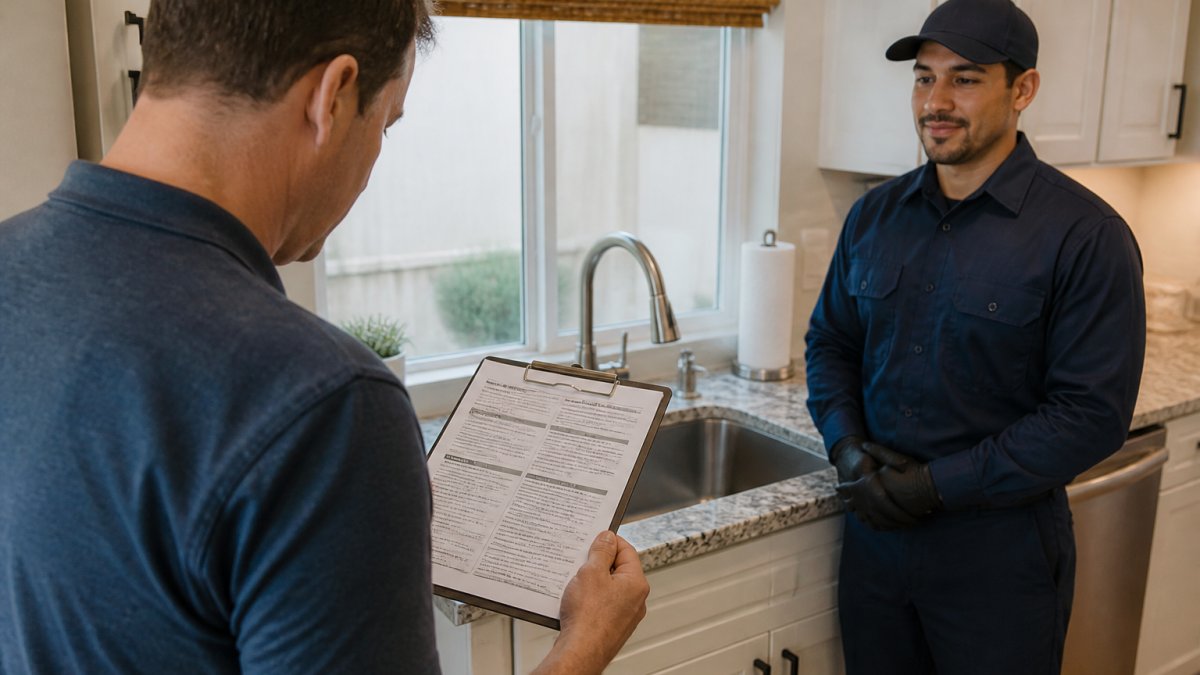
Neither business publishes a full public price list, and neither one's licensing, insurance, or warranty terms are spelled out clearly on the pages most homeowners land on.
Below: service details, coverage areas, estimate policies, and the verification steps that separate a smooth repair from a repeat call.
Always Plumbing Service Details and Verified Business Identity
Always Plumbing presents itself as a full-service plumbing company handling residential plumbing, drain cleaning, and sewer services. Their materials lean on longevity and repeat customers, but longevity is not verification.
Public information confirms only service categories and general positioning. What marketing alone cannot confirm:
- Current contractor license number and status
- General liability and workers' compensation coverage
- Written warranty terms for parts and labor
That is not an accusation. It is the normal state of local service marketing. The point is that you have to ask.
Power Pro Plumbing Service Details and Verified Business Identity
Power Pro Plumbing markets plumbing and HVAC services, emphasizing local availability and customer feedback.
That structure creates a problem: service-area pages are built to rank for city names, not to answer credential questions.
A common mistake is treating search visibility as proof of quality. A company can dominate local results and still have inconsistent technician training or vague warranty terms.
Side-by-Side Comparison: Services, Coverage, and Availability
The table below summarizes what each company publicly emphasizes, separating what you can verify today from what you can only confirm by phone. Treat it as your call script.
| Factor | Always Plumbing | Power Pro Plumbing |
|---|---|---|
| Core services | Plumbing, drains, sewers | Plumbing and HVAC |
| Emergency availability | Advertised | Advertised |
| Pricing disclosure | Not published | Not published |
| License info online | Not clearly posted | Not clearly posted |
| Warranty terms | Not published | Not published |
| Review presence | Established base | Broad directory listings |
| Service-area pages | Limited public detail | Extensive city-by-city pages |
| HVAC capability | Not emphasized | Core part of the offering |
Neither column is complete, and that is the finding. When both withhold the same categories of information, your decision should hinge on what you can confirm directly.
What the service mix actually means for your job
The biggest structural difference is HVAC. If your air conditioner fails in July or your furnace will not fire in January, a plumbing-only shop will refer you out or subcontract, adding a handoff, a second scheduling window, and a second invoice. A company running both trades in-house can often diagnose a water heater and a furnace on the same visit.
For pure plumbing work, the service mix matters less. Drain cleaning, sewer line work, leak repair, and water heater replacement are the same trade regardless of whether the truck also carries HVAC tools.
Coverage and availability: what to ask, not what to assume
"We serve your area" is a marketing statement, not a dispatch commitment. The useful questions are geographic and temporal:
- Which zip codes do you cover, and is there a trip charge outside them?
- How many technicians are on rotation overnight in my area?
- What is the typical arrival window for a non-emergency call booked today?
- Do you stock common parts (water heater elements, shutoff valves, P-traps) on the truck, or does every repair become a parts run?
A wide footprint with a thin overnight rotation will still leave you waiting, while a narrow footprint with deep local staffing often arrives faster. Compare the answers, not the map.
The verification checklist that replaces the missing columns
Because neither company publishes license, insurance, or warranty details on the pages most homeowners land on, run this checklist before booking either one:
- Confirm the contractor license number and status through your state's licensing board.
- Confirm the business name on the license matches the name on your contract and invoice.
- Request a certificate of insurance and verify it is active by calling the insurer.
- Get the warranty in writing, including duration and what voids it.
Whichever company answers all five in writing before the first wrench turns is the lower-risk choice, regardless of which name is on the truck.
Plumber Estimates and Upfront Pricing: How the Two Compare
Upfront pricing means the technician quotes a fixed price for a defined scope of work before starting, and that number does not change unless you approve additional work. It is the single most useful protection a homeowner has. Neither company publishes its estimate policy in detail, so the comparison must be built from the questions you ask.
The three pricing models you will actually encounter
Most residential plumbing work is priced one of three ways, and knowing which model you are quoted changes how you read the number:
- Flat-rate by task. The company publishes a price book and quotes a fixed figure for a defined job, such as replacing a kitchen faucet or clearing a main line. Easy to compare across companies because the scope is fixed.
- Time-and-materials. The technician bills an hourly labor rate plus parts. The final invoice depends on how long the job takes, which puts the risk on you.
- Diagnostic fee plus repair quote. You pay a service call or diagnostic fee to get the problem identified, then receive a separate quote for the repair. Some companies credit the diagnostic fee toward the repair if you approve the work; some do not.
Ask which model applies before you book. A flat-rate quote and a time-and-materials quote for the same job are not comparable, even if they look similar on the phone.
The four questions that expose the real cost
Neither company's public materials spell out its estimate terms, so the burden shifts to you. These four questions do the most work:
- Is the diagnostic or service call fee credited toward the repair if I approve the work?
- Is the quote flat-rate or hourly, and what is the hourly rate?
- What happens if the technician finds a second problem mid-job, such as a corroded shutoff valve behind a leaking supply line?
- Will you give me the revised price in writing before work continues?
If a company cannot answer those four questions clearly on the phone, that is your answer. A vague answer before the job rarely becomes a precise invoice after it.
Where the two companies diverge in practice
Based on their public positioning, the practical difference is not the pricing model but the breadth of work each quotes. A plumbing-only shop quotes the plumbing scope and stops. A company that also runs HVAC may quote a combined scope when one underlying problem, such as a leaking water heater or a condensate line, touches both systems, one invoice instead of two, but a larger quote that is harder to compare line by line.
For a straightforward repair, ask for an itemized quote showing labor and parts separately. For a larger job, ask for a plain-language scope of work, not just a total.
How to compare two quotes fairly
Put the quotes side by side and check four things: the scope of work, the parts specified by brand or grade, the warranty length, and whether the diagnostic fee is credited.
For homeowners weighing always plumbing vs power pro plumbing, the deciding factor is rarely the headline price. It is which company will put its license number, insurance certificate, warranty terms, and written scope in your hands before the first wrench turns.
Plumbing Contractor License and Insurance: What to Verify
A licensed contractor holds a current state-issued credential, carries general liability insurance, and typically carries workers' compensation coverage for employees. That combination protects you if a technician is injured on your property or a repair causes water damage.
Verification is straightforward and free:
- Look up the license number on your state's licensing board website
- Confirm the business name on the license matches the name on your contract
- Ask for a certificate of insurance and call the insurer to confirm it is active
- Confirm the warranty in writing, including duration and what voids it
For a broader view of what homeowners should expect from a legitimate contractor, the Federal Trade Commission's consumer guidance on hiring contractors is a solid reference on contracts, deposits, and your rights.
Emergency Plumbing Services and 24/7 Availability
Emergency plumbing services cover failures that cannot wait until morning: burst pipes, sewage backups, gas odors, and no-heat situations in winter. Both companies advertise around-the-clock availability.
Advertising it and staffing it are different things. Many companies route after-hours calls to an answering service, then dispatch whoever is on rotation.
When you call at 11 p.m., ask directly:
- Is a licensed technician dispatched, or a call center?
- What is the typical arrival window tonight, in hours?
- Is there an after-hours surcharge, and how much is it?
For urgent safety issues, the U.S. Consumer Product Safety Commission publishes guidance on gas appliance hazards and carbon monoxide that is worth reading before a winter emergency, not during one.
Questions to Ask Before Hiring a Plumber in South Orange County
The fastest way to separate a reliable contractor from a risky one is a five-minute phone call. Ask these questions and write down the answers.
Licensing and insurance
- What is your contractor license number?
- Can you email a certificate of insurance today?
- Is the name on the license the same as the name on my invoice?
Pricing and estimates
- Is the service call fee credited toward the repair?
- Is the quote flat-rate or hourly?
- Will I approve any added work in writing before it starts?
Workmanship and warranty
- How long is the warranty on parts and labor?
- What voids the warranty?
- Who do I call if the same problem returns in 60 days?
Scheduling and access
- What is the arrival window, and will I get a call before dispatch?
- Do your technicians wear shoe covers and clean up afterward?
That last item is not trivial. A company that protects your floors and cleans the work area is usually careful with the work itself.
For homeowners comparing always plumbing vs power pro plumbing specifically, the deciding factor is rarely the brand name.
Frequently Asked Questions
What plumbing services does Always Plumbing offer?
Always Plumbing provides residential plumbing services including drain cleaning, sewer line repair, leak detection, water heater installation and repair, and routine maintenance. Emergency service is available for urgent issues. Always Plumbing serves homeowners and property managers in South Orange County.
What plumbing services does Power Pro Plumbing offer?
Power Pro Plumbing offers a similar range of services: residential plumbing, drain and sewer cleaning, leak repair, water heater services, and HVAC work including heating and air conditioning installation and maintenance. They provide emergency plumbing services. Their service area and specific availability vary by location, so it is best to confirm coverage and response times directly with the company before scheduling.
How can I check whether a plumbing contractor is licensed and insured?
Ask the contractor for their license number and insurance certificate. In California, you can verify a contractor's license through the Contractors State License Board (CSLB) website. Check that the license is active, matches the business name, and covers the type of work you need. For insurance, request a certificate of insurance showing general liability and workers' compensation coverage.
Do plumbing companies offer emergency service and workmanship warranties?
Many plumbing companies advertise 24/7 emergency service and workmanship warranties. However, availability and warranty terms vary. Ask specifically: Is emergency service truly 24/7 or limited to certain hours? What does the warranty cover, parts, labor, or both? How long does it last? Get the warranty terms in writing before work begins. DC Plumbing Heating and Air Conditioning also offers 24/7 emergency services and warranties on all parts and installation.