 how-to
Why Is My AC Blowing Warm Air: Diagnostics & Fixes
Table of Contents
- Start Here: Quick Diagnostic Checklist
- Thermostat Settings Check
- Dirty or Clogged Air Filters
- How to Clean AC Condenser Coils
- Signs of Low Refrigerant in AC Units
- Electrical Issues and Circuit Breaker Resets
- When to Call an HVAC Professional
- Preventative Maintenance Checklist
- Frequently Asked Questions
Last Updated: October 7, 2026
Start Here: Quick Diagnostic Checklist
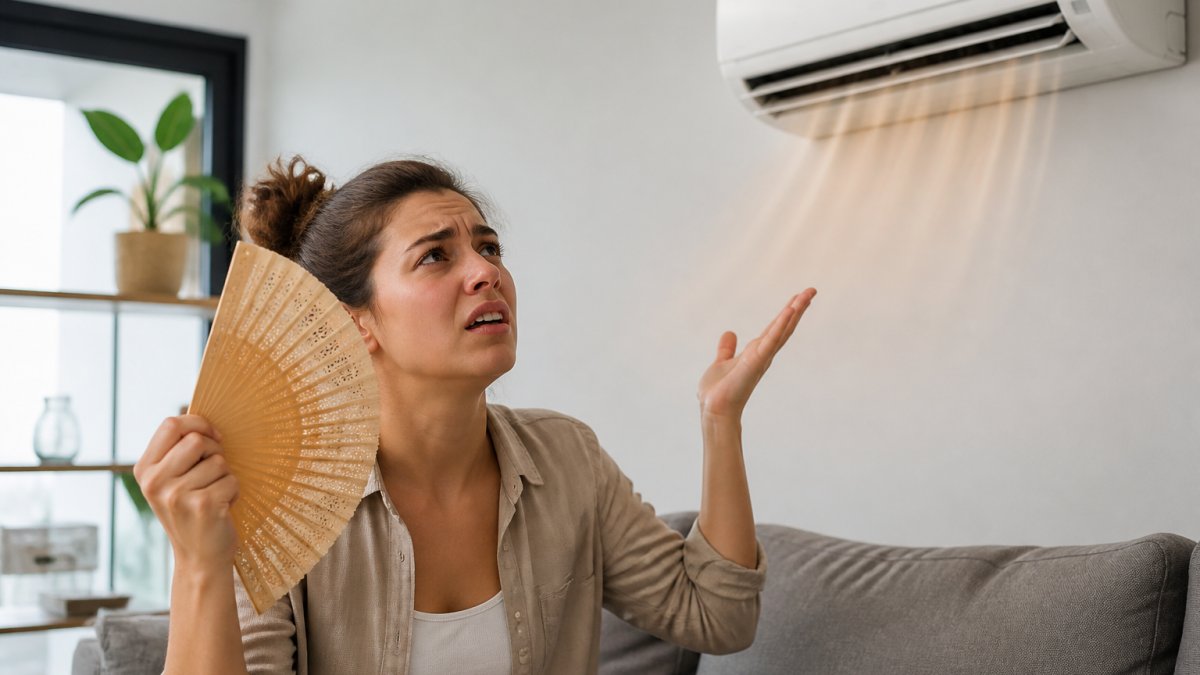
When your AC stops cooling and starts blowing warm air, the problem usually falls into a few categories. Start with these checks:
- Verify your thermostat is set to cooling mode, not heat
- Check that the temperature setting is lower than the current room temperature
- Look at your air filter, if it's dark or clogged, replace it now
If none of these reveal the problem, you're likely dealing with a mechanical issue that needs professional attention.
Thermostat Settings Check
Your thermostat is the command center for your system. If it's telling the equipment to heat, or failing to tell it to cool, your AC will blow warm air even when every mechanical component works.
The four settings that matter most:
- Mode: Confirm it reads "Cool," not "Heat," "Auto," or "Emergency Heat." On a heat pump, "Emergency Heat" runs the auxiliary electric strip heaters and will blow warm air on purpose.
- Setpoint: Set it at least 2-3 degrees below the current room temperature. If the room is 78 and the setpoint is 77, the system may not call for cooling at all.
- Fan: "Auto" runs the blower only during a cooling cycle. "On" runs it continuously, which pushes unconditioned air through the ducts between cycles and can feel warm.
Smart Thermostat Integration Errors
Smart thermostats add failure modes older units don't have. Rule these out before assuming the AC is broken.
Wiring and power problems:
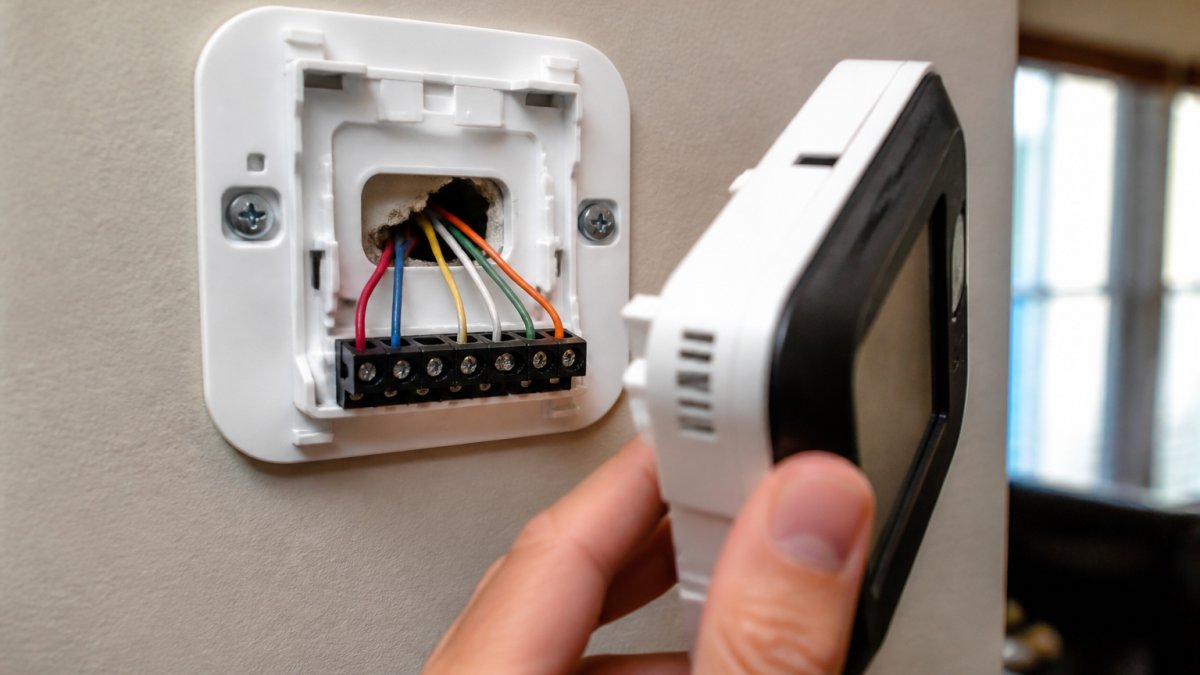
- Missing or disconnected C-wire. Many smart thermostats need a common wire for steady power. Without it, the unit may "power steal" from the cooling circuit, causing short cycling, reboots, or a blank screen mid-cycle. If the display flickers when the compressor kicks on, suspect the C-wire.
- Miswired terminals. A Y wire landed on W, or a reversed O/B wire on a heat pump, makes the thermostat call for heat when you asked for cool. Common after a DIY swap.
- Loose terminal screws. A loose wire at R or Y can drop the cooling call intermittently, so some cycles feel warm and others cold.
Software and configuration problems:
- Heat pump vs. conventional setting. If a heat pump is configured as a conventional furnace, the reversing valve logic inverts and the system heats when it should cool.
- Reversing valve (O/B) orientation. Heat pumps use an "O" or "B" energize-on-cool convention. The wrong selection reverses the entire mode.
- Firmware and app sync issues. A thermostat that lost Wi-Fi mid-update or runs outdated firmware can revert to a default schedule or reject app setpoint changes.
Quick smart thermostat reset sequence:
- Pull the thermostat off its base plate (or trip its breaker) for 30 seconds, then restore power.
- Confirm the equipment type and reversing valve setting in the installer/setup menu.
- Re-check the schedule and any active holds or eco modes in the app.
- Verify the C-wire is connected at both the thermostat and the air handler control board.
Ductless and Mini-Split Thermostat Differences
Ductless mini-splits and multi-zone systems use different thermostat logic.
- Each indoor head has its own setpoint and mode. One zone can heat while another cools, and a single head left in heat mode blows warm air into that room regardless of the other zones.
- Remote vs. wall controller. Many mini-splits use a handheld remote. A remote left in heat mode, or a wall controller that lost pairing, produces warm air.
- Mode conflict lockout. Most multi-zone systems lock out simultaneous heating and cooling. If one zone calls for heat, the outdoor unit may switch to heating and every zone blows warm air until that call ends.
If you've confirmed the mode, setpoint, fan setting, wiring, and app configuration and the air is still warm, the issue is downstream of the thermostat.
Dirty or Clogged Air Filters
A clogged air filter is one of the most common reasons an AC struggles to cool.
How to check your air filter:
- Locate your filter, usually in a return air duct or blower compartment
- Hold it up to a light source
- If you can barely see light through it, it's time to replace it
- Most filters need changing every 1-3 months depending on dust in your home
Replacing your filter is a 2-minute job. Buy the correct size and slide the new one in with the arrow pointing toward the furnace or air handler. If your AC was blowing warm air due to a clogged filter, you should feel the difference right away.
How to Clean AC Condenser Coils
Your outdoor condenser coils release heat from your home. When dirt, leaves, or debris block them, the system can't shed heat and your AC blows warm air inside.
Signs your condenser coils need cleaning:
- Visible dirt, grass, or leaves stuck to the outdoor unit
- The condenser fan running constantly but not cooling your home
- A hissing or bubbling sound from the outdoor unit
How to clean the condenser coils:
- Turn off your AC system at the thermostat and circuit breaker
- Use a garden hose to spray water gently across the coils from the top down
- Spray from the inside outward to push debris away from the fins
- Never use a pressure washer, it can bend the delicate fins
- Let the unit dry completely before turning it back on
Cleaning the condenser is DIY preventative maintenance, but heavily corroded coils or bent fins need professional help.
Signs of Low Refrigerant in AC Units
Refrigerant absorbs heat from inside your home and releases it outside. If the level drops, the system can't cool properly and you'll feel warm air.
Low refrigerant means a leak, and it's serious because:
- Your AC will never cool properly until the leak is fixed and refrigerant added
- Running with low refrigerant damages the compressor
- Refrigerant handling requires EPA certification (the EPA)
Signs your system is low on refrigerant:
- AC blowing warm air even after checking thermostat and filters
- Ice forming on the outdoor condenser unit or indoor copper lines
- A hissing sound coming from the outdoor unit or indoor air handler
If you see ice on your copper lines or condenser, turn off the system immediately, running it with low refrigerant will destroy the compressor. A technician must locate the leak, repair it, and recharge to the correct level.
Electrical Issues and Circuit Breaker Resets
Your AC depends on a chain of electrical components to run the compressor, condenser fan, and blower motor. When any link fails, the outdoor unit stops cooling while the indoor blower keeps moving air, so you feel warm air.
The electrical chain, in order:
- Main panel breaker
- Outdoor disconnect box (a small box near the condenser)
- Contactor (the relay that sends power to the compressor and fan)
- Capacitor (starts and runs the compressor and fan motors)
- Control board and low-voltage transformer
- Float switch or condensate safety switch
A failure anywhere in that chain produces the same symptom: warm air.
Step 1: Check the Breaker
- Go to your main electrical panel.
- Look for a double-pole breaker labeled "AC," "HVAC," "Cooling," or "Condenser."
- A tripped breaker sits in the middle position or fully off. Switch it firmly to "Off," then back to "On."
- If it trips again immediately, stop. Do not keep resetting it.
A breaker that trips once after a surge may reset cleanly. One that trips repeatedly points to a short, a grounded compressor winding, or an overloaded circuit, and needs a licensed technician.
Step 2: Check the Outdoor Disconnect
Many homes have a disconnect box on the wall near the condenser, holding a pull-out fuse block or small breaker.
- Pull the handle or open the cover and inspect the fuses or breaker.
- A blown fuse or tripped disconnect kills power to the outdoor unit while the indoor blower keeps running.
- Replace fuses with the exact same amperage rating. Never upsize a fuse.
Step 3: Look for the Common Component Failures
These are the parts technicians find failed most often when an AC blows warm air but the indoor fan still runs.
- Contactor. This electromagnetic relay has a low-voltage coil and high-voltage contacts. Pitted, welded, or burnt contacts prevent the compressor from receiving power, often signaled by a click from the outdoor unit with no compressor start.
- Run capacitor. The capacitor gives the compressor and fan motor starting torque. A bulged, leaking, or failed capacitor makes the compressor hum and trip on overload, or the condenser fan spin slowly or not at all.
- Float switch / condensate safety switch. A clogged condensate drain fills the pan, lifts the float, and opens a safety switch that cuts power to the outdoor unit. The indoor blower keeps running, so you feel warm air. Clearing the drain usually restores cooling.
Step 4: Know What Not to Touch
Safe for most homeowners:
- Resetting a tripped breaker once
- Replacing a blown disconnect fuse with the correct amperage
- Replacing thermostat batteries
Not safe without training:
- Testing or replacing capacitors
- Replacing contactors or control boards
- Diagnosing a grounded compressor
When the Breaker Keeps Tripping
A breaker that trips more than once, or the moment you reset it, signals a fault inside the system: a shorted compressor winding, a grounded wire, a seized condenser fan motor, or a loose connection overheating at a terminal.
Do not tape the breaker on, upsize it, or keep resetting it. Each reset pushes current through a fault and raises the risk of fire or equipment damage. Call a licensed technician.
If the breaker, disconnect, and visible components check out but the outdoor unit still won't start, the issue is likely inside the compressor circuit or control board. Bring in a professional.
When to Call an HVAC Professional
Some AC problems you can diagnose yourself; others require specialized tools and EPA certification.
Call a professional if you have:
- Low refrigerant (requires EPA certification to handle)
- A repeatedly tripping circuit breaker (electrical fault)
- Ice on your copper lines or condenser (system damage risk)
Why professional service matters:
Professional technicians have pressure gauges, leak detection equipment, and EPA certification, so they diagnose in minutes what would take you hours. They also carry parts and can often fix the problem the same day.
At DC Plumbing Heating and Air Conditioning, we offer emergency service when your AC fails during hot weather.
Preventative Maintenance Checklist
The best way to avoid AC problems is preventative maintenance. A well-maintained system runs efficiently, cools reliably, and lasts longer.
Monthly tasks:
- Check and replace your air filter if it looks dirty
- Make sure your thermostat is set correctly for the season
- Verify your outdoor condenser unit has clear space around it
Quarterly tasks:
- Inspect your outdoor condenser for leaves, dirt, or debris
- Listen for unusual sounds from your indoor or outdoor units
- Check that your vents are not blocked by furniture or curtains
Annually (before cooling season):
- Have a professional inspect your entire HVAC system
- Clean your condenser coils with a garden hose
- Check refrigerant lines for signs of leaks or damage
Every 3-5 years:
- Have your condenser coils professionally cleaned and inspected
- Replace any worn belts or bearings in your blower motor
- Inspect ductwork for leaks or disconnected sections
Regular maintenance catches small problems before they become expensive repairs, and a properly maintained system uses less energy.
If your AC is blowing warm air and you've worked through these diagnostics without finding the cause, it's time to call for professional help.
Frequently Asked Questions
Why is my AC blowing warm air instead of cold?
Warm air from your AC usually signals one of seven issues: a thermostat set to heat mode, a clogged air filter blocking airflow, frozen evaporator coils, low refrigerant levels, a faulty compressor, a dirty condenser unit, or an electrical failure. Start by checking your thermostat and air filter. If those are fine, the problem likely requires professional diagnosis, especially if refrigerant or electrical systems are involved.
Can a dirty air filter cause my AC to blow warm air?
Yes. A clogged air filter restricts airflow through your HVAC system, which can cause the evaporator coil to freeze over. When the coil freezes, your system can't absorb heat from your home, so warm air blows out instead. Check your filter monthly and replace it every 1-3 months depending on usage and pet hair. This is one of the easiest fixes you can do yourself.
What are the signs of low refrigerant in an AC unit?
Low refrigerant reduces your system's cooling capacity. Signs include warm air blowing from vents, longer cooling cycles that never reach your target temperature, ice buildup on the outdoor condenser or indoor copper lines, hissing sounds from the unit, and higher energy bills. Refrigerant leaks are the main cause. Do not attempt to refill refrigerant yourself, this requires EPA certification and specialized equipment. Call a licensed HVAC technician.
Should I turn off my AC if it's blowing warm air?
Yes, if warm air persists for more than a few minutes after startup. Continuing to run the system can damage the compressor or allow the evaporator coil to freeze completely, making repairs more expensive. Turn it off, check your thermostat and air filter, and reset your circuit breaker if needed. If the problem persists, contact a professional. Running a malfunctioning AC wastes energy and risks further damage.