 How-to
Air Filters and HVAC Efficiency: What a Clean Filter Really Saves
Last Updated: November 10, 2026
Quick Summary
Yes, changing air filters improves efficiency because a clean filter lets your HVAC system move air the way it was built to. When airflow drops, the blower motor runs longer to push the same amount of air, and that extra run time shows up on your utility bills.
- A dirty filter drops airflow, strains the blower, lengthens run cycles and wears parts faster.
- Change a 1-inch filter every 60 to 90 days with no pets and low dust.
- Replace 4- to 5-inch media filters every 6 to 12 months in a typical home.
- For most homes, MERV 8 to MERV 11 is the sweet spot for airflow and filtration.
- If airflow does not improve after a fresh filter, the restriction is downstream.
Table of Contents
- Does Changing Air Filters Improve Efficiency? The Short Answer
- How a Dirty Filter Restricts Airflow and Strains Your HVAC System
- How Often to Change a Home Air Filter
- Air Filter Replacement Signs You Should Not Ignore
- Air Filter Size and MERV Rating: Picking the Right Match
- How to Change an HVAC Air Filter in Five Steps
- When a New Filter Will Not Solve the Problem
- Schedule a System Check With DC Plumbing Heating and Air Conditioning
- Frequently Asked Questions
Does Changing Air Filters Improve Efficiency? The Short Answer
Yes, changing air filters improves efficiency, and the gain comes from one simple fact: a clean filter lets your HVAC system move air the way it was built to. When airflow drops, the blower motor runs longer to push the same amount of air, and that extra run time shows up on your utility bills.
The short answer is yes, with an important caveat. A fresh filter restores airflow. It does not fix a system that was already struggling before the filter clogged. That distinction matters, and it shapes everything below.
At DC Plumbing Heating and Air Conditioning, we serve South Orange County homeowners and businesses. Regular filter changes work best when treated as a habit, not a one-time fix.
Below, we walk through what a clean filter actually does, how often to change it, and how to pick the right one.
How a Dirty Filter Restricts Airflow and Strains Your HVAC System
A dirty filter works like a hand over your mouth. The blower pulls against the resistance, and every part of the system downstream feels it.
Here is the chain reaction:
- Airflow drops. Less air crosses the evaporator coil, so cooling takes longer.
- The blower works harder. Higher static pressure means more strain on the motor.
- The system runs longer. Longer run cycles mean more energy use for the same comfort.
- Parts wear faster. A strained blower and overheated compressor shorten equipment lifespan.
Small habits, compound savings.
If your home is older and airflow was never great to begin with, a filter change may only get you partway. Can you improve HVAC airflow in an older home walks through the deeper fixes.
How Often to Change a Home Air Filter
There is no universal schedule. The right interval depends on filter thickness, how hard the system works, and what is in the air.
Use this as a starting framework, then adjust based on what you see:
- 1-inch filter, no pets, low dust, mild system use: every 60 to 90 days
- 1-inch filter, one pet or seasonal allergies: every 30 to 60 days
- 1-inch filter, two or more pets, high occupancy, or a dusty area: every 30 days, and check monthly during peak heating or cooling season
- 4- to 5-inch media filter, typical home: every 6 to 12 months
- 4- to 5-inch media filter with pets or allergies: every 3 to 6 months
- Any thickness after remodeling, wildfire smoke, or a major dust event: replace immediately, then recheck in 30 days
System run time matters as much as the calendar.
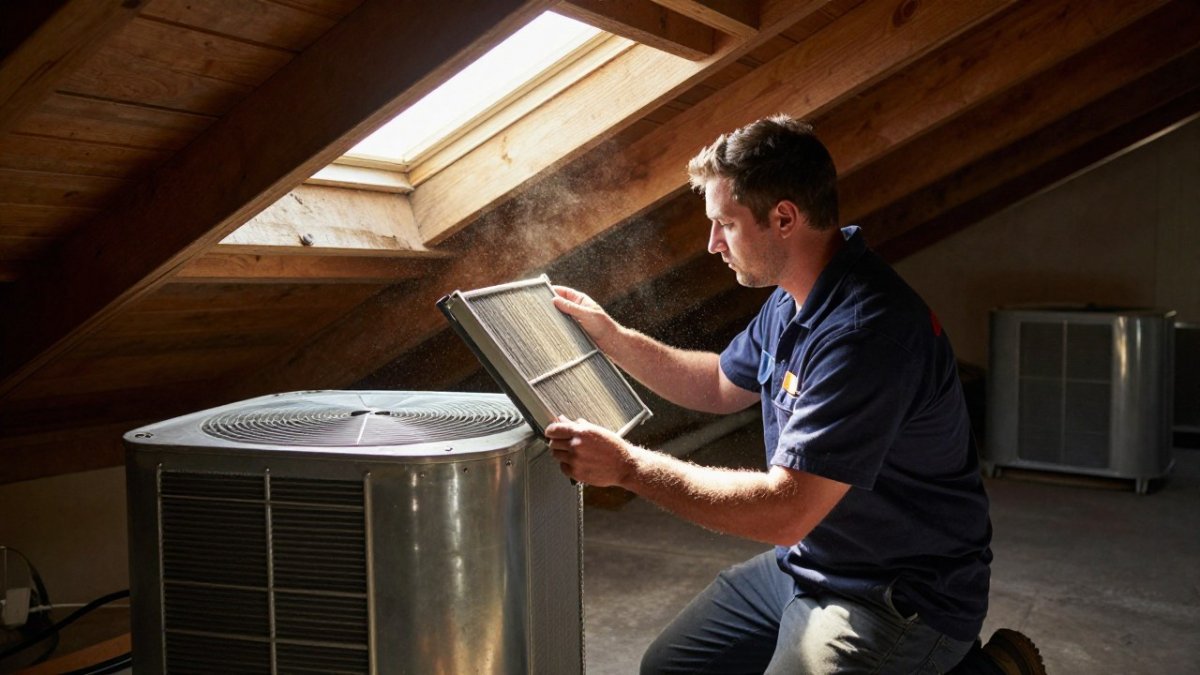
A common mistake is stretching the interval because the filter "still looks okay." Hold it up to a light. If you cannot see light through it, it is done, no matter what the calendar says.
Watch out: writing the install date on the filter frame is the simplest way to stop guessing. Without a date, most homeowners underestimate how long the filter has been in service.
Want a maintenance visit that includes a filter check and a full system inspection? How long HVAC system maintenance takes explains what to expect before you book.
Air Filter Replacement Signs You Should Not Ignore
Most guides list symptoms without explaining what causes them, which makes it hard to know whether the filter is actually the problem. Here is what to watch for, paired with the mechanism behind each sign:
- Visible gray fuzz or a matted surface. The pleats are loaded with dust and the media is near the end of its useful life. This is the most reliable sign.
- Rooms that never quite reach the thermostat setting. Restricted airflow means the system delivers less conditioned air per cycle, so some rooms fall short even while the system runs.
- Noticeably higher energy costs month over month. A clogged filter raises static pressure, the blower draws more power to move less air, and run times lengthen. Compare the same billing period year over year to filter out seasonal weather swings.
- More dust settling on furniture within days of cleaning. A loaded filter stops capturing particles and can shed them back into the airstream.
- A musty smell when the system kicks on. Moisture and biological growth on a damp filter or in the ductwork produce odor; a filter change alone will not fix growth downstream.
- Allergy symptoms that flare up indoors. Reduced particle capture means more dust, pollen, and dander stay airborne.
- The system cycling on and off more often than usual. Short cycling can come from airflow restriction, but it can also come from an oversized system or a thermostat issue, so treat it as a prompt to check the filter first, not a diagnosis.
It helps to follow the right order of operations. If your bills are climbing and the filter is fresh, the filter is not your problem. Dirty coils restrict airflow the same way a clogged filter does, and they sit out of sight. A simple check: hold a fresh filter up to the light and confirm you can see through it, then compare vent airflow before and after the change. If airflow does not improve, the restriction is downstream. Seven signs dirty coils are driving up your electric bill covers what to check next.
Watch out: a filter that looks clean on the surface can still be loaded internally, especially thicker media filters. Judge by light transmission and airflow, not color alone.
Air Filter Size and MERV Rating: Picking the Right Match
Filter size and MERV rating are the two specs that decide whether your new filter helps or hurts. Get either wrong and you can cut airflow instead of restoring it.
Air filter size is printed on the filter's cardboard frame, something like 20x25x1. Match those numbers exactly. A filter that is too small lets air bypass the media. One that is too large will not seat properly.
MERV rating runs from 1 to 16 on a scale set by ASHRAE Standard 52.2. Higher MERV traps smaller particles, but it also adds resistance. Here is the practical breakdown:
| MERV Rating | Traps | Best For | Airflow Impact |
|---|---|---|---|
| MERV 6-8 | Dust, lint, pollen | Most homes | Low |
| MERV 9-11 | Fine dust, mold spores | Allergy sufferers | Moderate |
| MERV 13+ | Smoke, bacteria, fine particles | Specialized setups | High |
For most homes, MERV 8 to MERV 11 is the sweet spot. A MERV 13 filter in a system not designed for it can choke airflow and undo every efficiency gain you were chasing. Check your system's manual before going higher. Choosing a filter your system can handle is only part of protecting airflow, and HVAC maintenance benefits include keeping the rest of the system working efficiently.
How to Change an HVAC Air Filter in Five Steps
Total time: 10 minutes. Difficulty: beginner. Here is the process we walk homeowners through.
What you'll need:
- The correct replacement filter
- A marker for dating the filter
- A vacuum with a brush attachment
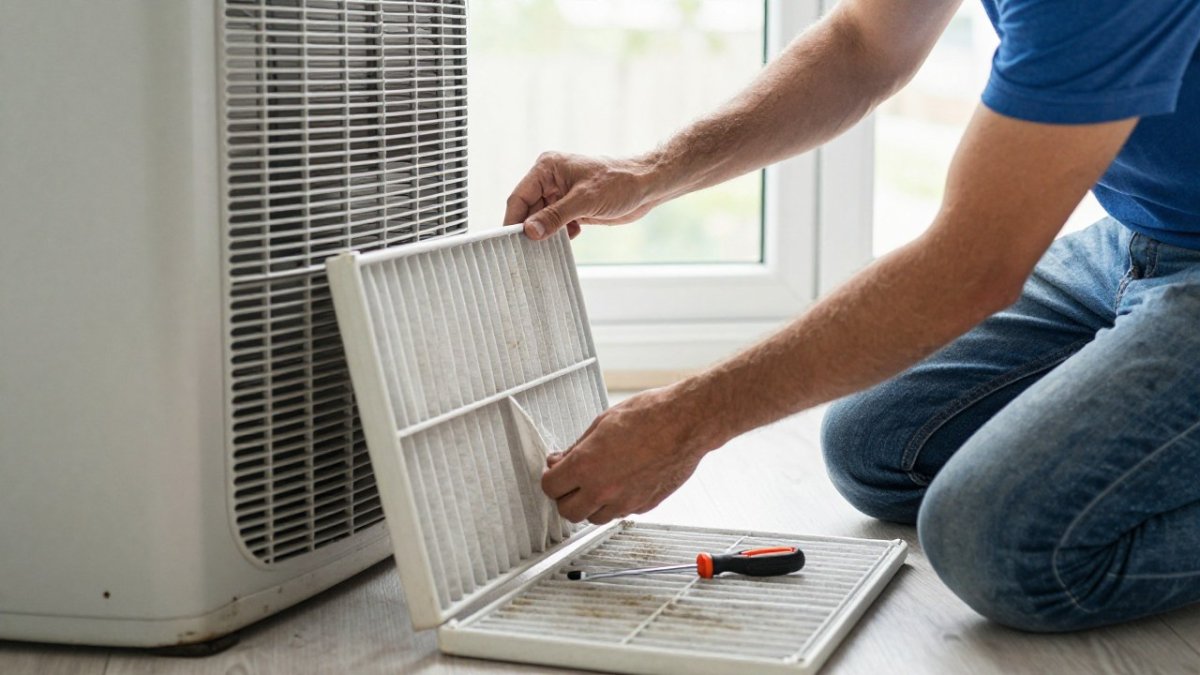
- Turn the system off. Shut off the thermostat or the breaker to stop the blower.
- Find the filter slot. Look at the return duct or the air handler cabinet. Most slots have a cover or latch.
- Pull the old filter out. Note the arrow on the frame. It shows airflow direction and should point toward the blower.
- Slide the new filter in. Match the size and keep the arrow pointing the same way. Write today's date on the frame edge.
- Turn the system back on. Run the fan for a few minutes and check that airflow from the vents feels normal.
Expected result: Stronger airflow at the vents and a system that reaches its set temperature faster.
Watch out: installing the filter backward is the single most common mistake we see. The arrow must point in the direction of airflow. Backward filters shed media into the system and cut performance.
When a New Filter Will Not Solve the Problem
A fresh filter fixes airflow restriction caused by a clogged filter. Nothing else.
If you change the filter and the system still struggles, the cause lives somewhere else:
- Dirty evaporator or condenser coils blocking heat transfer
- A failing blower motor that cannot move air even with a clean filter
- Duct leaks or poor duct design dumping conditioned air into the attic
- A refrigerant charge issue that makes the system run long and cool poorly
- An undersized return that was never adequate for the square footage
In those cases, a new filter is a band-aid. The system needs a technician who can measure static pressure and check the coil. The U.S. Environmental Protection Agency's Energy Star guidance points to proper maintenance as the way to keep equipment running efficiently, and that includes the parts a filter cannot protect.
Schedule a System Check With DC Plumbing Heating and Air Conditioning
The filter is the part you can handle yourself. The rest of the system needs eyes on it once a year.
Our licensed technicians can check filter condition and system performance during a visit. You get upfront pricing before any work starts, and parts and installation are warranted. Call today for current pricing.
We have served South Orange County since 1989, and we offer 24/7 emergency service when a system fails at the worst possible time. Before you book, you can read about the licensed HVAC technicians who will show up at your door.
If your energy bills keep climbing despite a fresh filter, the problem is deeper than the filter slot. DC Plumbing Heating and Air Conditioning can diagnose the real cause with a full system check, upfront pricing, and warranty-backed work, backed by nearly four decades of local experience and 24/7 emergency availability.
Frequently Asked Questions
Do air filters actually make a difference to HVAC efficiency?
Yes, but within limits. A clean filter keeps airflow moving freely, so the blower does not work as hard and the system uses less energy to move the same air. The energy gain only holds if the filter is the right size and MERV rating for your system. A filter that is too dense can restrict airflow and cancel out the benefit.
How often should you really change your air filter?
The common rule is every 30 to 90 days, but the right interval depends on your home. Households with pets, allergy sufferers, or heavy dust should lean toward 30 days. A single occupant with no pets and a clean home may stretch to 90 days. Check the filter monthly and replace it when you see a visible gray coating. Homes in dusty or wildfire-smoke-prone areas need more frequent changes.
Can changing an air filter lower energy bills?
It can help, but do not expect dramatic savings. A clogged filter forces the blower to work harder and can add to monthly energy use. Replacing it restores airflow and lets the system run closer to its rated efficiency. Pairing regular filter changes with annual maintenance, sealed ducts, and a properly sized system gives you the best shot at lower utility bills. Filter changes alone will not fix a system with other problems.
Can using the wrong air filter affect HVAC performance?
Yes. A filter that is the wrong size leaves gaps that let dust bypass the filter and coat the blower and coils. A MERV rating that is too high for your system can choke airflow, raise static pressure, and make the system run hotter and longer. Check your owner's manual for the recommended MERV range and measure the filter slot before buying. When in doubt, a licensed technician can confirm the right size and rating.