 How-to
How to Know How Long HVAC System Maintenance Takes
Last Updated: November 2, 2026
Quick Summary
HVAC maintenance typically takes 60 to 90 minutes for a single AC unit or gas furnace tune-up. Booking AC and furnace together in one visit runs 2 to 3 hours, while multi-zone or multi-story systems take 2 to 4 hours. A first visit in years with no records adds 30 to 60 minutes.
- A diagnostic repair visit typically takes 1 to 2 hours, while part replacement runs 2 to 4 hours.
- Annual service history on file shortens an appointment by 10 to 20 minutes.
- Heavy dirt, rust, or deferred service adds 30 to 60 minutes to the visit.
- Clear access to indoor and outdoor units shortens the appointment by 10 to 15 minutes.
- Clear at least three feet of space around the indoor and outdoor units before the technician arrives.
Table of Contents
- How Long Does HVAC System Maintenance Take?
- Typical Appointment Lengths by System Type
- How Long Does an AC Tune-Up Take?
- A Step-by-Step Time Breakdown of a Maintenance Visit
- What Is Included in HVAC Maintenance?
- The HVAC Maintenance Checklist Technicians Follow
- HVAC Maintenance vs Repair: How the Time Compares
- Factors That Extend or Shorten Your Appointment
- How to Prepare Before Your Maintenance Visit
- Frequently Asked Questions
How Long Does HVAC System Maintenance Take?
Most homeowners want a straight answer before they book: how long does HVAC system maintenance take?
At DC Plumbing Heating and Air Conditioning, we serve South Orange County. The honest answer depends on system type, condition, and whether the technician finds a problem that needs fixing on the spot.
Below, we break down realistic appointment lengths, walk through what happens during a visit, and show you how to prepare so your appointment runs shorter.
Typical Appointment Lengths by System Type
The maintenance visit length tracks closely with how much equipment a technician has to inspect. Here is what to expect for common residential setups.
| System Type | Typical Time | What Drives the Length |
|---|---|---|
| Single AC unit, routine tune-up | 60-90 minutes | One indoor and one outdoor unit to check |
| Gas furnace, routine tune-up | 60-90 minutes | Burner and heat exchanger inspection |
| AC plus furnace, same visit | 2-3 hours | Two full systems in one appointment |
| Multi-zone or multi-story system | 2-4 hours | Multiple thermostats and air handlers |
| First visit in years, no records | Add 30-60 minutes | Deeper cleaning and catch-up work |
How Long Does an AC Tune-Up Take?
If you want to understand how dirty coils affect your energy bills, our guide on 7 signs dirty coils are driving up your electric bill is worth a read before your visit.
A Step-by-Step Time Breakdown of a Maintenance Visit
Most guides give you a single number and move on. The useful answer is a time budget: how a 90-minute appointment is allocated, which steps are fixed, and which expand when the system is dirty, hard to reach, or hiding a problem.
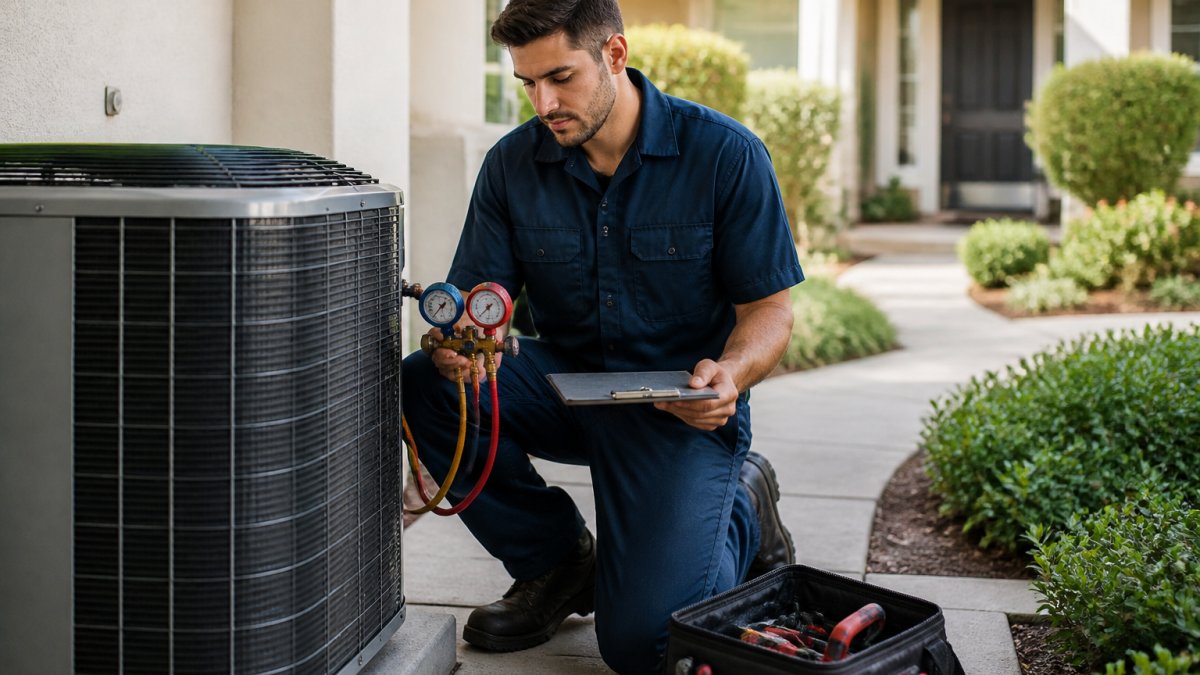
| Step | Typical Time | What Moves It |
|---|---|---|
| Arrival, walkthrough, and scope confirmation | 5-10 minutes | Whether you are available to describe symptoms; gate codes and pet containment |
| Initial inspection of indoor and outdoor units | 10-15 minutes | Accessibility of the air handler (attic, closet, crawlspace) and visible ductwork |
| Air filter inspection or replacement | 5-10 minutes | Filter location and whether you have the correct replacement size on hand |
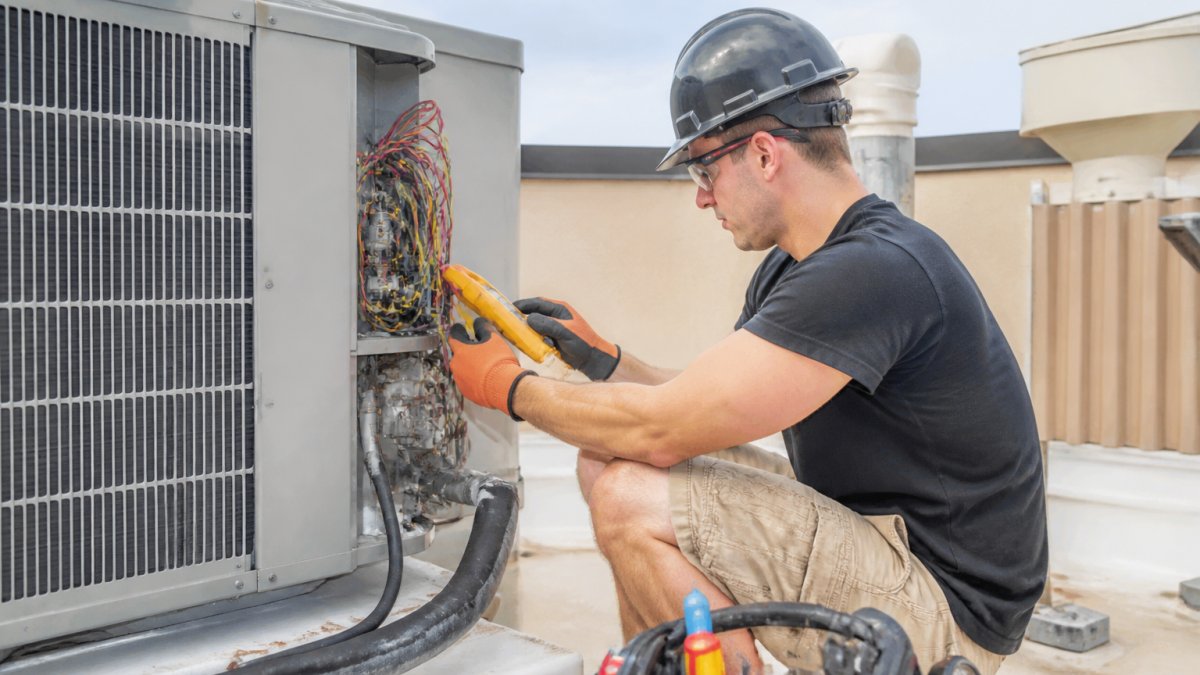
| Coil and condensate drain cleaning | 20-30 minutes | Coil condition; a heavily soiled condenser coil or clogged drain line adds time |
| Electrical connections and controls testing | 10-15 minutes | Number of low-voltage terminals and whether the thermostat is being reconfigured |
| Refrigerant and airflow measurement | 10-15 minutes | Whether gauges must be connected and whether airflow readings require blower access |
| Final operation test (cooling and heating cycles) | 10-15 minutes | Ambient temperature; a heating test in mild weather may need a longer cycle |
| Findings review and documentation | 5-10 minutes | Number of findings and whether you want a written summary or photos |
The fixed core versus the variable edges. Arrival, filter check, electrical testing, and the final operation test are relatively fixed. Coil cleaning, drain flushing, and refrigerant measurement are the variable blocks. An annually serviced system lands near the low end of each range; two or more years of deferred service tends to hit the high end and can push the visit past 90 minutes before any repair is discussed.
What happens when the technician finds a repair mid-visit. Diagnosis and repair are separate work from maintenance. Ask upfront how the company handles approval before additional work, and confirm whether diagnostic time is billed separately from the maintenance fee.
Have prior service records available; it helps the technician spot trends instead of starting cold.
What Happens During the Initial Inspection
The initial inspection is where the technician decides how the rest of the visit will go: a visual and functional check of the whole system before any cleaning or testing begins. A clean, well-kept system passes quickly; rust, debris, or obvious wear signals extra time ahead. This is also when the technician spots issues that may need a repair rather than routine service. The inspection covers the indoor air handler and blower compartment, the outdoor condenser and its disconnect, visible supply and return ductwork, the condensate drain and safety switch, and the thermostat location and wiring. Each checkpoint can add a few minutes if access is tight or condition is poor.
What Is Included in HVAC Maintenance?
HVAC maintenance is the scheduled service that keeps a system running safely and efficiently between breakdowns. It is not a repair visit. It is a preventive maintenance appointment that covers inspection, cleaning, and testing of the major components.
The HVAC Maintenance Checklist Technicians Follow
A good HVAC maintenance checklist is organized by system, not by guesswork. Here is the sequence our technicians work through on a standard visit.
Cooling side:
- Inspect and clean the condenser coil
- Check the evaporator coil for buildup
- Test refrigerant charge and inspect refrigerant lines
- Flush the condensate drain
- Verify the cooling cycle reaches target operating temperature
Heating side:
- Inspect the heat exchanger and burners
- Test the heating cycle and safety controls
- Check flue and ventilation
Shared components:
- Replace or clean the air filter
- Test electrical connections and system controls
- Check thermostat accuracy
- Measure airflow and inspect the blower
Thermostat checks are part of every visit, and if yours is aging, it may be worth upgrading. Our guide to the best smart thermostat for home heating covers what to look for before you buy.
HVAC Maintenance vs Repair: How the Time Compares
HVAC maintenance vs repair comes down to purpose. Maintenance is planned and predictable. A repair is reactive, because the technician has to diagnose the problem before fixing it.
| Visit Type | Typical Time | Predictability |
|---|---|---|
| Routine maintenance | 60-90 minutes | High |
| AC tune-up only | 60-90 minutes | High |
| Diagnostic repair visit | 1-2 hours | Medium |
| Part replacement | 2-4 hours | Low, depends on parts |
That gap is exactly why preventive maintenance pays off: it catches small issues before they turn into a repair call.
If your system is already blowing warm air, that is a repair signal, not a maintenance one. Our guide on why your AC is blowing warm air and how to diagnose it walks through the likely causes.
Factors That Extend or Shorten Your Appointment
Most lists of time factors are vague. The useful version quantifies them so you can predict your own appointment. The ranges below reflect common residential patterns; your technician's actual findings govern.
| Factor | Effect on Appointment Time | Why |
|---|---|---|
| Annual service history on file | Shortens by 10-20 minutes | Technician skips catch-up cleaning and works from prior readings |
| Recently changed air filter | Shortens by 5-10 minutes | No filter swap or filter-compartment cleaning needed |
| Clear access to indoor and outdoor units | Shortens by 10-15 minutes | No moving stored items, no tight crawlspace maneuvering |
| Single-zone system | Baseline | One thermostat, one air handler, one condenser |
| Heavy dirt, rust, or deferred service | Adds 30-60 minutes | Coil cleaning, drain flushing, and inspection take longer |
| Multi-zone or multi-story setup | Adds 60-120 minutes | Each zone has its own thermostat, damper, and often its own air handler |
| Poor equipment access (attic, crawlspace, closet) | Adds 15-30 minutes | Setup, ladder work, and panel removal |
| Repair found mid-visit | Adds 30 minutes to 2+ hours, or a follow-up visit | Diagnosis and repair are separate from maintenance; parts availability drives the outcome |
| Pet containment not arranged | Adds 5-15 minutes or reschedules the visit | Technicians cannot safely work with loose animals |
Access is the most underrated factor. A condenser on a clear pad with two feet of clearance is a different job than one boxed in by shrubs or a fence. An air handler in a conditioned closet with a service panel is faster to inspect than one in a crawlspace. If you are unsure how accessible your equipment is, walk the technician's path yourself before the appointment.
Homeowner preparation and appointment logistics. A few practical steps keep the visit on the shorter end:
- Clear at least three feet of space around the indoor and outdoor units
- Secure pets in a closed room or away from the work area
- Make sure an adult is home to provide access and answer questions
- Note any rooms that heat or cool unevenly, plus any new noises or smells
- Have prior service records and the filter size available
- Confirm the appointment window and whether the company texts an arrival notice
Being available for the findings review matters. The technician's walkthrough at the end is when you learn what was found and what to watch.
What you can do yourself versus what needs a technician. Changing the air filter every one to three months, keeping debris off the outdoor unit, keeping vents unblocked, and clearing the area around the equipment are safe homeowner tasks. Anything involving refrigerant, electrical connections inside the panels, the evaporator coil, the blower, or the heat exchanger requires tools, training, and licensing. Do not open panels or handle refrigerant lines yourself; those tasks belong in the maintenance visit and doing them yourself does not replace professional service.
How to Prepare Before Your Maintenance Visit
A little prep on your end can trim real time off the appointment. Here is what we recommend before a service appointment.
Booking maintenance should not feel like a gamble on your time or your wallet. At DC Plumbing Heating and Air Conditioning, we serve South Orange County with licensed technicians, upfront pricing with no surprise fees, and warranties on parts and installation. Call today to schedule a maintenance visit.
Frequently Asked Questions
How long does a typical HVAC maintenance appointment take?
Your technician can give a realistic appointment window once they know your system type and condition.
Can HVAC maintenance take longer if the system has a problem?
Yes. When a technician finds a problem that needs attention, the visit can shift from maintenance into diagnosis and repair.
What should I do before an HVAC maintenance appointment?
Clear at least three feet of space around both the indoor unit and the outdoor condenser, unlock gates, and secure pets. Replace or have a new air filter ready, and note any rooms that heat or cool unevenly so you can point them out. If you have a smart thermostat, confirm it is connected to Wi-Fi. These small steps let the technician start the inspection immediately instead of waiting on access.
How often should an HVAC system be serviced?
Regular HVAC maintenance helps catch small issues before they turn into repairs.