 how-to
24 Hour Heating Repair San Clemente: 2026 Guide
Table of Contents
- 24 Hour Heating Repair in San Clemente: What to Expect
- Emergency Furnace Repair: Critical Signs You Shouldn't Ignore
- HVAC Troubleshooting Guide: Safe Checks Before You Call
- The Cost of Emergency HVAC Service: What Drives the Price
- Why Local, Licensed Technicians Matter for Heating Repair
- Energy Efficiency Tips for Coastal Climates
- How to Choose a 24/7 Heating Repair Provider
- Frequently Asked Questions
Last Updated: September 27, 2026
24 Hour Heating Repair in San Clemente: What to Expect
When your furnace quits at 2 a.m. on a cold night, you need 24 hour heating repair San Clemente residents can actually count on. This guide from DC Plumbing Heating and Air Conditioning covers what happens when you call, what a technician checks, and how to avoid getting overcharged in an emergency. A heating failure rarely announces itself at a convenient hour. Most emergency calls come in during the coldest stretch of the night, when a system that was limping along finally gives out. Below, we'll walk through the full process, from your first phone call to the moment warm air returns, so you know exactly what to expect.
DC Plumbing Heating and Air Conditioning has served South Orange County since 1989, and we have handled enough after-hours calls to know where homeowners get surprised.
Emergency Furnace Repair: Critical Signs You Shouldn't Ignore
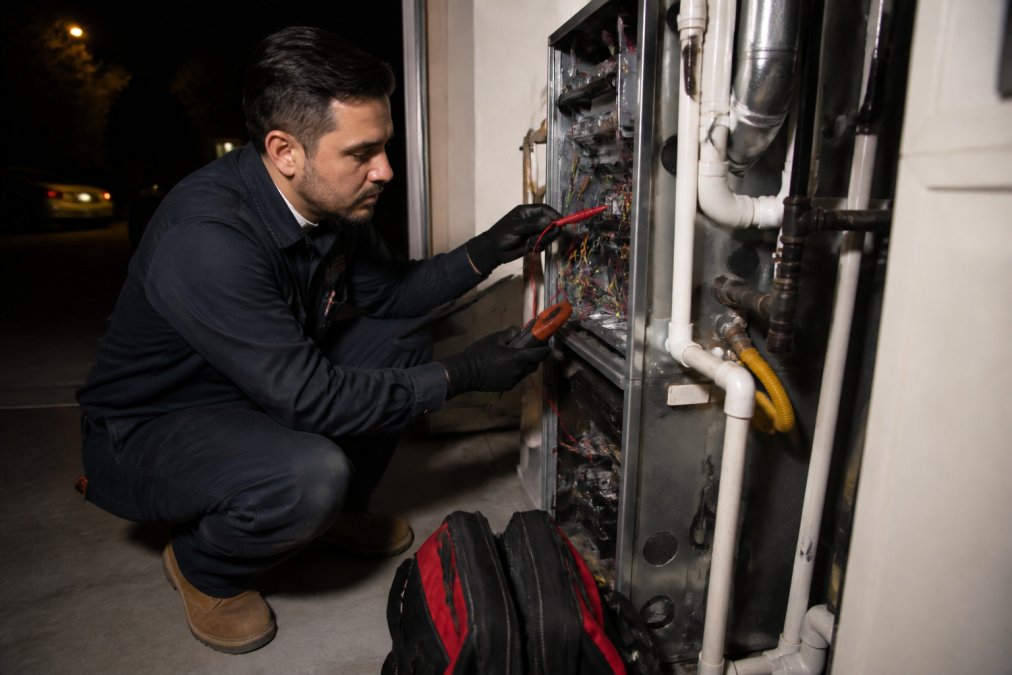
The signs that demand an immediate emergency furnace repair call are a gas smell, a carbon monoxide alarm, no heat combined with a running blower, or a furnace that repeatedly trips its breaker. These point to safety or electrical faults that should never wait until morning. Ignoring them risks a gas leak, a fire, or carbon monoxide exposure.
Other warning signs are less urgent but still worth a same-day call:
- Yellow or flickering burner flame instead of a steady blue one
- Loud banging, rumbling, or screeching from the unit
- The furnace short-cycles, turning on and off every few minutes
- A persistent burning or musty smell when heat runs
- The thermostat reads heat, but the house stays cold
A common mistake is resetting the breaker and hoping the problem clears. If a furnace trips its breaker more than once, something inside is drawing too much current. That is a repair, not a fluke.
HVAC Troubleshooting Guide: Safe Checks Before You Call
An HVAC troubleshooting guide saves you a service call when the fix is simple, and saves your safety when it isn't. Before dialing, run these safe checks. They take five minutes and resolve a surprising share of "no heat" complaints.
Safe checks you can do yourself:
- Confirm the thermostat is set to Heat and the temperature is above room level
- Replace or check the air filter; a clogged filter can choke airflow and trip the system
- Verify the furnace switch (looks like a light switch near the unit) is on
- Check the breaker panel for a tripped circuit
- Confirm the gas valve to the furnace is open
- Make sure return vents and registers aren't blocked by furniture
Never do these yourself: open the burner compartment, test gas lines, bypass a safety switch, or attempt to clean the heat exchanger.
The Cost of Emergency HVAC Service: What Drives the Price
| Repair | Typical Part Cost | Typical Labor | What Drives the Bill |
|---|---|---|---|
| Flame sensor clean or replace | $5-$40 | 30-60 min | Simple access, quick test |
| Hot surface ignitor | $20-$60 | 30-60 min | Fragile part, careful handling |
| Inducer motor | $100-$300 | 1-2 hrs | Access to flue, gasket reseal |
| Blower motor | $150-$500 | 1.5-3 hrs | Motor type (PSC vs. ECM), capacitor |
| Control board | $200-$600 | 1-2 hrs | Board availability, diagnostic time |
| Gas valve | $150-$400 | 1-2 hrs | Licensed gas work, leak test |
| Heat exchanger | $400-$1,500+ | 3-6 hrs | Often repair-vs-replace decision |
- Diagnostic fee. Many companies charge a trip or diagnostic fee that is credited toward the repair if you approve the work. Ask before you book.
- Time of day. A 2 a.m. call on a holiday weekend is the most expensive window. A weekday morning is the cheapest.
- Age of the system. On a furnace past 15 years, a $600 control board repair is often the moment to price a replacement instead. The repair is not wrong, it just may not be the best use of the money.
What you should not accept is a blank check. A legitimate provider diagnoses first, presents the failed part and the price, and waits for your approval. If a technician starts work before you have seen a number, stop them.
Why Local, Licensed Technicians Matter for Heating Repair
Local, licensed technicians matter because they know the housing stock, the climate, and the codes that apply to your system. A licensed and insured HVAC contractor carries the training and accountability that an unlicensed handyman does not. In an emergency, that difference shows up in how fast the problem is diagnosed and fixed correctly the first time.
Energy Efficiency Tips for Coastal Climates
What salt air does, and how to counter it:
- Condenser and heat pump coils within a few miles of the coast accumulate salt film that insulates the coil and cuts efficiency. Rinse outdoor coils with fresh water a few times a year, never pressure-wash, which bends the fins.
- Cabinet screws, burner brackets, and electrical terminals corrode first. A technician who knows the area will check these on every visit, not just the filter.
- Any exposed metal on the outdoor unit benefits from a manufacturer-approved coil coating. It is not free, but it is cheaper than replacing a coil early.
What humidity does:
- High humidity plus a cool furnace cabinet is a rust recipe. Keep the unit's condensate drain clear so water does not pool inside the cabinet.
- A heat pump in defrost mode pulls moisture out of the air and dumps it at the outdoor unit. Make sure the defrost drain pan and line are clear before winter.
What mild winters hide:
- A furnace that runs only a few weeks a year can go two seasons with a cracked heat exchanger before anyone notices. That is why an annual inspection matters more here than in a climate where the system runs daily and problems surface fast.
- Short, mild heating seasons also mean a heat pump is often the better long-term fit than a gas furnace. A heat pump moves heat rather than burning fuel, and in a mild coastal climate it rarely has to work hard. When your furnace reaches the end of its life, price a heat pump before you default to another furnace.
Habits that pay off in this climate:
- Schedule preventative maintenance in early fall, before the first cold snap fills every company's calendar.
- Seal gaps around doors, windows, and the attic hatch. Coastal humidity finds every crack, and so does cold air.
- Use a smart thermostat with a schedule. Heating an empty house is the single easiest waste to eliminate.
- Keep return vents and registers clear. A blocked return starves the system and raises runtime.
DC Plumbing Heating and Air Conditioning has worked on coastal systems and builds these checks into every maintenance visit. If your system is aging out, we will walk you through heat pump installation as an option, not a default.
How to Choose a 24/7 Heating Repair Provider
Use this checklist when you call:
- A real person answers, day or night
- They can give a fast response time window
- Technicians are licensed and insured
- Pricing is quoted upfront, with no surprise fees
- The work carries a warranty on parts and installation
- They serve your local area specifically
DC Plumbing Heating and Air Conditioning meets each of these. Our team is licensed, certified, and local, we offer upfront pricing with no surprise fees, and our work is backed by warranties on parts and installation. We also arrive ready to leave your space clean and tidy, which matters more than people expect after an emergency repair.
Frequently Asked Questions
What should I check before calling for emergency heating repair?
Check your thermostat settings, replace batteries if needed, verify the circuit breaker hasn't tripped, and ensure the furnace filter isn't clogged. If the system still won't heat after these steps, call for 24 hour heating repair in San Clemente. Avoid opening the furnace panel or touching electrical parts. A certified technician can run system diagnostics safely and identify the real issue.
How much does 24-hour heating repair typically cost?
The cost of emergency HVAC service depends on the repair type, parts needed, and time of day. Common factors include diagnostic fees, after-hours labor rates, and component replacements. DC Plumbing Heating and Air Conditioning provides transparent pricing with no surprise fees. Call today for a quote based on your specific situation.
Is a lack of heat considered an HVAC emergency?
Yes, especially during cold nights or if you have infants, elderly residents, or medical conditions. A complete heating failure can lead to burst pipes or health risks. If your system blows cold air or won't turn on, treat it as an emergency. Same-day service and 24/7 availability from local providers can restore heat quickly.
How quickly can a technician arrive for emergency heating service?
Response times vary by provider and demand. Local companies serving San Clemente and South Orange County often offer same-day service and 24/7 emergency dispatch. DC Plumbing Heating and Air Conditioning prioritizes urgent calls and aims for fast response. Call today to confirm availability and get a clear arrival window.