 How-to
HVAC Maintenance for Rental Properties: Landlord Guide
Table of Contents
- Why HVAC Maintenance for Rental Properties Protects Your Investment
- Landlord and Tenant HVAC Maintenance Responsibilities
- Your Rental Property HVAC Maintenance Checklist
- Building a Landlord HVAC Maintenance Schedule by Season and System
- Keeping an HVAC Maintenance Log for Landlords
- HVAC Maintenance Costs and Return on Investment
- Repair or Replace: Planning for Equipment Lifecycle
- Frequently Asked Questions
Last Updated: October 19, 2026
Why HVAC Maintenance for Rental Properties Protects Your Investment
The HVAC system is the most expensive appliance in most rental properties, and it is also the one tenants use every single day. That combination makes hvac maintenance for rental properties a landlord's single best defense against surprise repair bills, tenant complaints, and early equipment replacement.
Here is the core problem: a furnace or air conditioner rarely fails without warning. It gives signals for months, and those signals get ignored when no one is watching.
At DC Plumbing Heating and Air Conditioning, we have worked on heating and cooling systems across South Orange County since 1989. The pattern is consistent. Properties with a written maintenance schedule see fewer breakdowns, and their owners spend less over the life of the equipment.
This guide gives you the checklist, the schedule, the record-keeping system, and the cost logic. Below, we show you exactly how to run hvac maintenance like a business process instead of a reaction to emergencies.
Landlord and Tenant HVAC Maintenance Responsibilities
The split is simple: the landlord owns the equipment and pays for repairs and professional service. The tenant handles light, safe upkeep and reports problems fast. Put this split in writing in the lease.
Landlord responsibilities include:
- Scheduling and paying for annual professional inspections
- Covering repairs, parts, and system replacement
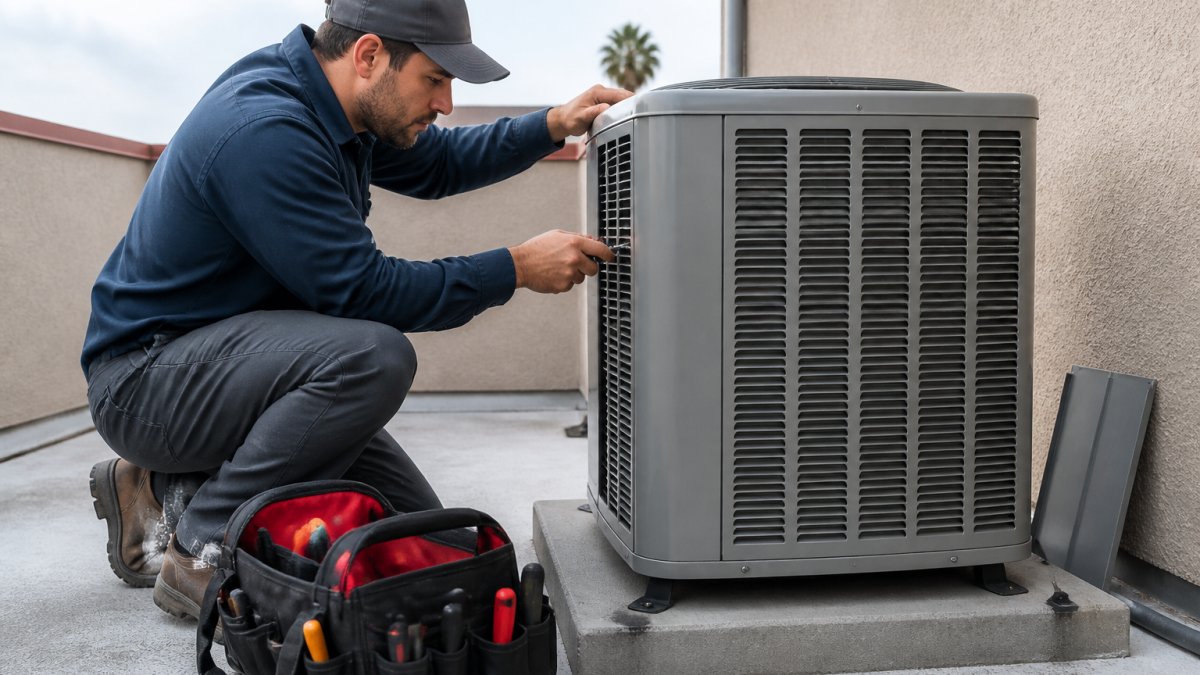
- Cleaning the outdoor unit and clearing debris
- Keeping written service records
- Handling any work that touches refrigerant, wiring, or gas lines
Tenant responsibilities include:
- Replacing or cleaning the air filter on schedule
- Keeping vents and return grilles unblocked
- Reporting strange noises, smells, or temperature swings
- Not tampering with the thermostat settings beyond the lease terms
The U.S. Department of Energy guidance on heating and cooling notes that regular filter changes and coil cleaning keep systems running efficiently. That efficiency is a landlord's gain, because the owner pays for the energy-hungry repairs and replacements.
Your Rental Property HVAC Maintenance Checklist
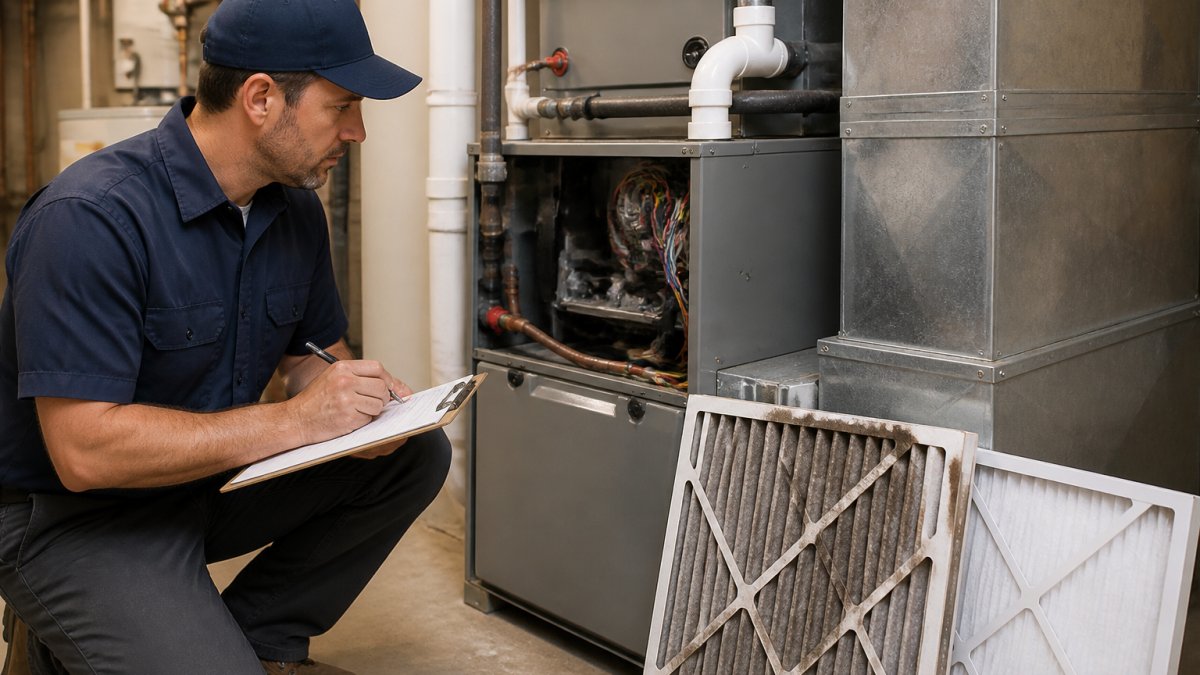
A rental property HVAC maintenance checklist is a short, repeatable list of tasks a landlord or property manager completes on every service visit. It keeps nothing to memory and gives you a paper trail. Here is the checklist we would use.
Every visit (monthly to quarterly):
- Check and replace the air filter
- Confirm thermostat settings and battery
- Clear debris from around the outdoor unit
- Inspect visible ductwork and vents for blockage
- Note any tenant complaints since the last visit
Twice a year (spring and fall):
- Clean the outdoor condenser coil
- Check refrigerant levels and look for leaks
- Inspect the condensate drain line for clogs
- Test heating and cooling operation in both modes
- Lubricate moving parts and tighten connections
Annually:
- Full professional inspection and tune-up
- Duct inspection and airflow check
- Document equipment age and expected replacement date
- Review the maintenance log with the owner
That checklist is the backbone of any landlord HVAC maintenance schedule. Work it once and you have a template for every unit you own.
To make the checklist truly repeatable, assign each task to a responsible party and set a clear trigger. The table below shows how a typical single-family rental might divide the work.
| Task | Frequency | Responsible Party | Notes |
|---|---|---|---|
| Replace or clean air filter | Monthly during peak season, otherwise quarterly | Tenant (with landlord verification) | Provide filters and a written reminder; landlord checks at each visit |
| Clear debris from outdoor unit | Monthly | Tenant or landlord | Safe for tenants if unit is off and accessible |
| Test thermostat and replace batteries | Quarterly | Tenant | Report any malfunction immediately |
| Clean condenser coil | Twice a year | Licensed technician | Requires coil cleaner and access to electrical components |
| Check refrigerant levels and look for leaks | Annually | Licensed technician | Refrigerant handling is regulated; do not attempt DIY |
| Inspect heat exchanger for cracks | Annually | Licensed technician | Critical safety check for gas furnaces |
| Flush condensate drain line | Twice a year | Licensed technician or handy landlord | Can be done by landlord if comfortable |
| Full system tune-up | Annually | Licensed technician | Includes cleaning, lubrication, and safety checks |
A common pattern is to give tenants a simple one-page checklist at move-in that covers only their responsibilities, with a reminder that filter changes are tracked. Landlords then verify filter condition at each quarterly or semi-annual visit. This division keeps routine upkeep from falling through the cracks while reserving technical work for licensed professionals.
Building a Landlord HVAC Maintenance Schedule by Season and System
Timing matters more than most owners realize. A landlord HVAC maintenance schedule should follow the seasons and the system type, not a random reminder on your phone.
In practice, the calendar looks like this:
| Season | Focus | Key Tasks |
|---|---|---|
| Spring | Cooling prep | Clean outdoor unit, check refrigerant, test AC |
| Summer | Peak cooling | Monthly filter checks, monitor airflow |
| Fall | Heating prep | Inspect furnace, test heat, clear debris |
| Winter | Peak heating | Filter checks, watch for short cycling |
System type changes the frequency. A heat pump runs year-round and benefits from two professional visits a year. A gas furnace needs one annual inspection before heating season. Central air needs a spring tune-up. Window units need cleaning more often.
Climate matters too. In a mild coastal climate, the cooling season is long and the heating season is short, so spring service carries more weight. In colder regions, the fall furnace inspection is the one you cannot skip.
Keeping an HVAC Maintenance Log for Landlords
An HVAC maintenance log for landlords is a simple record of every filter change, service visit, repair, and cost for each unit. It takes five minutes to update and pays for itself the first time you need a warranty claim or a tax deduction.
Track these fields for every property:
- Date of service
- Task performed or part replaced
- Technician or vendor name
- Cost and invoice number
- Equipment model, serial number, and install date
- Notes on condition and next due date
A spreadsheet works. So does a shared folder with a photo of each invoice. What matters is that the record exists and travels with the property.
HVAC Maintenance Costs and Return on Investment
Maintenance costs money, and landlords are right to ask what they get back. The honest answer: routine service is cheaper than emergency repair, and it extends equipment life.
The U.S. Environmental Protection Agency ENERGY STAR program explains that well-maintained heating and cooling equipment uses less energy and lasts longer than neglected systems. Those two effects compound over a decade.
Where the return shows up:
- Fewer emergency calls at premium rates
- Lower energy bills from clean coils and filters
- Longer equipment life before replacement
- Fewer tenant complaints and turnover costs
- Stronger records at tax time and resale
We do not quote prices here because cost depends on system size, age, and what the inspection finds. The right move is to ask for an upfront quote before work begins.
To make budgeting easier, here are typical cost ranges for common maintenance items in the United States. These are general estimates and vary by region, system size, and contractor.
| Service | Typical Cost Range (USD) | Frequency |
|---|---|---|
| Air filter (standard 1-inch) | $10-$30 each | Monthly to quarterly |
| Professional tune-up (single system) | $150-$300 | Annually |
| Coil cleaning | $100-$250 | As needed or annually |
| Refrigerant leak check | $100-$200 | Annually |
| Condensate drain flush | $75-$150 | Twice a year |
| Emergency repair call | $200-$500+ | As needed |
| Compressor replacement | $1,200-$2,500 | If failure occurs |
A common pattern is that landlords who spend $200-$400 per year on preventive maintenance avoid emergency repairs that can cost several times that amount.
The return on investment also shows up in energy savings. A dirty filter or coil forces the system to run longer, raising electric bills.
Finally, keep receipts and invoices. Maintenance costs are generally deductible as ordinary business expenses for rental properties, and having records ready at tax time simplifies filing. Consult your tax advisor for specifics.
Repair or Replace: Planning for Equipment Lifecycle
Every system has a lifespan, and the smart landlord plans for it instead of getting surprised. Most furnaces and air conditioners run for a decade or more with good upkeep, but age, repair history, and efficiency all factor in.
Use this decision framework:
| Situation | Recommended Action |
|---|---|
| Under 10 years old, one repair | Repair it, keep servicing |
| Over 15 years, repeated repairs | Start budgeting for replacement |
| Rising energy bills, no other cause | Get an efficiency assessment |
| Refrigerant leak on old equipment | Compare repair cost to replacement |
A common mistake is patching an aging system year after year. Each repair feels small, but the total climbs, and the equipment keeps losing efficiency. Track cumulative repair cost against replacement cost, and set a threshold in advance.
When replacement is due, plan it in the off-season if you can. You will have more scheduling flexibility, and the tenant will not be without heat or cooling during a peak-weather failure.
Running hvac maintenance for rental properties well comes down to a schedule, a checklist, and a record you actually keep. That discipline protects your equipment, your tenants, and your cash flow at the same time.
If you own or manage rentals in South Orange County, DC Plumbing Heating and Air Conditioning can take the maintenance load off your plate. Our licensed technicians handle inspections, repairs, and replacements with upfront pricing and warranties on parts and installation.
Frequently Asked Questions
Who is responsible for HVAC maintenance in a rental property?
The landlord is generally responsible for maintaining the HVAC system in working order, including professional servicing, repairs, and replacement. Tenants typically handle simple tasks like changing air filters and reporting problems promptly. Your lease should spell out each side's duties in writing so there is no confusion. Many landlords assign filter replacement to tenants and keep annual inspections and repairs with a licensed technician. Clear written roles reduce disputes and keep the system running efficiently.
How often should tenants change HVAC filters?
Most rental properties need filter replacement every three months, and more often during heavy heating or cooling season or in homes with pets. A clogged filter restricts airflow, strains the system, and raises energy costs. Put the interval in the lease and leave spare filters on site so tenants can swap them easily. Ask tenants to note each change in the HVAC maintenance log so you have a record of routine upkeep.
What should tenants do if the heating or air conditioning stops working?
Tenants should check the thermostat settings and the air filter first, then report the problem to the landlord or property manager right away. Give them a written emergency contact and a clear response window in the lease. For a complete failure during extreme heat or cold, treat it as urgent and dispatch a licensed technician. Fast reporting prevents small issues, like a tripped breaker or dirty filter, from turning into costly repairs.
When should a landlord repair or replace a rental property's HVAC system?
Repair when the fix is straightforward and the unit has years of service left. Replace when repairs become frequent, refrigerant leaks recur, or the system is nearing the end of its expected life. A licensed technician can assess operating condition and give you a straight recommendation. Replacing an aging unit often lowers energy costs and prevents emergency breakdowns, which protects both rental income and tenant satisfaction.