 How-to
How to Clean a Clogged Bathroom Sink Drain Without Chemicals
Last Updated: November 7, 2026
Quick Summary
To clean a clogged bathroom sink without chemicals, remove the stopper and pull out hair and soap scum with a bent wire or zip tool, then seal the overflow with a wet rag and plunge in short bursts. If water still stands, snake the drain or drop the P-trap and clean it with a bottle brush.
- Most bathroom clogs start within two inches of the drain opening, so check the stopper first.
- Hold a wet rag over the overflow hole so the plunger moves water instead of air.
- A baking soda and vinegar flush sits 15 minutes and works on soap scum, not hair.
- Never mix baking soda and vinegar with a commercial drain cleaner.
- Use a hair catcher in the drain as the single most effective prevention step.
Table of Contents
- Diagnose the Clog Before You Reach for a Tool
- How to Unclog a Bathroom Sink With Standing Water
- How to Unclog a Bathroom Sink Clogged With Hair
- How to Clear a Slow Bathroom Sink Drain
- Natural Drain-Clearing Methods That Actually Work
- When You Feel Like Your Bathroom Sink Is Clogged and You've Tried Everything
- Prevent Future Clogs in Your Bathroom Sink
- Schedule a Professional Drain Inspection
- Frequently Asked Questions
Diagnose the Clog Before You Reach for a Tool
A clogged bathroom sink drain usually gives you clues about the blockage before you touch a single tool. Diagnosing first saves time and prevents damage. A bathroom sink clog usually falls into one of three types: hair and soap scum near the stopper, a slow buildup deeper in the P-trap, and hard mineral deposits along the pipe walls.
Here is how to tell them apart:
- Water drains slowly but never backs up: soap scum and hair buildup near the drain opening.
- Standing water that drains over hours: a partial blockage in the P-trap.
- Gurgling sounds and a bad smell: debris trapped on the pipe walls.
Check the stopper first. Most bathroom clogs start right there, within two inches of the drain opening. If the sink drains fine with the stopper removed, you have found your culprit.
How to Unclog a Bathroom Sink With Standing Water
Standing water means the clog is holding firm, and every extra quart you pour in just makes the mess bigger. Work from the drain opening outward, and stop at the first step that restores flow.
- Bail out the standing water into a bucket with a cup. Leave about an inch so you can see the drain opening and so plunging does not splash.
- Pull the stopper. On a pop-up stopper, either twist the stopper counterclockwise and lift it out, or reach under the sink and pull the retaining clip off the horizontal lift rod behind the faucet, then lift the stopper free. Set the small parts in a cup so they do not roll into the drain.
- Clear the visible gunk. Put on gloves and pull hair and soap paste out of the drain opening with a bent wire or zip tool. Wipe the tool on a paper towel and repeat until it comes up clean.
- Seal the overflow and plunge. Bathroom sinks have an overflow hole near the rim, and a plunger will just push air through it instead of moving water. Hold a wet rag firmly over the overflow, set the cup plunger over the drain so the rubber seals, and push down and pull up in short 15- to 20-second bursts. Check the flow between bursts.
- Snake past the stopper. If plunging does not move the water, feed a hand snake or zip tool down the drain and crank slowly until you feel resistance, then pull back and wipe. Repeat two or three times.
- Drop the P-trap. If water still will not move, the blockage is past the trap. Place a bucket under the trap, loosen both slip nuts by hand (use pliers only if they are stuck), and pull the trap free. Clean it with a bottle brush, check the trap arm for hair, then reassemble hand-tight and run water to check for leaks at both slip nuts.
Watch out: never force a slip nut with pliers on plastic fittings, because a cracked nut or a cross-threaded joint turns a clog into a leak, and never leave a trap open under a sink that someone else might use.
If the sink still holds water after the trap is clean, the blockage is in the branch line past the trap, and that is a job for a drain snake long enough to reach the stack or for a professional inspection.
How to Unclog a Bathroom Sink Clogged With Hair
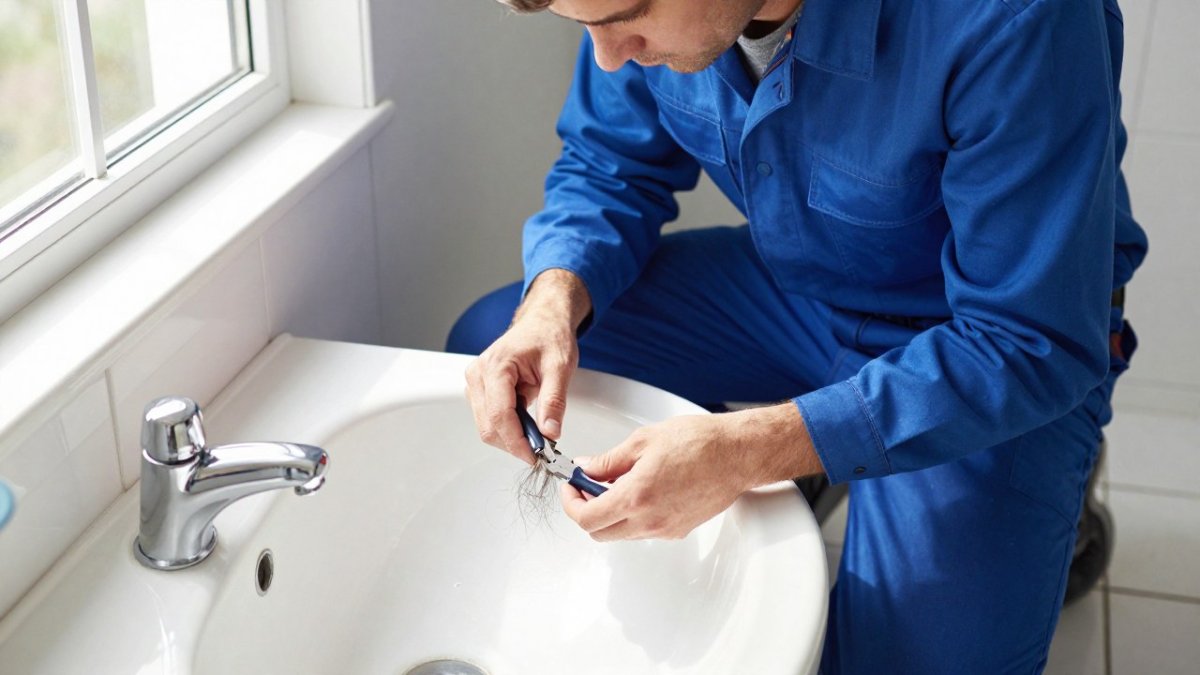
Hair is a common cause of a clogged bathroom sink, and it can wrap around the stopper and the P-trap arm. Hair is often best removed mechanically rather than with a chemical product.
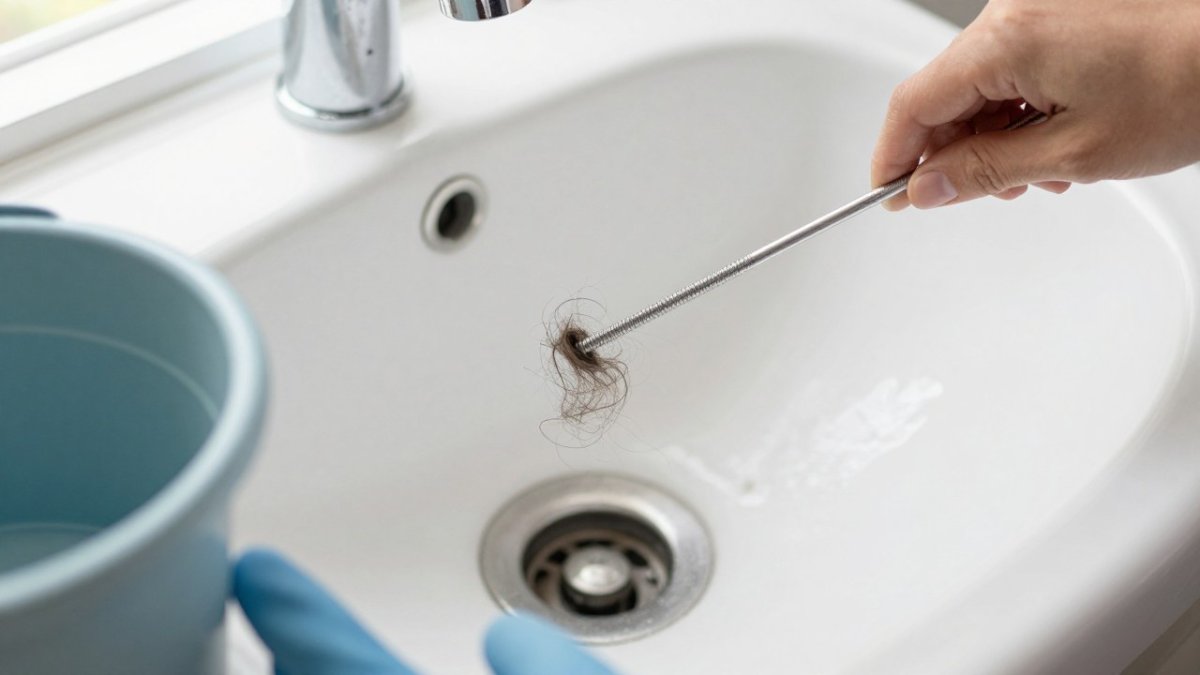
Tools that make this quick: rubber gloves, a hand drain snake (a 15- to 25-foot drum auger is plenty for a sink branch), a short zip-style hair tool, an adjustable wrench or slip-joint pliers, a bucket, a bottle brush, and a rag.
- Remove the stopper and clean it first. Twist a pop-up stopper counterclockwise, or pull the retaining clip off the lift rod behind the faucet and lift the stopper out. Hair collects on the stopper body and the pivot rod, so scrub it with a brush before you go deeper.
- Run the snake. Feed the snake into the drain opening, crank slowly until you feel resistance, then pull back. Wipe the snake clean and repeat two or three times. Cranking too fast just pushes the hair ball deeper.
- Drop the P-trap if the snake stalls. Place a bucket underneath, loosen both slip nuts by hand, and pull the trap free. Clean it with a bottle brush and check the trap arm for hair wrapped around the inside.
- Reassemble and test. Hand-tighten both slip nuts, run hot tap water for a minute, and check both joints with a dry paper towel for weeping. A drip means the nut needs another quarter turn or the washer is seated crooked.
- Flush with hot tap water once the flow improves, then run the water for 30 seconds after each future shave or wash to keep hair moving.
Watch out: a snake that will not pass the trap may be catching on the trap arm or a sharp fitting edge, and forcing it can crack plastic; back off and drop the trap instead.
If the clog returns within a few days, the hair is likely collecting on a rough pipe wall or a partially closed pop-up, and the next step is a camera inspection rather than another round of snaking.
How to Clear a Slow Bathroom Sink Drain
A slow drain is an early warning, not an emergency. Clear it now and you avoid a full blockage later.
Start with a hot water flush. Boiling water can be used with metal pipes, but use caution with PVC. Very hot water can soften PVC joints over time, so use hot tap water instead of boiling water if your pipes are plastic.
Then try this routine:
- Sprinkle half a cup of baking soda into the drain opening.
- Pour half a cup of white vinegar on top. It will fizz.
- Let it sit for 15 minutes while the mixture loosens soap scum and mineral buildup.
- Chase with hot water for 30 seconds.
- Repeat once if the flow is still sluggish.
This chemical-free method can help with light buildup. It will not cut through a solid hair clog, so pair it with mechanical clearing for best results.
Natural Drain-Clearing Methods That Actually Work
Household ingredients are generally better suited to soft buildup than to solid blockages. Set your expectations accordingly.
| Method | Best For | Wait Time | Limitation |
|---|---|---|---|
| Baking soda + white vinegar | Soap scum, odors | 15 minutes | Weak on hair clogs |
| Hot water flush | Grease, light buildup | Immediate | Risky for PVC pipes |
| Dish soap + hot water | Oily film | 10 minutes | Surface-level only |
| Plunger | Loose clogs near trap | 1-2 minutes | Needs overflow sealed |
| Drain snake | Hair, solid debris | 5-10 minutes | Requires some force |
A common mistake is combining methods carelessly. Never mix baking soda and vinegar with a commercial drain cleaner. The reaction can splash back, and the chemicals may cancel each other out. Also skip the vinegar if you have just used a drain product, and never pour boiling water into a toilet or a pipe you are unsure about.
The U.S. Environmental Protection Agency's guidance on household hazardous waste explains why harsh chemicals need careful handling and disposal.
When You Feel Like Your Bathroom Sink Is Clogged and You've Tried Everything
If the bathroom sink is clogged and you have tried everything, the blockage is likely deeper than the P-trap or the pipe itself is damaged. Repeated clogs in the same spot can point to one of several causes:
- A blockage in the branch line past the trap
- Corroded or misaligned pipes in older homes
- Root intrusion or a sagging line further down
Stop pouring products into the drain. Repeated chemical use can damage older pipes and does not fix the underlying problem. At this point, a professional inspection may be the more practical path. If you are unsure who to call, our guide on how to choose a reliable plumber walks through the questions that separate a real fix from a temporary patch.
Prevent Future Clogs in Your Bathroom Sink
Prevention comes down to catching debris before it settles. A few habits make a real difference:
- Use a hair catcher in the drain. This is the single most effective step.
- Wipe out toothpaste and soap residue weekly with a damp cloth.
- Run hot water for 30 seconds after each shave or wash.
- Do a baking soda and vinegar flush once a month.
- Pull the stopper and clean it every few weeks.
For a full room-by-room routine, our residential plumbing maintenance checklist covers drains, fixtures, and the early warning signs worth watching. Small habits now prevent most emergency calls later.
Schedule a Professional Drain Inspection
Some clogs need eyes on the inside of the pipe. A professional drain inspection uses a camera to find the real cause, whether that is a collapsed line, grease buildup, or a break you cannot see from the sink.
Before you book, it helps to know what the visit involves. Our guide on how to avoid surprise plumbing charges explains what to ask upfront, and our breakdown of sewer camera inspection cost covers what drives the price.
DC Plumbing Heating and Air Conditioning has served South Orange County since 1989 with licensed, certified technicians, upfront pricing, and warranties on parts and installation. Our team also offers 24/7 emergency services. Call today to schedule an inspection.
A clog that keeps coming back is telling you something. If DIY methods have stopped working, our team can trace the cause and fix it for good.
Frequently Asked Questions
What can I pour down the bathroom sink to unclog it without chemicals?
Start with a pot of boiling water and a few drops of dish soap. If that doesn't clear the clogged bathroom sink, try a half-cup of baking soda followed by a half-cup of white vinegar, let it sit for 15 minutes, then chase with hot water. For stubborn clogs, use a plunger or drain snake to physically remove hair and debris.
Why should you never use baking soda and vinegar to unclog a drain?
Baking soda and vinegar create a fizzing reaction that can loosen light soap scum, but the method rarely clears a hair blockage. The reaction produces mostly water and salt, and the fizzing stops within minutes. If the drain remains clogged, the mixture sits in standing water and can worsen odors. Use it only as a maintenance step, not as a primary fix for a blocked drain.
How do you unclog a bathroom sink with standing water?
First, remove the stopper and clear any visible hair. If water remains, use a cup plunger with a tight seal over the drain and plunge 10 to 15 times. If that fails, place a bucket under the P-trap, unscrew the slip nuts, and clean out the trap. For clogs deeper in the drain line, feed a drain snake through the pipe.
Is it safe to pour vinegar and baking soda down the drain?
Yes, in moderation. Baking soda and white vinegar are safe for most plumbing pipes, including PVC and metal. However, avoid using them after a commercial chemical drain cleaner, because mixing chemicals can create dangerous fumes. Also, do not rely on this method alone for a severe clog; mechanical removal with a plunger or snake is more effective for hair and debris.