 How-to
Does Homeowners Insurance Cover Sewer Line Repair?
Last Updated: October 26, 2026
Quick Summary
Most standard homeowners insurance policies do not cover sewer line repair, because they cover sudden, accidental damage rather than the slow breakdown most sewer lines suffer. An optional service line coverage endorsement can pay to repair or replace the buried pipe, while separate sewer backup coverage handles sewage damage inside the home.
- Standard policies cover sudden pipe breaks but exclude wear and tear, corrosion, and tree roots.
- Service line coverage is an optional endorsement that pays for excavation, repair, and landscaping damage.
- Sewer backup coverage is separate from service line coverage and pays for sewage damage inside the home.
- Document the damage with photos, video, and a written plumber's report before any repair begins.
- If a claim is denied, ask which exclusion applies and appeal with a licensed plumber's second opinion.
Table of Contents
- The Short Answer: What Standard Policies Actually Cover
- Service Line Coverage for Homeowners: The Optional Endorsement That Fills the Gap
- Sewer Backup Coverage: When the Mess Comes Back Into the House
- Side-by-Side: Dwelling Coverage, Sewer Backup, and Service Line Coverage
- Broken Sewer Pipe Repair Cost: What Drives the Number
- How to File a Sewer Line Insurance Claim Without Getting Denied
- When a Claim Is Denied: Your Next Steps
- Schedule a Sewer Line Inspection Before You File
- Frequently Asked Questions
The Short Answer: What Standard Policies Actually Cover
Most standard homeowners insurance policies do not cover sewer line repair. They cover sudden, accidental damage, not the slow breakdown most sewer lines suffer. That distinction decides nearly every claim.
Here's what standard policies do cover:
- Water damage inside the home from a covered event
- Sudden pipe breaks, like a contractor striking your line
- Damage from a fire, storm, or vehicle hitting the line
Here's what they exclude:
- Wear and tear over time
- Corrosion and rust
- Tree roots pushing into pipes
- Gradual deterioration
The Insurance Information Institute's guide to homeowners policies confirms that underground pipes serving the home often fall outside standard coverage. So why the confusion? Because a policy can pay for the soaked drywall and still refuse the broken pipe. That split matters, and it's where most claim disputes start.
Service Line Coverage for Homeowners: The Optional Endorsement That Fills the Gap
Service line coverage for homeowners is an optional endorsement that pays to repair or replace underground utility lines on your property. That includes sewer lines, water lines, and sometimes gas and electrical lines.
Standard policies stop at the foundation. This endorsement reaches into the yard.
What it typically covers:
- Excavation and access to the buried line
- Repair or replacement of the damaged pipe
- Damage to landscaping from digging
What it usually doesn't:
- The full cost of replacing a line that was already failing
- Pre-existing problems known before the policy started
Most insurers offer this as an add-on rather than a built-in. Ask your agent directly: "Do I have service line coverage, and what's the limit?" Many homeowners assume it's included. It isn't.
Sewer Backup Coverage: When the Mess Comes Back Into the House
Sewer backup coverage pays when sewage reverses into your home through drains or toilets. It's a separate endorsement from service line coverage, and the two protect different things.
Service line coverage fixes the pipe. Sewer backup coverage cleans up what enters the house.
The distinction trips up a lot of people. A backed-up line can flood your basement with waste, and standard policies often exclude that water damage entirely. The endorsement covers:
- Water damage from sewage entering the home
- Cleanup and remediation
- Damage to floors, walls, and belongings
Limits are often modest compared to the mess. Check your sublimit before you need it. Our guide on how to stop recurring sewer backups walks through the steps.
Side-by-Side: Dwelling Coverage, Sewer Backup, and Service Line Coverage
Here's the comparison most articles skip. Three different coverages, three different jobs.
| Coverage Type | What It Pays For | Typical Trigger | Usually Included? |
|---|---|---|---|
| Dwelling coverage | Damage to the home itself | Sudden, accidental events | Yes, standard |
| Sewer backup coverage | Sewage damage inside the home | Backup through drains | No, optional |
| Service line coverage | Repair of buried pipes | Sudden line failure | No, optional |
Read the table again. Notice that dwelling coverage never pays to fix the pipe. It pays for what the pipe damages.
- Did sewage enter the home? Check backup coverage.
- Is the buried line itself broken? Check service line coverage.
- Is the damage to the house sudden and accidental? Check standard dwelling coverage.
If all three answers are no, you're likely paying out of pocket.
Broken Sewer Pipe Repair Cost: What Drives the Number
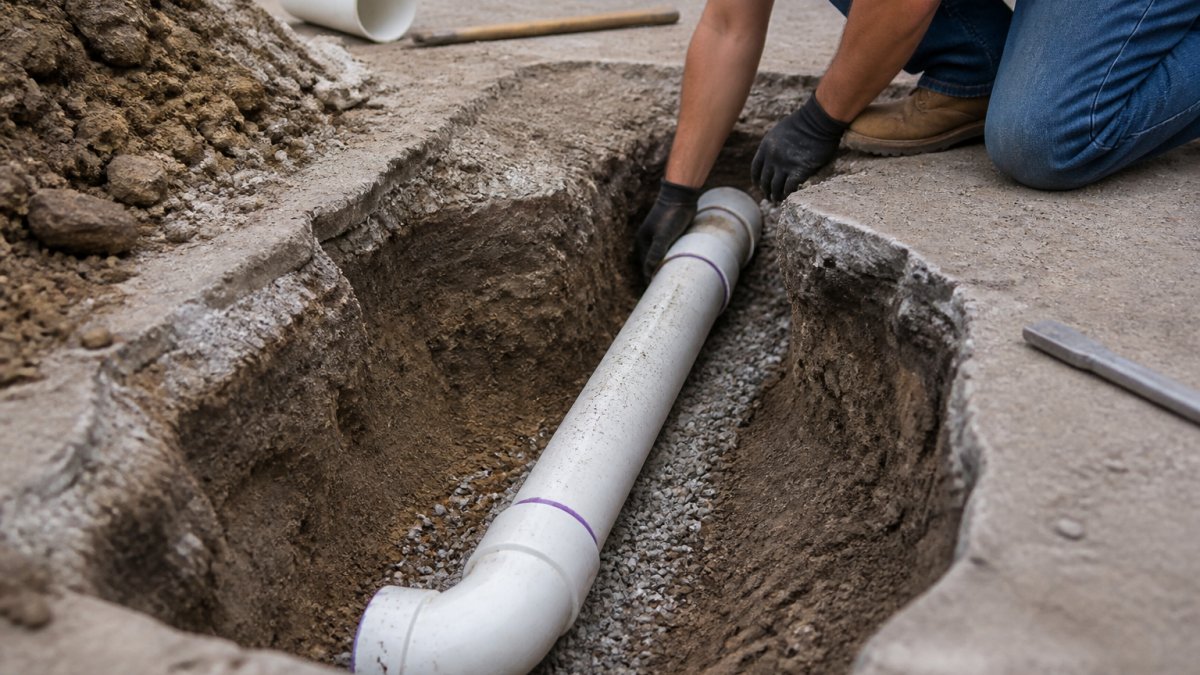
Broken sewer pipe repair cost depends on four things: pipe length, depth, method, and access. A shallow spot repair costs far less than a full line replacement under a driveway. Most contractors price the job by the linear foot plus excavation and restoration, so the same break can land in very different places depending on where it sits.
The main cost drivers:
- Depth. Deeper lines mean more excavation, shoring, and soil to haul away. A line four feet down costs more to reach than one two feet down.
- Method. Trenchless repair often costs less than digging because it avoids tearing up finished surfaces, but it isn't always possible on collapsed or offset pipe.
- Length. A short patch beats a full replacement. Spot repairs address one failed section; replacement runs the length of the line.
- Access. Concrete, landscaping, driveways, and finished basements add work before the pipe is even touched.
- Pipe material and diameter. Clay, cast iron, PVC, and Orangeburg pipe fail differently and price differently to replace.
Repair methods and how they compare
| Method | What it involves | Best for | Cost pattern |
|---|---|---|---|
| Spot repair | Excavate and replace one damaged section | Isolated cracks, single root intrusion point | Lowest, but only fixes the spot |
| Trenchless lining | Insert a resin liner through existing pipe | Cracks, joint gaps, moderate root intrusion | Mid-range; avoids surface restoration |
| Pipe bursting | Pull a new pipe through the old one | Worn but structurally continuous line | Higher upfront, replaces the line |
| Full excavation and replacement | Dig up and replace the run | Collapsed, offset, or badly deteriorated line | Highest; includes restoration |
A common pattern is that homeowners anchor on the lowest quote without asking what method it uses. A spot repair quote and a full replacement quote are not the same job, and comparing them side by side leads to bad decisions. Ask each contractor to state the method, the linear footage, and whether surface restoration is included.
For a fuller breakdown of what moves the number, see our guide to the average cost of sewer line repair.
How to File a Sewer Line Insurance Claim Without Getting Denied
To file a sewer line insurance claim, document the damage before anyone touches the pipe. Photos, video, and a written plumber's report are your evidence. Most denials come from missing proof, not bad policies.
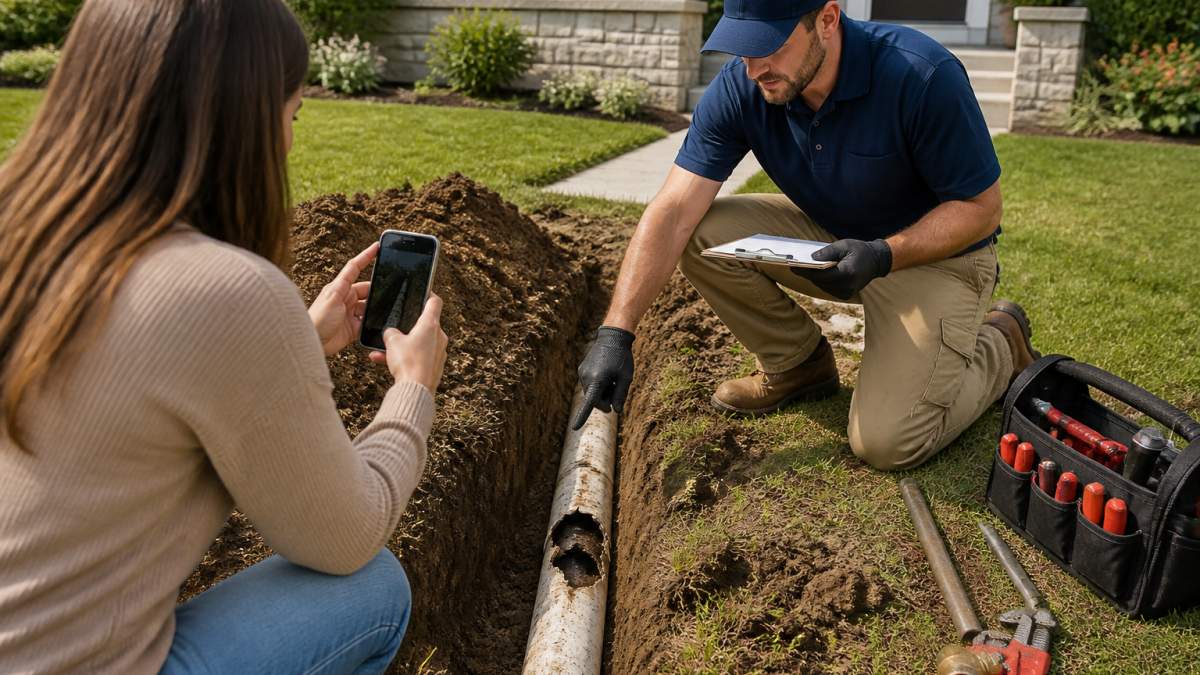
What the adjuster is actually looking for
A sewer line claim usually turns on three questions, and your documentation should answer each one:
- What was the cause? Sudden and accidental events (a contractor strike, a vehicle, a freeze rupture) read differently from gradual deterioration (roots, corrosion, settling). A plumber's report that names the cause in plain language is the single most useful document you can supply.
- Where is the damage? The line segment on your property versus the segment under a public right-of-way or easement can change who is responsible. Photograph the cleanout, the yard, and any visible markers so the location is clear.
- What did it damage? Separate the pipe itself from the resulting water damage inside the home. Standard dwelling coverage may pay for soaked drywall or flooring even when it won't pay for the pipe.
The documentation checklist
- Photograph and video the damage before any repair begins, including the cleanout and the surrounding yard
- Get a written plumber's report naming the cause and the affected segment
- Keep the camera inspection footage and stills from the inspection
- Save all receipts, estimates, and invoices
- Call your insurer before major work starts and note the claim number and adjuster's name
- Keep damaged materials until the claim closes
- Note the date and time of the failure and when you first noticed it
One common mistake: homeowners let a plumber haul away the broken pipe. That pipe is your proof. Keep it, or at minimum photograph it in place with a scale reference before removal.
The inspection report that supports a claim
Ask the plumber to note the cause, the location by footage from the cleanout, and whether the damage looks recent or longstanding. A report that says "collapsed section at 32 feet, no prior root intrusion visible" is worth more than one that says "sewer line damaged."
If your claim is denied, the same report becomes your appeal evidence. Our guide on how to choose a reliable plumber covers the questions to ask before you hire anyone to inspect or repair the line.
When a Claim Is Denied: Your Next Steps
A denial isn't always final. Read the reason in writing, then push back with evidence.
Ask three questions:
- Which exclusion applies?
- Was the cause sudden or gradual, per the adjuster?
- Would an endorsement have covered this?
If the denial cites wear and tear, a second opinion from a licensed plumber can help. A clear report separating sudden damage from long-term decay often changes the outcome.
Before you hire anyone to fix the line, choose carefully. Our guide on how to choose a reliable plumber covers the questions to ask.
Schedule a Sewer Line Inspection Before You File
It also tells you whether the problem is sudden or gradual, and that answer decides your claim. Want to see what an inspection involves? Check our guide to sewer camera inspection costs.
If you're also checking whether a warranty might pay, our guide on verifying plumbing warranty coverage explains how to confirm what's covered.
Frequently Asked Questions
Are sewer line issues covered by home insurance?
Usually not the pipe itself. A standard homeowners policy generally excludes the sewer line from the house to the street, especially when damage comes from wear and tear, corrosion, tree roots, or gradual deterioration. What it may pay for is resulting damage, such as water-damaged flooring or drywall, if the loss is sudden and accidental. To cover the underground pipe, you need an optional service line endorsement or a separate sewer backup endorsement added to the policy.
What is the difference between sewer backup coverage and service line coverage?
They solve two different problems. Sewer backup coverage pays for damage inside the home when wastewater reverses through a drain or toilet, including cleanup and ruined flooring or drywall. Service line coverage for homeowners pays to excavate and repair or replace the failed underground pipe on your property. One handles the mess indoors, the other handles the broken pipe outdoors. Many homeowners need both endorsements, and each carries its own limit and deductible.
Who is responsible for repairing the sewer line between the house and the street?
In most cases the homeowner owns the lateral line from the house to the property boundary or the connection at the main. That means excavation, pipe replacement, and restoration of your yard are your cost unless you bought service line coverage. The public utility typically maintains the main line in the street. Local rules and property boundaries vary, so confirm where your responsibility ends before a failure happens rather than after.
Will filing a water damage claim raise my homeowners insurance premium?
It can. Insurers weigh claim history when renewing a policy, and a paid water damage claim may affect your rate or eligibility at renewal. That is why the decision often comes down to the deductible versus the repair bill. If the covered damage is close to your deductible, paying out of pocket may protect your policy. Ask your agent how a specific claim would be treated before you file.
A failed sewer line is stressful enough without guessing what your policy covers. DC Plumbing Heating and Air Conditioning has served South Orange County since 1989 with licensed, certified technicians, upfront pricing, and 24/7 emergency service. We inspect the line, document the damage, and give you the written report your insurer needs. Get started with DC Plumbing Heating and Air Conditioning and know exactly what you're dealing with before you file.