 How-to
Signs Your Water Heater Needs Replacing
Table of Contents
- Signs Your Water Heater Needs Replacing: When to Act
- Water Heater Life Expectancy and Age
- Water Heater Leaking from Bottom: Diagnosis and Next Steps
- Rust, Discolored Water, and Contamination
- Inadequate or Fluctuating Hot Water
- Unusual Noises and Sediment Buildup
- Water Heater Repair or Replacement: Making the Decision
- Average Cost to Replace a Water Heater
- Frequently Asked Questions
Last Updated: October 10, 2026
Signs Your Water Heater Needs Replacing: When to Act
Your water heater works quietly in the background until something goes wrong. Then you're faced with a cold shower or a flooded basement. Knowing the warning signs your water heater needs replacing helps you act before a failure becomes an emergency.
Most water heater problems build gradually. Catching them early gives you time to plan, budget, and avoid the panic of an unexpected breakdown.
Water Heater Life Expectancy and Age
Most tank water heaters last 8 to 12 years. Tankless models can run 15 to 20 years. The age of your unit is often the single best predictor of failure.
Check your water heater's age via the serial number on the tank. If your unit is 10 years old, start budgeting for replacement, age alone makes failure likely within the next few years.
Hard water and mineral buildup speed up aging. In high-mineral areas, tanks can fail by 6-7 years old. Regular maintenance extends lifespan but cannot reverse time's damage to internal components.
Water Heater Leaking from Bottom: Diagnosis and Next Steps
A leak at the base of your tank often signals that your water heater needs replacing, but not every wet spot means failure. You need to know the difference.
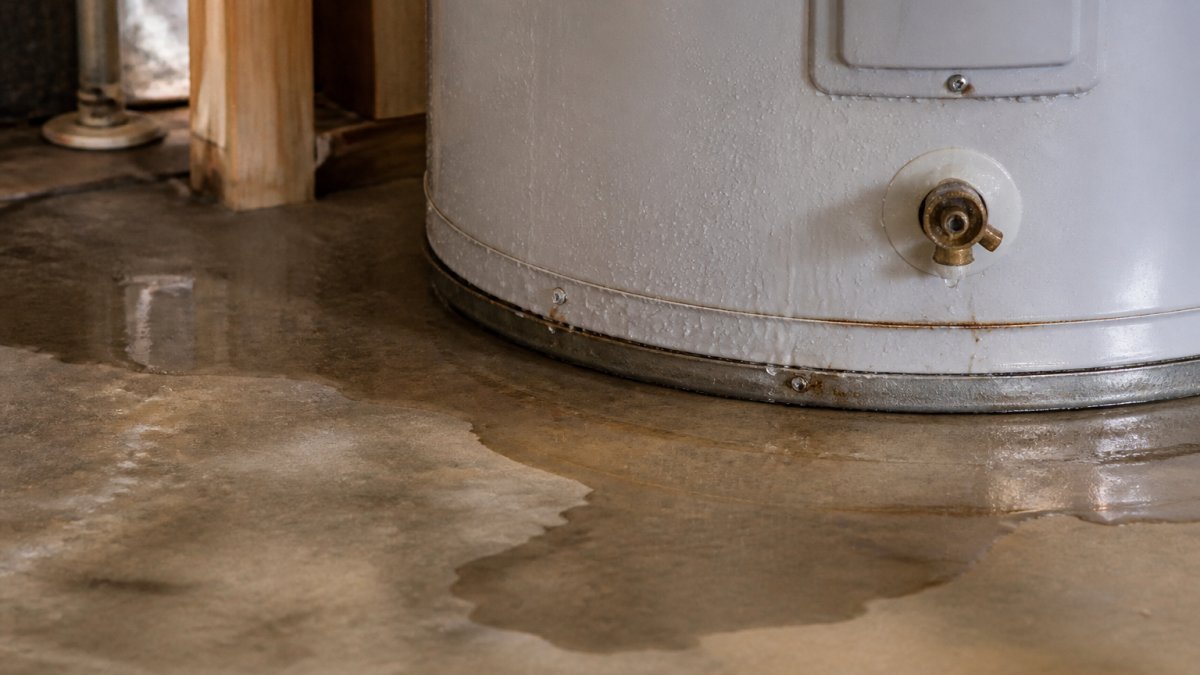
Condensation vs. Active Leaks
Water around the tank base could be condensation, normal moisture that forms when cold water enters a hot tank. It usually appears only when the heater fires up and dries quickly.
An active leak pools continuously and doesn't dry between heating cycles, signaling a crack in the tank or failed internal seal.
To test which you have, wipe the area dry and wait a few hours without using hot water. If moisture returns, you have an active leak; if it stays dry, you have condensation only.
Plumbing Connection Leaks
Check the inlet and outlet connections at the top of the tank before assuming the tank itself is leaking. These fittings can loosen over time and are fixable without full replacement.
Tighten the connections with a wrench. If water stops, the problem is solved. If not, the fitting may need replacement, still a repair, not full replacement.
Only when water seeps from the tank walls themselves do you need a new unit. A leak from the tank body means internal corrosion has created a hole that cannot be repaired.
Rust, Discolored Water, and Contamination
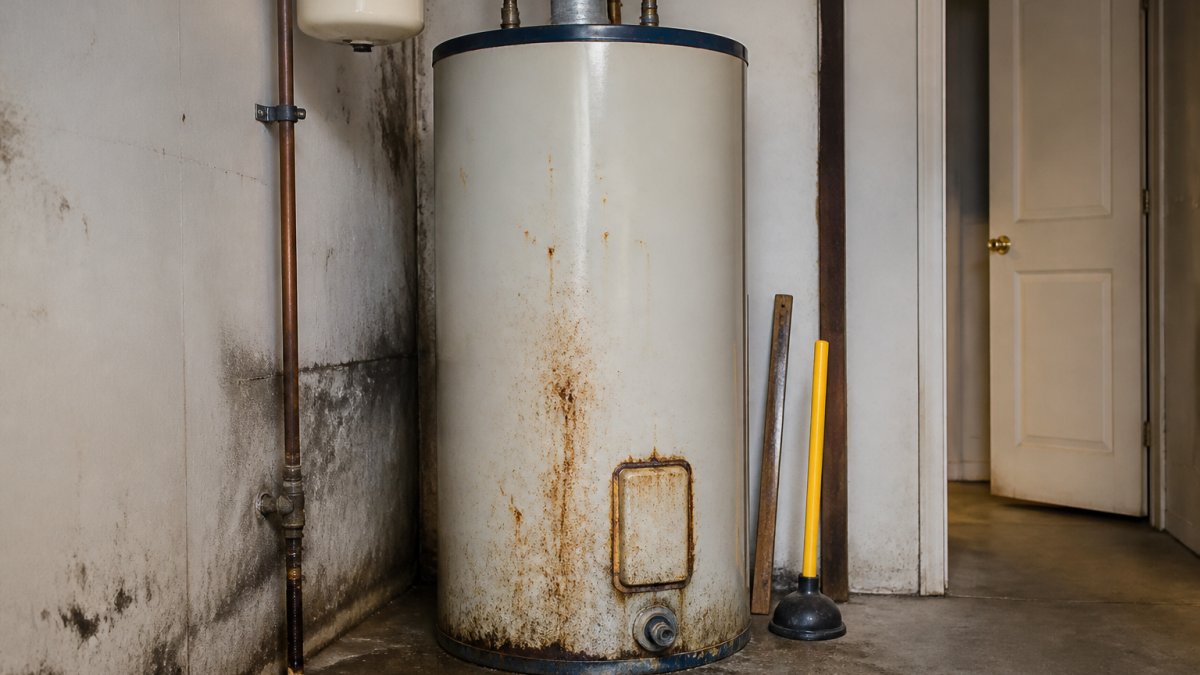
Brown or reddish water from your hot tap signals rust inside the tank, the protective lining has corroded and rust particles enter your water supply.
Discolored water means internal corrosion is advancing and the tank is breaking down from inside. Replacement is needed soon.
Run hot water for a minute to determine the source. If the water clears, the issue is in your home's pipes.
Unusual smells in hot water, metallic or sulfur, suggest sediment buildup or bacterial growth inside the tank. Flushing might help temporarily, but if the smell returns quickly, replacement is the practical answer.
Inadequate or Fluctuating Hot Water
Running out of hot water faster than before is a common warning sign that the tank's ability to deliver has declined.
This happens when sediment builds up inside the tank.
Fluctuating water temperature is another red flag.
Low water pressure from hot taps can signal tank problems, mineral deposits clog the outlet valve. This differs from low pressure throughout your home.
When hot-water shortages appear suddenly, check your thermostat setting first. If the setting is correct and problems persist, internal tank failure is likely.
Unusual Noises and Sediment Buildup
Strange sounds from your water heater are worth investigating.
These noises happen because mineral deposits accumulate at the tank bottom. When the heating element fires, it superheats the sediment, causing it to pop and shift. More noise means more sediment buildup.
Flushing the tank removes sediment temporarily, but buildup recurs. If your tank is 8+ years old and making noise, replacement makes more sense than repeated flushing.
Sediment also insulates the heating element, forcing your water heater to work harder and raising energy bills. The combination of noise, sediment, and age points toward replacement.
Water Heater Repair or Replacement: Making the Decision
Not every water heater problem requires full replacement. The key is understanding which failures are fixable and which signal the tank itself has failed.
Repairable Issues (Repair Makes Sense)
Several common problems can be fixed without replacing the entire unit:
Faulty heating element. If the tank is under 10 years old with no rust or leaks, a failed heating element costs $300-$500 to replace, a straightforward repair.
Thermostat malfunction. Fluctuating water temperature or failure to reach set temperature can be repaired and extends the tank's life significantly if the tank itself is sound.
Faulty pressure relief valve. Replacement prevents pressure buildup that could damage the tank.
Loose inlet or outlet connections. Tightening or replacing solves pooling immediately.
Sediment buildup. Flushing the tank removes mineral deposits, restores hot-water capacity, and quiets popping noises. Professional flushing can add years to an aging tank's life.
Terminal Issues (Replacement Is Necessary)
These problems indicate the tank itself has failed and cannot be repaired:
Corrosion holes in the tank walls. Water seeping from the tank body itself, not from connections, means internal corrosion has created a hole. The tank cannot be patched. Replacement is the only option.
Severe internal rust. If rust particles persist in your hot water even after flushing, the protective lining inside has deteriorated beyond recovery. The tank will continue to corrode and eventually leak.
Failed internal seal. Some tanks develop leaks at internal seams or the seal between the tank and heating element. These cannot be repaired and require full replacement.
Cracks in the tank body. Physical cracks from freezing, corrosion, or impact cannot be sealed. The tank must be replaced.
The 50% Rule and Age Factor
Use this straightforward decision framework: if the repair cost exceeds 50% of a new tank's price, replace the unit. If a repair exceeds a certain threshold, replacement is the smarter investment.
Age is the deciding factor when repair costs are moderate. If your tank is under 7 years old and the repair costs less than 50% of replacement, repair it. If your tank is 8-10 years old, lean toward replacement even if the repair is cheaper, you're buying time on a unit nearing the end of its lifespan.
Tankless as a Replacement Option
If you're replacing your tank anyway, consider whether a tankless water heater makes sense for your home. Tankless units last 15-20 years and use less energy than tank models. They're ideal if you have consistent hot-water demand and want long-term savings. However, they require adequate gas supply or electrical capacity and may need venting upgrades, which adds installation cost. A licensed technician can assess whether tankless is practical for your home's layout and budget.
Average Cost to Replace a Water Heater
Replacement cost depends on tank size, fuel type, installation complexity, and whether you upgrade to tankless. Understanding both upfront and operating costs helps you make an informed decision.
Tank Water Heater Replacement Costs
Standard tank installation: $800-$1,500 for a 40-50 gallon electric or gas tank, including the unit and labor. Smaller 30-gallon tanks run $600-$1,000. Larger 75-80 gallon tanks cost $1,200-$1,800.
Installation complexity: Most replacements are straightforward if your existing connections and venting are compatible. However, some homes require upgrades:
- New gas line or venting: Add $300-$800 if your current setup doesn't meet code or if you're upgrading from electric to gas.
- Electrical upgrades: Electric tank replacements usually plug into existing circuits, but older homes may need panel upgrades ($500-$2,000).
- Water line modifications: If connections need relocation or upgrading, add $100-$300.
Tankless Water Heater Replacement Costs
Tankless units cost significantly more upfront but deliver long-term savings:
Unit and installation: $1,500-$3,000 for a quality tankless system, including labor. Premium models with advanced controls run $2,500-$4,000.
Venting and gas line upgrades: Tankless units often require new venting (concentric or separate lines) and larger gas supply lines. Budget an additional $500-$1,500 for these upgrades.
Electrical upgrades for electric tankless: Whole-home electric tankless systems require significant electrical service upgrades, often $1,000-$3,000 or more. Point-of-use electric tankless (for a single fixture) costs $300-$800 and needs no major upgrades.
Operating Cost Comparison
While tankless costs more upfront, operating expenses differ significantly:
Tank water heater annual operating cost: $400-$600 per year for a typical household (based on 2024 energy rates). The tank maintains water temperature continuously, even when not in use, consuming energy 24/7.
Tankless water heater annual operating cost: $250-$400 per year for the same household. Tankless units heat water only on demand, eliminating standby losses. Gas tankless systems are typically more efficient than electric tanks; electric tankless is most efficient but requires substantial electrical infrastructure.
10-year operating cost difference: Over a decade, a tankless system saves $1,000-$3,500 in energy costs, partially offsetting its higher purchase price. Savings vary by local energy rates, household size, and hot-water usage patterns.
Warranty and Longevity
Tank water heaters: Most carry 6-12 year warranties on the tank and 1-3 years on parts and labor. Expected lifespan is 8-12 years.
Tankless water heaters: Most carry 10-15 year warranties on the heat exchanger and 5-10 years on parts and labor. Expected lifespan is 15-20 years, meaning fewer replacement cycles over your home's lifetime.
When Replacement Pays for Itself
If your current tank is 10+ years old and failing, replacement is inevitable. Choosing tankless makes financial sense if:
- You plan to stay in your home for 10+ years (long enough to recoup the upfront cost difference through energy savings).
- Your home has adequate gas supply or electrical capacity (avoiding expensive upgrades).
- Your household uses hot water consistently (tankless efficiency gains are greatest with steady demand).
- You want to reduce energy consumption and lower utility bills over time.
If your tank is relatively new or your home has constraints that make tankless installation expensive, a standard tank replacement is the practical choice.
Frequently Asked Questions
What is the typical life expectancy of a water heater?
Most tank water heaters last 8 to 12 years with proper maintenance. Tankless water heaters typically last 15 to 20 years. Your water heater's actual lifespan depends on water quality, maintenance frequency, and usage patterns. Hard water and infrequent flushing shorten tank life significantly. Check your unit's installation date on the nameplate to determine its age and whether replacement is approaching.
How can I tell if my water heater needs to be replaced or repaired?
Single issues like a faulty thermostat or heating element may be repairable, especially on units under 8 years old. Multiple problems, leaks, rust, inconsistent temperature, and age over 10 years, usually signal replacement is more cost-effective. A professional inspection reveals whether repair costs justify keeping the unit versus investing in a new one. Leaks from the tank itself (not connections) almost always require replacement.
What should I do immediately if I suspect a gas leak or electrical problem with my water heater?
If you smell gas or notice a rotten-egg odor near your water heater, turn off the gas supply at the valve, leave the area, and call a licensed technician immediately. For electrical units showing sparks, burning smells, or scorch marks, turn off power at the breaker and contact a professional. Do not attempt repairs yourself. These situations pose safety risks and require expert diagnosis and corrective action.
What is the average cost to replace a water heater?
Replacement costs vary based on tank size, fuel type (gas or electric), and installation complexity. Pricing depends on your specific home setup and whether upgrades like tankless systems are involved. For an accurate quote reflecting your exact situation, contact a licensed technician who can assess your needs and provide transparent pricing with no surprise fees.