 ultimate-guide
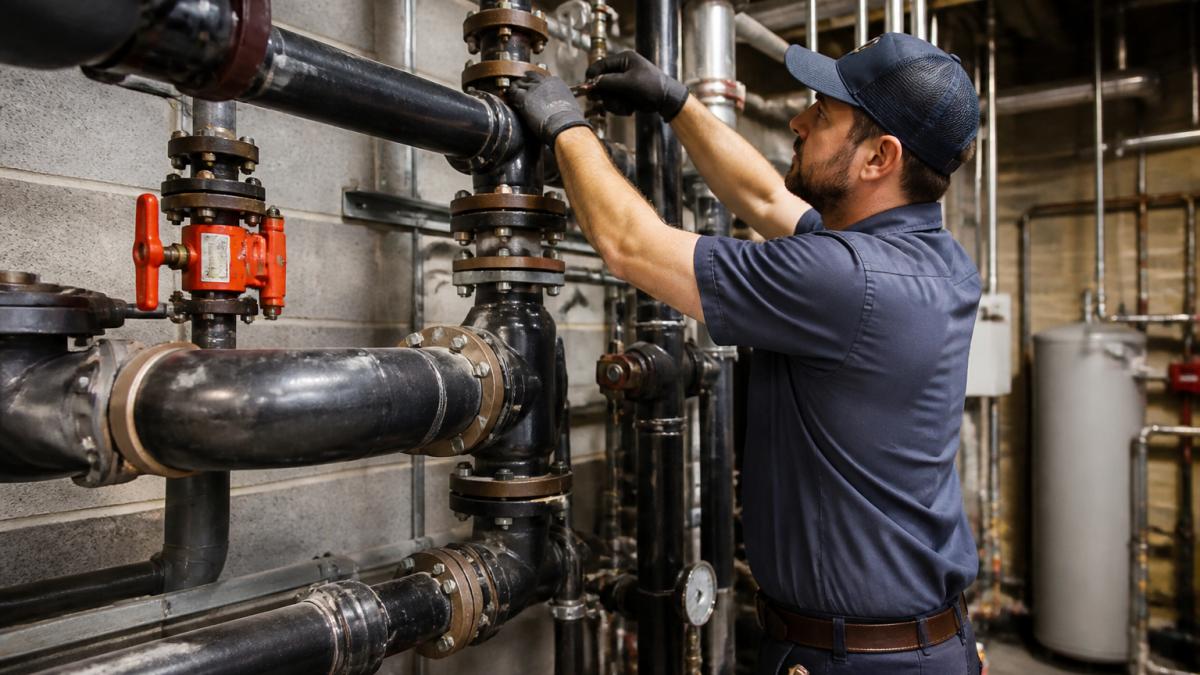
Licensed Commercial Plumber in South Orange County
Table of Contents
- Why Hiring a Licensed Commercial Plumber Matters in South Orange County
- Commercial Plumbing Maintenance Checklist for Facility Managers
- Emergency Commercial Plumbing Services: What to Expect
- Commercial Plumbing Repair Costs: What Drives the Price
- Specialized Systems That Need a Licensed Commercial Plumber
- How to Verify a Plumbing Contractor's License and Insurance
- Conclusion
- Frequently Asked Questions
Last Updated: October 2, 2026
Why Hiring a Licensed Commercial Plumber Matters in South Orange County
A licensed commercial plumber in South Orange County is a state-certified professional who has passed trade exams, carries a valid contractor license, and is insured to work on the complex plumbing infrastructure that commercial buildings depend on. That credential is not a formality. It is the difference between a repair that holds and one that fails inspection, floods a tenant space, or voids your property insurance.
Commercial Plumbing Maintenance Checklist for Facility Managers
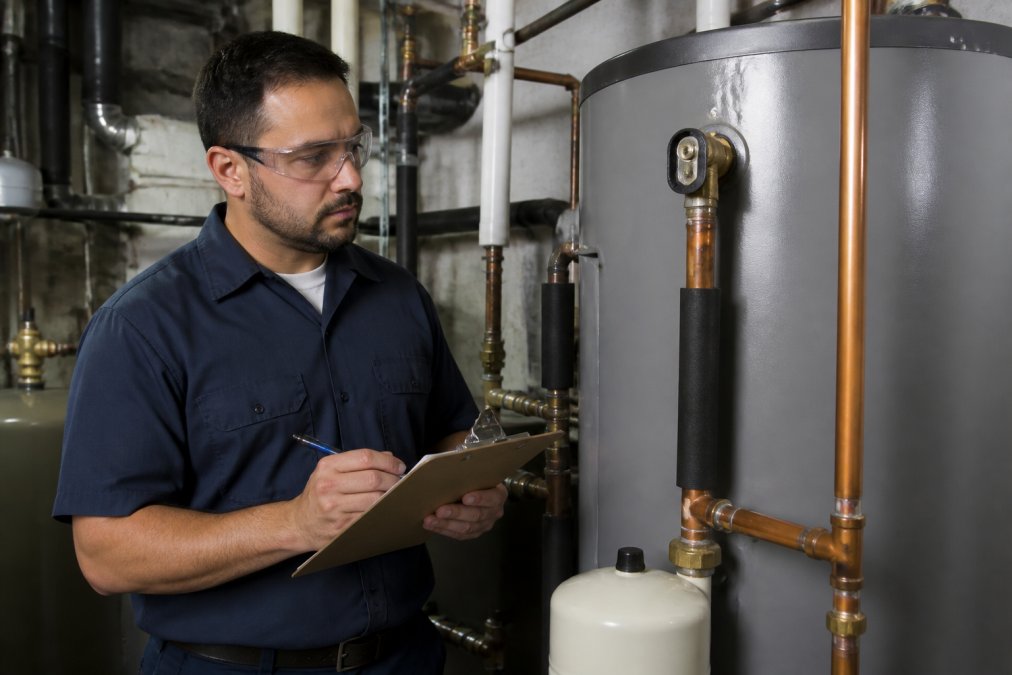
A commercial plumbing maintenance checklist separates the tasks your own team can handle from the ones that require a licensed technician. Running this checklist on schedule prevents the emergency calls that cost the most.
Daily and Weekly Checks Your Team Can Handle
Your maintenance staff can catch most early warning signs without a license. These checks take minutes and prevent small issues from becoming after-hours emergencies.
- Check under sinks and around supply lines for moisture, corrosion, or drips
- Verify water pressure at fixtures is consistent (sudden drops signal a hidden leak)
- Inspect grease traps for buildup and schedule pumping before overflow
- Listen for running toilets or unusual sounds from pipes after hours
- Confirm floor drains in mechanical rooms are clear and draining
Monthly and Quarterly Tasks for a Licensed Technician
A certified plumbing technician should handle anything involving backflow prevention, sewer camera inspection, water heater servicing, and code compliance. These tasks require licensing and specialized equipment.
- Test backflow prevention assemblies and file annual certification
- Camera-inspect sewer lines for root intrusion or bellied pipe
- Flush water heaters to remove sediment and check anode rods
- Inspect and service grease interceptors per local pretreatment requirements
- Review water pressure regulation at the main and at each zone
Emergency Commercial Plumbing Services: What to Expect
Emergency commercial plumbing services should put a licensed technician on site within a defined response window, not a callback promise. When a sewer line backs up into a tenant space or a gas line develops a leak, the difference between a two-hour response and a next-morning response is measured in thousands of dollars of damage and lost business.
What "Response Time" Actually Means
Most commercial plumbing companies advertise "24/7 emergency service" without defining what that means. Facility managers should pin down three separate numbers before signing a maintenance agreement:
- Phone answer time: How long until a live dispatcher picks up, versus an answering service that takes a message.
- Dispatch time: How long from the call until a technician is rolling toward your address.
- On-site arrival time: How long until a licensed technician is physically at your building with the right equipment.
How Emergencies Get Triaged
Not every after-hours call is the same emergency. A dispatcher who asks the right diagnostic questions can route the right technician and the right equipment on the first trip, which is what actually shortens the outage.
- Life-safety calls (gas odor, sewage in occupied space, active flooding near electrical): Immediate dispatch, gas shutoff guidance over the phone, and notification to the local utility or fire authority if warranted.
- Business-critical calls (no water to a restaurant during service, backed-up grease interceptor, failed water heater in a hotel): Priority dispatch with an on-site target measured in hours, not the next business day.
- Deferred calls (slow drain, dripping fixture, intermittent pressure loss): Scheduled into the next available daytime slot, which keeps after-hours premiums off the invoice.
What a Real Emergency Truck Carries
A real emergency response includes more than a truck and a wrench. Expect the technician to arrive with leak detection equipment, a sewer camera, a pipe locator, and the fittings and isolation valves needed to stop the problem on the first visit. If the technician has to leave to get a part, the response time you were promised just doubled.
The Costs Most Facility Managers Miss
What most facility managers miss is that emergency rates are not the only cost. Uncontrolled water damage, business interruption, tenant complaints, and mold remediation add up faster than any after-hours premium. A single sewage backup into a tenant space can trigger a rent abatement claim, an insurance deductible, and a lease dispute that dwarfs the plumbing invoice.
Commercial Plumbing Repair Costs: What Drives the Price
Commercial plumbing repair costs depend on four factors: the type of system involved, access to the failed component, the time of day, and whether the repair requires permits or code upgrades. A leaky fixture is a different job than a main sewer line failure under a concrete slab.
Here is how the major cost drivers break down:
| Cost Driver | What Raises the Price | What Keeps It Down |
|---|---|---|
| System type | Sewer mains, gas lines, backflow assemblies | Standard fixture repair |
| Access | Under slab, behind walls, roof-mounted | Exposed piping in mechanical rooms |
| Timing | After-hours, weekends, holidays | Scheduled daytime service |
| Permits and code | Repairs triggering code upgrades | Like-for-like replacement |
Why Transparent Pricing Prevents Surprise Invoices
Transparent pricing means the technician diagnoses the problem, explains the options, and gives you a written scope before any work begins. The invoice should match the quote unless you approve additional work in writing.
Specialized Systems That Need a Licensed Commercial Plumber
Certain systems legally require a licensed commercial plumber in South Orange County, regardless of how simple the repair looks. Working on these without a license is a code violation and often an insurance problem. The list below covers what each system is, why it requires a license, and what local requirements apply.
Backflow Prevention Assemblies
A backflow prevention assembly stops contaminated water from reversing into the potable supply. Most water districts require annual testing and certification, and only a certified tester can perform the test and file the report with the district. In this region, the requirements come from a patchwork of retail water agencies and the state health code, and the filing deadlines and assembly types accepted vary by district.
Grease Interceptors and Traps
Restaurants and food service facilities must maintain grease interceptors to pretreatment standards enforced by the local sewer agency. Improper maintenance leads to sewer surcharges, fines, and in severe cases a cease-discharge order. The required pumping frequency depends on the interceptor size and the kitchen's volume, a high-output commercial kitchen may need monthly service, while a small cafe may go quarterly.
Commercial Water Heaters and Boilers
Gas connections, venting, expansion tanks, and temperature-and-pressure relief valves all fall under code requirements. A commercial water heater replacement typically requires a permit and an inspection, and the venting category (Category I, III, or IV) must match the appliance. Installing a residential-grade unit in a commercial application is a common shortcut that fails inspection and voids the manufacturer warranty.
Sewer Line Repair Using Trenchless Technology
Pipe relining and trenchless replacement require specialized equipment and permits. Trenchless methods, cured-in-place pipe lining, pipe bursting, and slip lining, let crews rehabilitate a failing sewer line without excavating a parking lot or tenant slab. The trade-off is that not every pipe is a candidate: severely collapsed or misaligned lines may still require open-cut repair.
Gas Line Installation and Repair
Any gas work requires a licensed contractor and an inspection. This includes new gas appliance connections, line extensions for tenant build-outs, and leak repair. Gas work is the category where unlicensed labor creates the most serious liability, because a failed connection is a life-safety event, not a maintenance issue.
Municipality-Specific Compliance
Compliance requirements are not uniform across the region. A few examples of how they diverge:
- Coastal jurisdictions often layer on additional backflow and grease interceptor requirements tied to ocean-water protection and storm drain rules.
- Inland business districts with older building stock frequently trigger code upgrades when a repair exceeds a threshold percentage of the system's value, a like-for-like repair can become a full replacement once the permit is pulled.
- Restaurant-heavy corridors tend to have more aggressive grease interceptor inspection schedules and surcharge structures than office or retail zones.
How to Verify a Plumbing Contractor's License and Insurance
Verifying a contractor takes about ten minutes and prevents most of the problems that lead to costly rework. Ask for three things: the license number, a certificate of insurance, and references from comparable commercial jobs.
Conclusion
Commercial plumbing failures rarely announce themselves. They build quietly behind walls, under slabs, and inside mechanical rooms until a tenant calls at the worst possible time. A licensed commercial plumber in South Orange County, backed by a real maintenance program and transparent pricing, is what keeps those failures from becoming emergencies.
Frequently Asked Questions
How much does a commercial plumber charge?
Commercial plumbing repair costs depend on the scope of work, parts required, and urgency. A simple fixture repair differs greatly from a sewer line replacement or hydro-jetting service. DC Plumbing Heating and Air Conditioning provides upfront pricing with no surprise fees, so you know the cost before work begins. Call today for a quote specific to your facility.
What is the difference between a commercial plumber and a residential plumber?
Commercial plumbers handle larger, more complex systems such as grease traps, backflow prevention assemblies, and industrial-grade water heaters. They must understand building code compliance for commercial properties and often work with property managers on service contracts. Residential plumbers focus on single-family homes. A licensed commercial plumber in South Orange County has the training and certifications for these specialized systems.
What are common signs of a commercial plumbing emergency?
Watch for sewage backups, sudden drops in water pressure across multiple fixtures, gas odors, and water pooling near your water heater or main line. These issues require immediate attention to prevent property damage and health hazards. DC Plumbing offers 24/7 emergency response, so call right away if you notice any of these signs rather than waiting for a scheduled appointment.
How do I verify a plumbing contractor's license?
Ask for the contractor's license number and check it through the state licensing board's online lookup. Confirm the license is active, covers commercial work, and that the company carries both liability insurance and workers' compensation. DC Plumbing Heating and Air Conditioning is licensed, bonded, and insured, and we are happy to provide documentation before any work begins.